- By Dotbooker
- Sep 28, 2026
- 4
Why is Caribbean Payment Processing Software key to Customer Satisfaction?
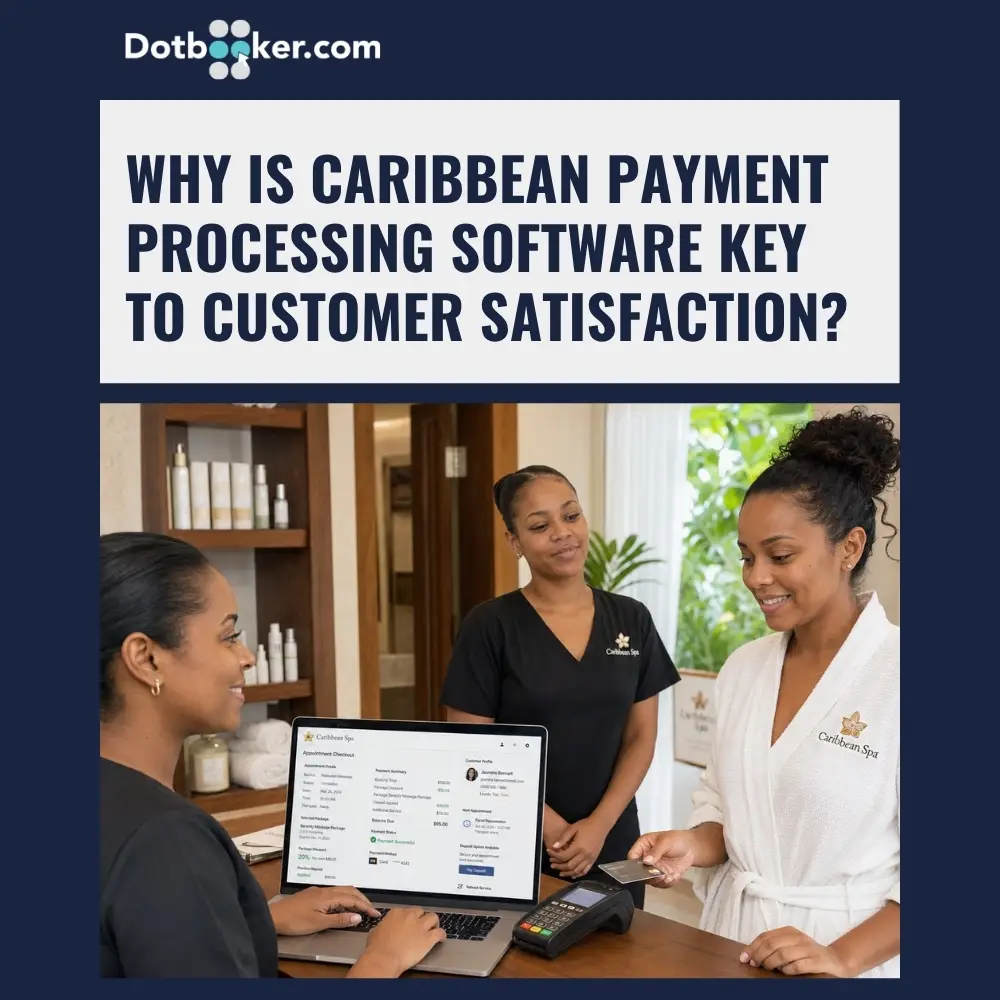
A customer finishes a relaxing massage at a Cayman spa. They are happy with the treatment, ready to leave, and already thinking about the rest of their day.
Then comes the payment. The card terminal takes time to respond. The customer wants to use a different payment method. Another guest is waiting at the reception. A package discount needs to be checked manually. Someone else wants to pay a deposit for their next appointment.
Suddenly, the last five minutes of an otherwise excellent experience feel unnecessarily complicated.
For a service business, payment is not simply an accounting task that happens after the service. It is the final part of the customer experience.
That is why payment processing software matters for Cayman and Caribbean service businesses. When payments connect with bookings, customer information, deposits, packages, and other sales activity, businesses can make checkout easier for customers while giving staff a clearer way to manage transactions.
Whether you run a salon, spa, gym, wellness center, pet grooming business, or another appointment-based service, customers remember how easy it was to book, receive the service, and pay. The last step should be just as smooth as the first step.
What Is Payment Processing?
Payment processing is the series of steps that take place when a customer pays for a business. For a card or digital transaction, information needs to move between the customer, merchant, payment technology, and relevant financial parties so the payment can be authorized and completed.
From the customer's perspective, it may look simply:
Tap → Approved → Done
Behind that small moment, the payment needs to be securely processed and recorded. Caribbean payment providers are increasingly supporting contactless cards, digital wallets, online payments, and other online payment experiences as consumer expectations change. For a Cayman service business, the bigger question is not only: “Can we accept a payment?”
It is: “How easily can the customer complete that payment?”
That is where payment processing software becomes part of the customer journey.
What Does Payment Processing Software Do for Caribbean Businesses?
Think about everything that can happen around one appointment. A customer books for treatment.
- They may pay a deposit.
- They arrive for the appointment.
- During the service, they add another treatment or product.
- At checkout, they pay the remaining balance.
- Then they book their next visit.
If every step is handled separately, employees may need to move between the booking calendar, calculator, payment terminal, customer account, package records, and other systems.
Payment management software can help businesses keep payment activity more organized and connected with the services customers are purchasing. An integrated payment system takes this further by connecting payment with other parts of the customer journey, such as booking or point-of-sale activity.
For employees, that can mean fewer manual steps.
For customers, it can mean something even more noticeable: less waiting.
Caribbean Customers Have More Ways to Pay
Cash and traditional cards remain familiar with options, but they are no longer the whole payment story. Customers may expect different choices depending on the business and its payment provider.
Credit and Debit Cards
Card payments remain an important option for service businesses, particularly when serving both residents and international visitors.
Contactless Payments
A customer can tap an eligible card or device rather than complete a longer checkout process.
Digital Wallets
Supported mobile wallets allow customers to pay using compatible smartphones or other devices. Digital wallets and contactless payments are among the payment technologies gaining attention across Caribbean markets.
Online Payments
Online payment software can allow customers to make eligible payments through digital channels rather than waiting until they physically arrive at the business.
Deposits
A business may collect part of the service price when the customer books and collect the balance later.
Gift Cards and Stored Value
Where supported, customers may use gift cards, credits, or stored balances toward eligible purchases.
The right options depend on the business, payment provider, location, and customer base. The goal is not to offer every payment method imaginable. It is to make paying convenient for the customers you actually serve.
5 Ways an Integrated Payment System Can Improve Customer Satisfaction
Customer satisfaction is often associated with friendly staff and great service. Those things matter enormously. But customers also notice unnecessary friction. Here are five ways an integrated payment system can help remove some of it.
1. Faster Checkout Means Less Waiting
Imagine your Cayman salon has six customers finishing appointments around the same time. If every transaction requires employees to manually check the service, calculate the amount, find the customer, process the payment, and update another record afterward, a queue can quickly form.
Customers who have already spent an hour or two receiving a service generally do not want another ten minutes at reception.
Payment processing software can help make the payment stage more direct when it relates to the transaction information the business already has.
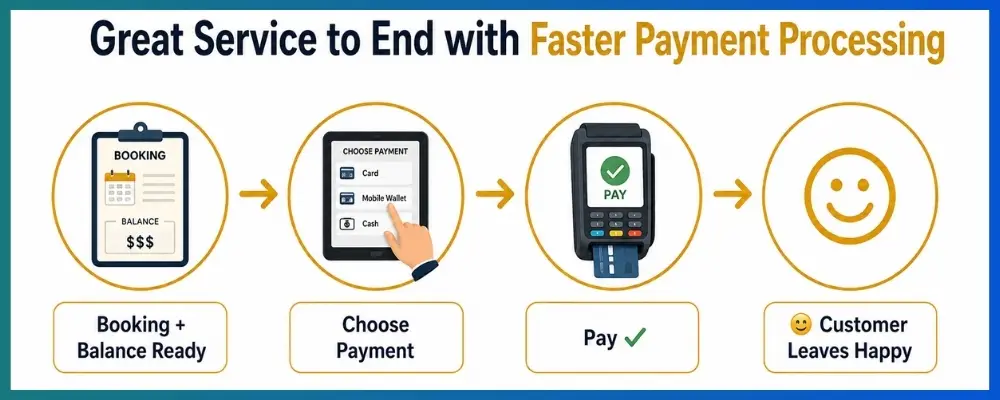
The customer is finished.
The correct transaction is identified.
Payment is processed.
The customer leaves.
Faster billing is not only an operational benefit. It is a customer experience benefit.
2. Online Payment Software
Some appointments require commitment before the customer arrives.
- A spa may reserve a long treatment.
- A salon may block several hours for a complex service.
- A wellness business may reserve a specialist.
Rather than asking: “Can you come in and pay the deposit?” or “Call us with your payment information.” Online payment software can support a more convenient digital payment journey where the business and provider support it.
For the customer, the booking becomes easier to complete.
For the business, the deposit can provide clearer commitment to the appointment.
The customer should also be able to understand what they are paying, what remains due, and the business's applicable cancellation or refund terms.
3. More Payment Choices Give Customers Flexibility
Picture two customers leaving the same Cayman spa.
- One prefers a physical card.
- The other prefers a supported digital wallet.
Neither customer should feel that paying is the difficult part of their visit. A good payment management software setup can help businesses manage supported payment methods more clearly while giving customers practical choices.
This can be particularly relevant for Cayman businesses serving tourists.
Visitors may arrive with different banking habits and preferences. They may not want to carry much cash, and they may already be accustomed to paying digitally.
A payment experience that supports appropriate options can make the business easier to use.
4. Split Payments
Now imagine four friends visit a Cayman wellness center together. They book several services. At checkout: “Can we pay separately?”
Without a clear process, this can turn into a calculator exercise at reception.
- Who had which treatment?
- Who purchased the add-on?
- Who has already paid?
An integrated payment system that supports the required payment flow can make group or split transactions easier to manage. The same idea can apply when one customer wants to use more than one supported payment method, depending on the system and merchant setup.
For spas, salons, wellness businesses, and other service providers handling groups, payment flexibility can prevent an enjoyable experience from ending with confusion at reception.
5. Gift Cards and Wallets
Payment does not always have to end the relationship. A customer may have a gift card. Another may have account credit. A regular customer may have a supported stored balance or wallet.
When these options are available, payment processing software can help the business recognize and apply eligible value during checkout rather than relying on handwritten records or separate spreadsheets. This is where payment management software can support both convenience and repeat business.
A gift card purchased today may bring someone back next month. A stored credit can make the next checkout easier.
The payment experience becomes connected with the customer's relationship with the business rather than being treated as an isolated transaction.
6. Deposits and Final Balances
Deposits create another area where disconnected payment records can become frustrating. Suppose a customer book a CI$150 treatment and pays a CI$50 deposit.
After the service, the remaining amount is CI$100 before any eligible add-ons or adjustments.
That sounds simple. Now imagine the business processes dozens of deposits every week. If deposit information is kept in messages, receipts, or a separate spreadsheet, employees may have to manually verify what each customer has already paid.
Payment management software can help keep relevant payment information closer to the transaction. That means checkout does not begin with: “Did you already pay something?” The business should already have a clearer record.
Online Payment Software Can Make Payment Part of the Booking Journey
Payment does not need to begin when the customer reaches the front desk. For some service businesses, it can begin when the appointment is booked. A customer could choose a service, select an appointment, and complete an eligible deposit or payment online. This makes online payment software particularly useful for businesses where customers are already booking digitally. Consider a visitor arriving in Grand Cayman.
They want a massage tomorrow afternoon.
They found the spa tonight.
Instead of:
Book → Wait → Call → Arrange deposit → Confirm
The customer may be able to complete more of the journey digitally.
Choose → Book → Pay → Confirm
The fewer unnecessary interruptions between interest and confirmation, the easier the experience becomes.
Integrated Payment System Can Help Staff Too
Customers experience the front of the payment process. Employees deal with everything behind it. Customer satisfaction and employee experience are closely connected. When employees are struggling with disconnected systems, customers often see the result.
- They wait while someone searches for a deposit.
- They watch an employee calculate an outstanding balance.
- They repeat information they already provided.
- They wait while staff switch between systems.
An integrated payment system can reduce some of that back-and-forth by keeping relevant online booking and payment activity closer together. Staff can focus on the customer standing in front of them rather than searching for information. For a busy Cayman service business, that can make checkout feel calmer even during peak hours.
Great Service Should Not End With a Difficult Payment
Think about everything your team does to create a good customer experience.
The salon prepares before the customer arrives.
The therapist remembers the client's preferences.
The instructor delivers a great class.
The groomer takes care of someone's pet.
The wellness team makes the customer feel welcome.
Then comes the final interaction:
Payment.
That moment should not undo the convenience created everywhere else.
Payment processing software can help Cayman service businesses make checkout faster, keep deposits and balances clearer, support appropriate digital payment options, and connect transactions more closely with the services customers receive.
Online payment software can make payment possible earlier in the booking journey. An integrated payment system can reduce the gap between booking and checkout. And payment management software can help the business maintain clearer transaction information after the customer leaves.
Make the Last Step as Easy as the First
Your customer journey may begin with an online booking and continue through an appointment, treatment, class, or service.
Payment is where that journey ends. Dotbooker helps Cayman service businesses connect appointments with payment-related experiences, POS activity, deposits, packages, gift cards, customer wallets, and transaction records from a more organized system.
The result is not simply a quicker transaction. It is a customer who can book, receive their service, pay, and move on with their day without unnecessary friction. Because when the service feels effortless, the payment should be too.
Popular Blogs

- Oct 20, 2022
- 6142
- Sep 08, 2024
- 5626

- Nov 11, 2022
- 5004

- Oct 13, 2025
- 4056
Ready to Transform
Your Business?

Get expert guidance to streamline your business operations.