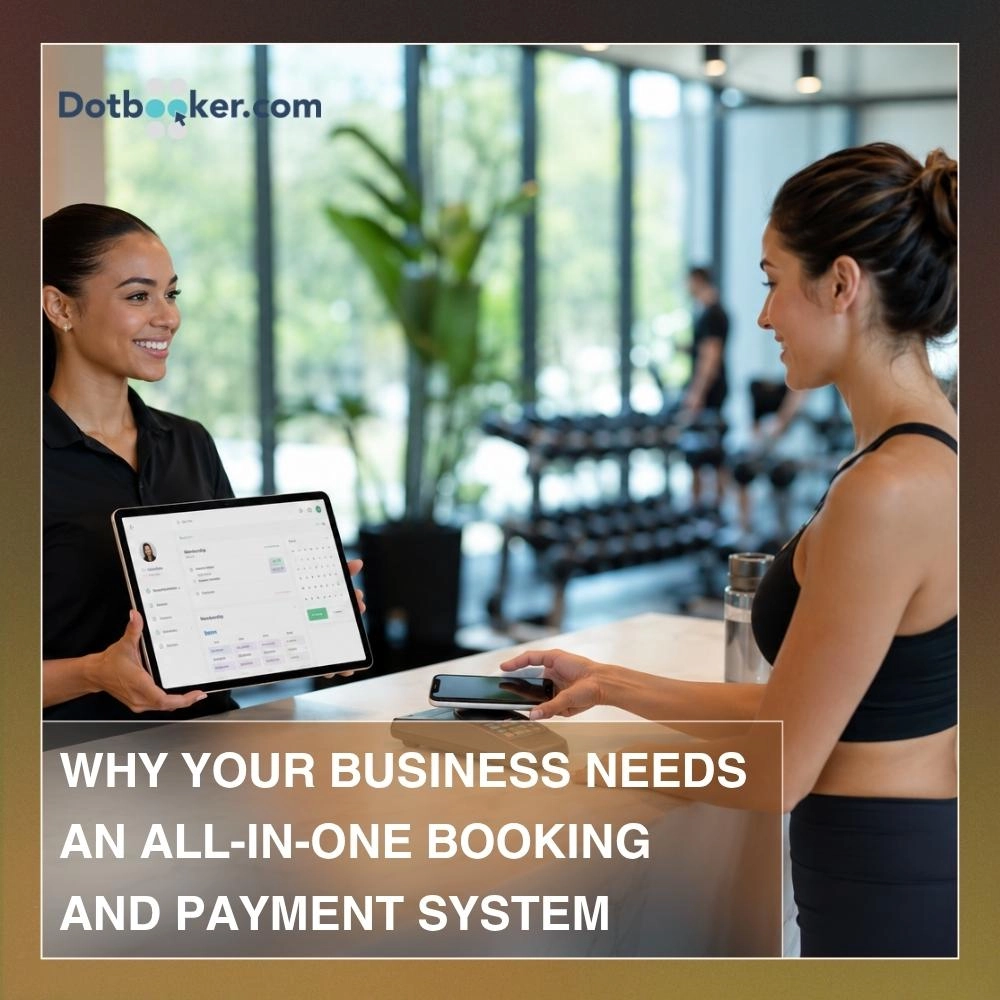
Why Your Business Needs an All-in-One Booking and Payment System
Picture this.
A customer finds your business online at 10:47 PM.
They like your service. They check your photos. They read a few reviews. They are ready to book.
Then they see: “Call us to schedule an appointment.”
Now the customer has a choice.
They can wait until morning, remember to call, hope someone answers, ask for available slots, confirm the price, request payment details, and then complete the booking.
Or they can go to another business that lets them book and pay in three minutes.
Most people choose the second option.
Not because your service is bad. Not because your team is careless. Not because your pricing is wrong. They simply want the process to be easy.
That is exactly why a booking and payment system has become such a practical need for modern service businesses. Customers want speed. Business owners want fewer missed bookings. Staff want less confusion. Everyone wants payments to be handled without a dozen follow-up messages.
And honestly, nobody started a salon, spa, gym, studio, clinic, coaching business, or service company just to spend half the day asking, “Hi, have you made the payment?”
Old Booking Methods Cost Businesses More
For years, many businesses managed appointments the old familiar way.
- A customer calls.
- A staff member checks the calendar.
- Someone writes the booking down.
- A payment link is sent later.
- A reminder is sent manually.
- A cancellation comes through WhatsApp.
- Someone forgot to update the calendar.
- Another customer gets booked into the same slot.
Then comes the classic panic sentence:
“Wait, who confirmed this appointment?”
This kind of chaos does not always look dramatic from the outside. Customers may still walk in. Staff may still manage the day. The business may still be running.
But behind the scenes, time is leaking.
Five minutes here to confirm a booking. Ten minutes there to chase a payment. Another few minutes to check whether someone paid a deposit. A long conversation about refunds. A missed appointment. A double booking. A customer who thought they had confirmed, while the team thought they had not.
Slowly, these small issues become expensive.
A business loses money not only when a customer cancels. It also loses money when staff spend hours fixing problems that should not exist in the first place.
A good booking and payment system does not make your business less personal. It simply removes the messy parts that get in the way of properly serving people.

Customers Expect Online Booking With Payments
This may sound funny, but it is true.
Some businesses accidentally make customers work too hard just to book and pay.
They ask customers to call during working hours, wait for a reply, manually confirm availability, copy bank details, send screenshots, or follow up again if no one responds.
That may have been normal a few years ago. Today, it feels tiring.
Customers are used to booking flights, ordering food, paying bills, buying products, and scheduling services from their phones. They expect the same level of ease when booking a haircut, massage, fitness class, consultation, therapy session, or training appointment.
Why Easy Online Booking Matters Today
Online booking with payments gives customers the comfort of completing everything in one place.
They can:
- View available services
- Choose a suitable time
- See the price clearly
- Pay securely
- Receive confirmation instantly
- Get reminders before the appointment
For customers, this feels simple.
For businesses, it means fewer abandoned inquiries, fewer unpaid bookings, and fewer manual conversations that start with “Can you please confirm?”
In places like the Cayman Islands, the US, and Canada, this matters even more because many service businesses serve busy locals, professionals, families, tourists, and repeat customers. These people value convenience. If they are ready to book, they do not want the process to slow them down.
Payments Make Every Booking More Reliable
Every service business knows this situation.
- A customer says, “Please hold the slot for me.”
- The team blocks the time.
- Then the customer disappears.
- No payment. No confirmation. No message. Nothing.
- The appointment slot sits there like an empty chair at a dinner party.
This is one of the biggest reasons businesses need a booking and payment system. When booking and payment happen together, the customer’s commitment becomes clearer.
They are not just showing interest. They are confirming.
Choose Flexible Payment Options for Bookings
This does not always mean every business must collect full payment upfront.
- Some businesses may prefer full payment.
- Some may prefer deposits.
- Some may collect partial payments.
- Some may charge only for certain services, classes, packages, or high-demand slots.
The point is simple: payment rules should be part of the booking process, not a separate chase after the booking is made.
A payment automation system can help businesses collect:
- Full appointment payments
- Service deposits
- Class fees
- Package payments
- Membership charges
- Late cancellation fees
- Rescheduling charges
- Subscription renewals
- Add-on service fees
This helps protect revenue and gives the customer a clear understanding of what has been booked, what has been paid, and what happens next.
No more searching through bank alerts, screenshots, chat messages, and spreadsheets just to answer one question: “Did this customer pay?”
No-Shows Hurt Booking Revenue More
A no-show is not just an empty slot.
- It is lost staff time.
- It is a lost room usage.
- It is a lost earning potential.
- It is a lost opportunity to serve another customer.
- The painful sentence often follows it: “We could have given that slot to someone else.”
For appointment-based businesses, time is inventory. Once 3:00 PM passes, you cannot sell that same 3:00 PM slot tomorrow.
How Integrated Booking Software Reduces No-Shows
A booking and payment system helps reduce no-shows by making the customer more committed at the time of booking.
When customers pay upfront or place a deposit, they are more likely to show up. When they receive automated reminders, they are less likely to forget. When cancellation rules are clear, they are less likely to treat the appointment casually.
This is not about being strict for its own sake. It is about respecting the business’s time.
A salon chair, treatment room, gym class, consultation slot, or therapy session has value when customers understand that, from the beginning, they treat the booking with more care.
And yes, some customers will still forget. Humans are talented like that. But reminders, deposits, and clear policies can reduce the number of “Oops, was that today?” moments.
Staff Need Smarter Booking Management Tools
In many businesses, front desk teams become part receptionist, part accountant, part calendar manager, part customer support agent, and part detective.
They are constantly trying to figure out:
- Who booked?
- Who paid?
- Who canceled?
- Who needs a refund?
- Who has package credits left?
- Who is assigned to which staff member?
- Who changed the time?
- Who forgot to update the calendar?
- Who promised the customer something on the phone?
That is too much mental load for something that software can manage more cleanly.
One System for Bookings and Payments
Integrated booking software gives the team one place to see the full picture.
Appointments, payments, customer details, staff schedules, package usage, reminders, cancellations, and reports can all be managed within one system.
This means fewer internal mistakes and fewer awkward customer conversations.
Instead of saying, “Let me check with the team,” staff can answer with confidence.
That confidence matters. Customers notice when a business is organized. They also notice when the team looks confused, even if everyone is smiling politely while panicking inside.
Manage Packages With Integrated Booking Software
Many businesses make more money when customers return regularly.
That is why packages, memberships, class passes, treatment bundles, and subscriptions are so popular. They encourage repeat bookings and help the business earn more predictable revenue.
But if these are tracked manually, they can quickly become a headache.
- A customer says they have three sessions left.
- The staff member sees two.
- The spreadsheet says four.
- The owner remembers giving one bonus session.
- Nobody knows what is true anymore.
Connected Booking Software Handles Packages Clearly
This is where a booking and payment system becomes extremely useful.
It can track:
- Package purchases
- Remaining credits
- Used sessions
- Expiry dates
- Membership status
- Renewal payments
- Special pricing
- Customer history
When customers book, the system can automatically apply their package or membership rules.
- If credits are available, the booking is covered.
- If credits are finished, the system can request payment.
- If the package has expired, the customer can be prompted to renew.
This keeps things fair for customers and much easier for staff.
It also helps businesses sell more packages because customers can clearly see what they are buying and how much they have left.
Booking Reports Reveal Real Business Performance
A full calendar can look impressive.
But here is the real question: how much of that calendar turned into paid revenue?
Many businesses appear busy yet struggle with cash flow because bookings and payments are not properly connected.
- A customer may book but not pay.
- A class may be reserved but later canceled.
- A package may be sold but not used.
- A staff member may be fully booked but assigned to lower-value services.
- A popular service may bring traffic but not enough profit.
Without clear reports, the business owner has to guess.
That is risky.
For businesses that want to understand the payment side in more detail, Dotbooker’s guide ononline payment integration for booking systems explains how connected payments can reduce no-shows, prevent booking errors, and create a smoother customer journey.
Better Booking Data Improves Business Decisions
A connected system gives better visibility into what is actually happening.
You can see:
- Which services are earning well
- Which time slots are popular
- Which customers book most often
- Which packages are performing
- Where revenue is being lost
- Which staff members are fully booked
- Which services need better pricing
- Which cancellations affect revenue the most
This helps with real business decisions.
- I understand that Saturday morning classes need more capacity.
- You may find that one service gets many inquiries but few paid bookings.
- You may notice that a deposit rule reduced the number of no-shows.
- You may discover that memberships are more profitable than one-time appointments.
- You may see that a staff member’s schedule needs to be adjusted.
Good reports do not need to be complicated. They need to answer the questions that help you run the business better.
Professional Booking Experiences Build Customer Trust
The customer experience begins before the service.
It begins when someone lands on your website, social media page, booking link, or online profile.
If the process feels smooth, they feel confident.
If the process feels confusing, they hesitate.
A clear online booking with payments flow tells customers:
- This business is organized.
- The pricing is clear.
- My payment is secure.
- My appointment is confirmed.
- I know what happens next.
That trust is powerful.
First Impressions Begin With Online Booking
Imagine two wellness studios.
One asks customers to send a message and wait for available slots.
The other lets customers select a session, pay instantly, receive confirmation, and get a reminder before the class.
Both may offer great service. But the second one feels easier to trust from the first interaction.
This is especially true for new customers. They do not yet know your team personally. They are judging the experience based on the process unfolding before them.
A clean booking and payment system helps your business make a strong first impression before anyone walks through the door.
Booking Policies Make Cancellations Easier
Cancellations are part of business.
People get sick. Meetings run late. Children have emergencies. Flights get delayed. Life happens.
The problem is not cancellation itself. The problem is confusion around cancellation.
- Can the customer get a refund?
- Is the deposit kept?
- Can they reschedule?
- How much notice is required?
- Does the staff member still get paid?
- Can someone from the waitlist take the slot?
When rules are handled manually, these conversations can become uncomfortable.
Clear Payment Policies Protect Your Business
A booking and payment system allows businesses to set cancellation and refund rules clearly at the time of booking.
Customers can see the policy before they confirm. Staff can follow the rule without sounding personal.
This protects the relationship.
Instead of the customer feeling like the business made a random decision, the process feels fair and consistent.
For high-demand services, classes, and appointment slots, this matters a lot. A fair cancellation policy helps protect business revenue while still giving customers clarity.
Booking Software Protects Human Service Quality
Some business owners worry that software will make their customer experience feel cold.
That fear makes sense. Nobody wants their business to feel like a machine.
But the right system does not remove the human touch. It removes the repetitive admin work that often prevents the team from being fully present with customers.
Technology Gives Teams More Customer Time
When software handles bookings, payments, reminders, package tracking, and basic updates, your team has more time for the moments that actually matter.
- Welcoming customers.
- Remembering preferences.
- Helping someone choose the right service.
- Giving better consultations.
- Supporting nervous first-time clients.
- Handling special requests.
- Creating a better in-person experience.
Technology should not make your business sound robotic. It should give your team more room to be human.
That is the real value of integrated booking software.
What to Look for in Booking Software
Choosing a system should not feel like buying a spaceship.
You do not need every feature ever invented. You need the features that match how your business actually works.
Essential Features in Booking and Payment Systems
A practical system should help you manage:
- Online booking with payments
- Real-time availability
- Secure online checkout
- Deposits and full payments
- Automated reminders
- Cancellation and refund rules
- Staff scheduling
- Customer profiles
- Package and membership tracking
- Payment history
- Class or appointment capacity
- Reports for bookings and revenue
- Mobile-friendly booking pages
- Email or SMS notifications
- Multi-location support, if needed
The best system should feel easy for customers and practical for your team.
If customers need a training manual to book an appointment, something has gone wrong.
Why Booking Systems Matter in 2026
Customers are not becoming more patient with slow processes.
They are becoming more selective.
They choose businesses that respect their time. They return to businesses that make life easier. They recommend businesses that feel organized and reliable.
For service businesses in the Cayman Islands, the US, and Canada, this shift is already visible. Customers want digital access, flexible payment options, simple scheduling, and clear communication.
A booking and payment system helps businesses meet those expectations without adding more pressure on staff.
Payment Automation System Brings Business Control
A connected system also helps owners move away from guesswork.
Instead of asking, “Are we busy?” they can ask better questions.
- Are we getting paid on time?
- Are customers returning?
- Which services are growing?
- Where are no-shows happening?
- Which packages are working?
- Which time slots need attention?
- Which customers need follow-up?
That is a much stronger way to manage growth.
A Better Way to Book, Pay, and Grow With Dotbooker
A modern business should not have to choose between serving customers and managing admin work. Both matter. But when bookings, payments, reminders, packages, and reports are scattered across different tools, the day becomes harder than it needs to be.
An all-in-one booking and payment system brings everything into one practical flow.
- Customers can book easily.
- Payments can be collected faster.
- Staff can manage schedules with less confusion.
- Owners can see what is happening without having to dig through messages, spreadsheets, and payment records.
This is where Dotbooker can support service-based businesses that want a cleaner way to manage bookings and payments.
Dotbooker helps businesses handle online scheduling, payments, customer records, packages, reminders, and daily booking activity from one place. For salons, spas, wellness studios, fitness centers, clinics, consultants, and other appointment-based businesses, it gives the structure needed to reduce manual work and create a smoother customer experience.
Because at the end of the day, your customers do not want a complicated process.
They want to book, pay, show up, and enjoy the service.
And your business deserves a system that makes that possible without turning every appointment into a mini admin project.