- By Dotbooker
- May 15, 2026
- 579
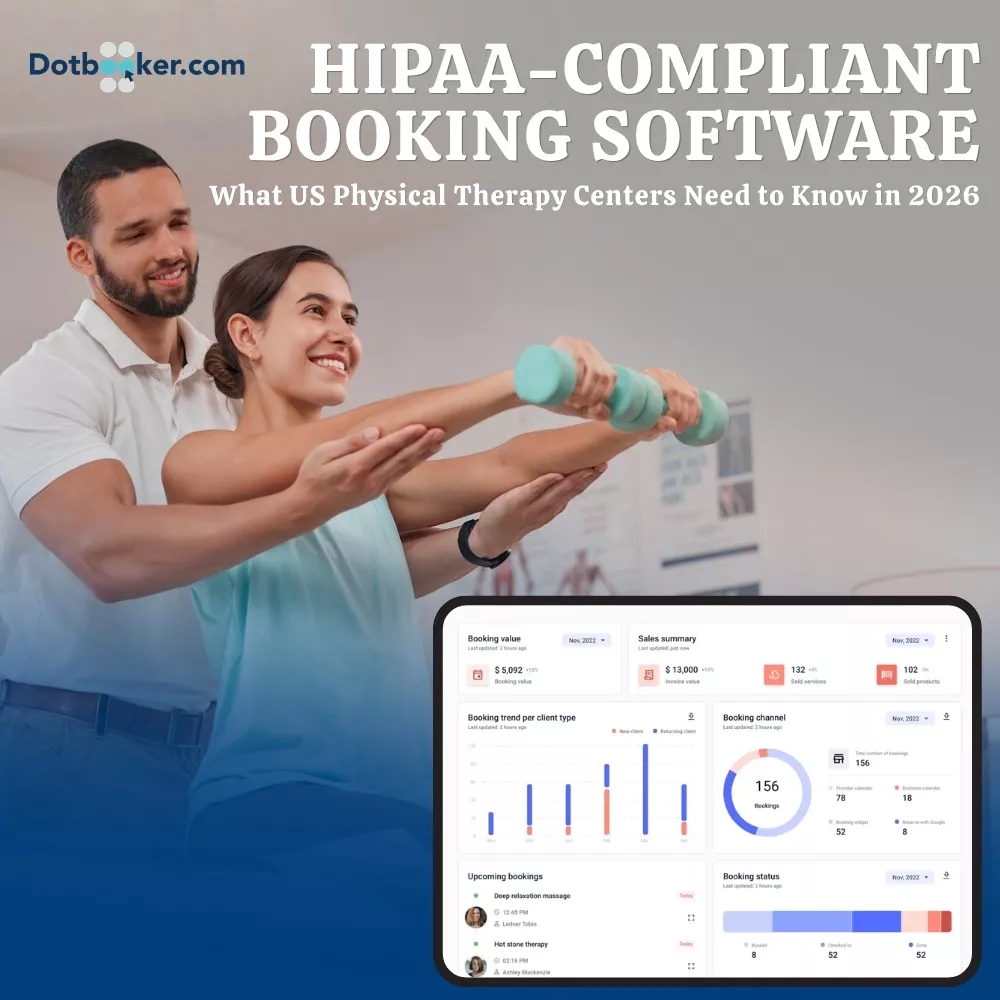
HIPAA-Compliant Booking Software: What US Physical Therapy Centers Need to Know in 2026
The Normal-Looking Appointment. It began like every other day, until it wasn't.
Sarah, a patient, made an online appointment for her physical therapy session. Insurance information, knee discomfort, and post-surgery rehabilitation were all properly completed. After selecting "Confirm Appointment," she continued with her day.
The clinic's receptionist saw the reservation appear right away. Easy. Quick. Practical.
Sarah called back three days later, although it had nothing to do with her knee.
"Why did I get a random email with the details of someone else's appointment?"
Quiet.
It turned out that there was a minor issue with the clinic's scheduling system. Not damaged. Not sluggish. Simply said, not safe.
And that one “small flaw” was enough to turn a routine booking into a HIPAA violation.
This is the reality many clinics are quietly facing in 2026.
Why HIPAA Compliant Booking Software Is Essential for Physical Therapy Appointment Scheduling
There was a time when booking systems were simple.
- A calendar on the wall.
- A phone call during lunch hours.
- Maybe a notebook with scribbled names and “Rescheduled???” written three times in panic.
You deleted anything that went wrong. Or acted as though it had never occurred.
Right now? Data is scheduling. Not the innocuous sort, either.
When a patient makes a reservation through your system, they do more than simply select a time period. Quietly, they are giving up fragments of their lives.
- Their health condition
- Contact details
- Treatment history
- Insurance information
Sometimes even more than they realize.
Think about it. A simple note like “post-ACL recovery” or “chronic lower back pain” is not just context. It is deeply personal medical information.
And here is where things get serious.
The moment this data enters your system, it becomes protected under the Health Insurance Portability and Accountability Act.
Which means your scheduling tool is no longer just for managing time. It is handling responsibility.
It is decided:
- Who can see this data?
- Where it is stored
- How it moves
- And what happens if something goes wrong
So when someone says, “It’s just a booking system,” that is like calling a vault “just a box with a door.”
Technically correct. Completely misleading.
Why Even Small Clinics Need HIPAA Compliant Booking Software
Let’s address this one honestly, because almost every clinic has thought about this at some point.
“We’re not a big hospital. Why would anyone bother with us?”
Fair question. Slightly dangerous answer.
Because smaller clinics are easier targets.
Not because they are careless, but because they are busy.
Between managing patients, handling walk-ins, dealing with cancellations, and chasing insurance approvals, security often becomes… something to “look into later.”
And that is where the cracks begin.
You will often see patterns like:
- Using general-purpose booking tools that were never designed for healthcare
- Skipping compliance checks because the software “looked good enough.”
- Sharing login credentials because “it’s faster this way.”
- Assuming the provider automatically handles security
It is the digital version of locking your front door while leaving the side window open because “no one will check there.”
And here is the uncomfortable truth.
Hackers are not always chasing the biggest clinics. They are scanning for the easiest ones.
No headlines. No drama. Just quiet access.
Key Features Every Physical Therapy Appointment Scheduling System Must Have
Let’s move past the marketing phrases for a moment.
- “Secure.”
- “Protected.”
- “Advanced.”
They sound good. They also mean very little unless backed by actual behavior.
HIPAA-compliant booking software is not what it claims to be. It is about what it does, consistently, in the background.
How HIPAA Compliant Booking Software Protects Patient Data
Not just stored. Not just hidden behind a password.
Data is encrypted while being sent, stored, and accessed. So even if someone intercepts it, all they see is unreadable noise.
Role-Based Access in HIPAA Compliant Booking Software for Clinics
In a real clinic, not everyone needs access to everything.
- A receptionist needs appointment visibility.
- A therapist needs treatment details.
- A billing executive needs payment information.
A good system respects these boundaries without you having to manage chaos manually.
Why Audit Trails Matter in Physical Therapy Appointment Scheduling Systems
Every action is recorded.
- Who accessed a record?
- Who edited it
- When it happened
So if something feels off, you are not guessing. You are tracing.
Secure Access Controls in HIPAA Compliant Booking Software
Strong authentication, session control, and login monitoring are built in.
No more “I forgot who logged in last” situations.
Why Business Associate Agreements Matter in HIPAA Compliant Booking Software
A serious provider will offer a Business Associate Agreement.
If they hesitate, that tells you everything you need to know.
How Secure Physical Therapy Appointment Scheduling Builds Patient Confidence
Here is something interesting.
Patients rarely ask about compliance.
No one walks into a clinic and says, “Before we begin, can you confirm your scheduling system meets regulatory standards?”
But they assume it does.
Trust in healthcare works quietly.
Patients trust that:
- Their data is safe
- Their condition is private.
- Their story stays within the clinic.
They do not double-check. They believe.
And that belief is fragile.
- A delayed session? Annoying, but manageable.
- A billing error? Frustrating, but fixable.
- A data leak? That changes how they see your clinic entirely.
Because suddenly, it is not about therapy anymore. It is about safety.
Common Mistakes in Physical Therapy Appointment Scheduling That Risk HIPAA Violations
This is where things get a bit uncomfortable.
Not because clinics are doing anything wrong on purpose, but because the mistakes do not feel like mistakes.
They feel normal.
Like:
- Using a popular booking tool because “everyone else uses it.”
- Sending appointment confirmations with too much detail because “it helps the patient remember.”
- Maintaining shared spreadsheets because “it’s quick and easy.”
- Not checking where data is stored because “the software handles that.”
None of these feels risky on the surface.
They are convenient. Familiar. Fast.
But compliance does not measure intent. It measures exposure.
And these small habits quietly increase it over time.
Why Clinics Must Rethink HIPAA Compliant Booking Software Adoption
Switching to HIPAA-compliant booking software is not just a technical shift.
It is a perspective shift.
From: “Let’s make booking easier.”
To: “Let’s make booking safe, simple, and reliable.”
And here is the surprising part.
When clinics start thinking this way, things actually become smoother.
- Less confusion at the front desk
- Fewer scheduling overlaps
- Clearer communication with patients
- More structured workflows
It is like organizing your workspace.
At first, it feels like extra effort. Then suddenly, everything takes less time.
Doing things properly has a strange way of making life easier.
How to Select the Best HIPAA Compliant Booking Software for Your Clinic
Choosing the right system does not require a technical background.
It requires asking better questions.
Not: “Does this look good?”
But: “Does this actually protect us?”
Ask things like:
- Will they sign a Business Associate Agreement?
- Can access be controlled for different roles?
- How exactly is data protected, not just stored?
- What happens if there is a breach?
- Can this system grow with the clinic over time?
If the answers sound unclear, overly complicated, or avoided altogether, that is a signal.
Good systems are transparent. Not mysterious.
If you’ve ever dealt with double bookings or missed appointments, you’ll relate to how automated booking systems reduce errors and chaos by replacing manual scheduling with structured, real-time systems that keep everything in sync.
Hidden Risks of Non-Compliant Physical Therapy Appointment Scheduling Systems
No one plans for a compliance issue.
No calendar reminder says, “Possible data breach today at 3 PM.”
Most issues start quietly.
- A shortcut here
- A small assumption there
- A decision to “fix it later.”
“We’ll handle it next quarter.” “It’s working fine for now.” “It probably won’t happen to us.”
Until one day, it does.
And suddenly, the problem is no longer small.
The Future of HIPAA Compliant Booking Software in Physical Therapy
The future of physical therapy appointment scheduling is becoming smarter, faster, and more connected.
We are seeing:
- Scheduling systems that learn therapist availability patterns
- Automated reminders that actually reduce no-shows
- Platforms that connect bookings, billing, and patient records in one place
But here is the important part.
None of these features matters if the base is not secure.
You cannot build something reliable on something fragile.
Security is not an extra feature. It is the starting point.
Rethinking Physical Therapy Appointment Scheduling with Security First
Instead of asking: “Is this software good enough?”
Ask: “Would I feel comfortable putting my own medical history into this system?”
That question removes all confusion.
Because when it becomes personal, the answer becomes clear.
Why Choosing the Right HIPAA Compliant Booking Software Matters More Than Ever
Choosing the right HIPAA-compliant booking software is not just about ticking a compliance box. It is about protecting every patient interaction before it even begins.
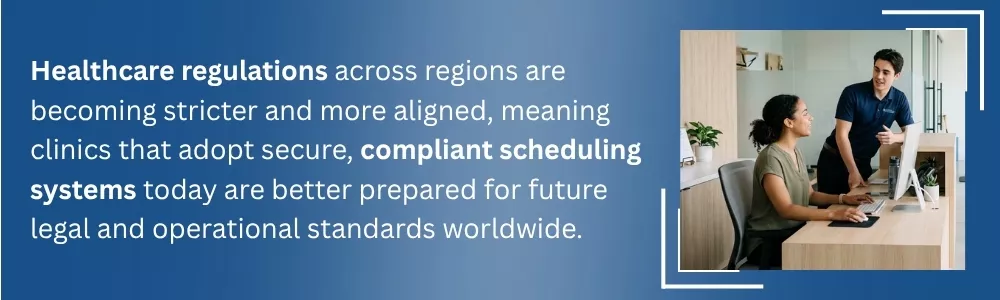
For physical therapy centers that want a system that handles scheduling, client data, payments, and communication in one place, platforms like Dotbooker are becoming part of that shift. Especially for clinics managing multiple services, memberships, or recurring sessions, having a structured, secure setup can make a noticeable difference in both operations and patient confidence.
Because in the end, the safest booking system is not the one you think about after a problem.
It is the one that quietly prevents it from happening in the first place.
Popular Blogs

- Oct 20, 2022
- 6136
- Sep 08, 2024
- 5623

- Nov 11, 2022
- 5002

- Oct 13, 2025
- 4049
Ready to Transform
Your Business?

Get expert guidance to streamline your business operations.