
Fitness Membership Management: How Flexible Fitness Packages Support Members?

A fitness member can be committed to a studio without having the same routine every week.
One week may be full of classes. The next may be affected by work, travel or family plans. A holiday can change the following week, and a busy period may mean the member attends only once before returning to a normal routine.
For fitness businesses in Cayman, this is a practical reality. Gyms, Pilates studios, yoga studios, cycling businesses and other fitness centers serve customers with different schedules and different reasons for choosing a package.
The challenge is finding a balance between member flexibility and business control.
A package should give customers room to use their membership around real life, while the business still needs clear rules for validity, class access, advance booking, cancellations, freezes and package changes.
This is where fitness membership management becomes more than keeping a record of who has paid. It can help connect memberships, packages, bookings and class access so the business can offer flexibility without creating confusion for staff.
Members Don't Use Every Week the Same Way
A member who attends three classes this week may attend only one next week. That does not necessarily mean they are less interested in the studio.
Their schedule may have changed. For example, a Cayman resident may have a normal weekday routine but travel for work during the following week. Another member may have more free time on weekends. A third may attend regularly but reduce their visits during a holiday period.
Fitness businesses need to account for these differences because a package that works perfectly for one customer may not suit another. A gym membership software solution can help businesses manage different membership types, access levels and package arrangements while keeping member information organized.
A fitness platform supports membership options such as class-specific subscriptions, unrestricted monthly access and premium services. It also supports class scheduling, online booking, and membership management.
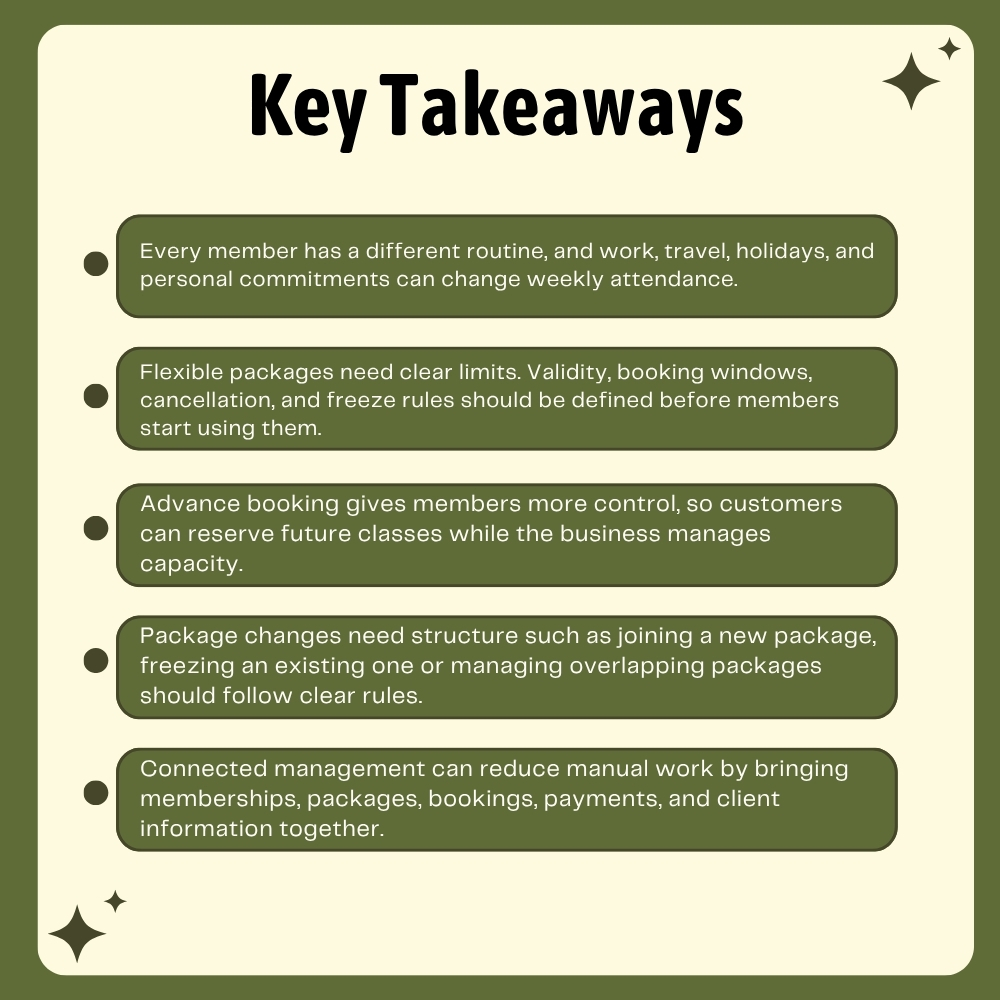
The goal is not to make every membership completely different. It is to give customers appropriate choices while keeping the business rules clear.Key Takeaways
5 Benefits of Fitness Package Flexibility
Flexible packages can benefit both the customer and the fitness business when they are managed with clear rules.
1. Members Can Adapt to Changing Schedules
Customers do not need to follow an identical weekly routine. A flexible package can make it easier to use classes around work, travel and personal commitments.
2. Members Can Plan Future Classes
When advance booking is available, members can reserve suitable classes before their schedules become busy. This can make it easier to turn occasional attendance into a more regular routine.
3. Businesses Can Offer More Suitable Packages
Not every customer needs unlimited access. Some may prefer a fixed number of classes, while others may want broader access. Flexible package structures allow a business to offer different options.
4. Staff Get Clearer Package Information
When package validity, credits and usage are managed in one place, staff can answer questions without manually checking several records.
5. Businesses Can Manage Capacity More Clearly
Flexibility does not have to mean unlimited access. Booking windows, class capacity and package rules can still control how and when members reserve sessions.
Package Master supports tailor-made packages with validity based on specific dates or time periods, as well as limited or unlimited credit options.
Give Members Visibility Into What They Can Use
Flexibility starts with knowing what a member has access to. A fitness package may include a fixed number of sessions, selected classes, or access for a specific period. Members should be able to understand how many sessions they have, which classes they can book and when their package expires.
This is where fitness package management becomes useful.
Imagine a member having a 10-class Pilates package. They have used six sessions and have four remaining. If members can clearly see that information, planning the next few classes becomes much easier.
For staff, the same information can prevent unnecessary manual checking.
Package Management supports customized membership plans, usage tracking, renewals, benefits and connections between memberships, bookings, payments and client records.
The goal is simple: the member should know what they can use, and the business should know what the member has available.
Advance Booking Helps Members Build a Routine
Flexibility does not mean waiting until the last minute to book. Members can still benefit from planning ahead.
A member might know that next week will be busy, so they reserve two early-morning classes now. Another member may know they are free on Saturday and Sunday and book both sessions in advance. An advance booking system can make this possible within the rules set by the business.
For example:Membership → Available classes → Advance booking → Attendance → Next booking
Members get more control over their week, while the business gets a clearer view of upcoming demand.
A membership booking system can connect member eligibility with class availability, allowing businesses to control which sessions members can book and how far ahead they can make reservations. For Cayman fitness businesses with popular classes or limited equipment, this can also help prevent unnecessary booking confusion.
What Happens When Someone Buys Another Package Before the Current One Ends?
Package transitions can become confusing when members purchase a new package before the current one has ended. A clear system should define what happens next.
Joining Packages
A business may allow a member to purchase a new package while the current package is still active, with the new package beginning after the existing one ends.
For example:
Current Package: Ends October 31
New Package: Starts November 1
Members can secure their next package without creating confusion about which package is currently being used. This is particularly useful for members who already know they want to continue.
Overlapping Packages
Some businesses may also allow members to pause an existing package while starting another, depending on their membership rules.
For example, a member may freeze their current package because of travel and later activate another package under the studio's membership rules.
The important part is that these situations should not require staff to manually calculate dates every time. A fitness package management process can help the business apply defined rules to joining, freezing and package transitions.
Membership Flexibility Still Needs Clear Rules
A flexible membership works best when everyone understands the boundaries. Before introducing flexible packages, a fitness business should decide how its booking and membership rules will work.
How Far Ahead Can Members Book?
A studio might allow members to book seven days ahead, while another may open its calendar several weeks in advance. The right booking period depends on class demand, capacity and the type of membership.
What Happens When a Member Cancels?
Cancellation rules should explain when a booking can be cancelled and whether the member gets the class credit back. This is particularly important for limited-capacity classes.
Can Members Freeze Their Packages?
Travel or temporary changes in schedule may make a package freeze useful. The business should define when a freeze is allowed, how long it can last, and how it affects package validity.
How Long Is a Package Valid?
A package may include 10 sessions but still has a defined expiry date. Members should know when they need to use their remaining sessions.
Which Classes Are Included?
Membership may include regular yoga classes but not personal training or specialty sessions. These access differences should be clear during booking.
A membership booking system can help apply these rules while giving members a simpler way to view available classes.

What Should Fitness Businesses Review Before Offering Flexible Packages?
Before changing membership rules, owners should review a few key areas.
First, check whether the package structure is easy for customers to understand. If customers cannot quickly tell what they have purchased, flexibility can create more questions rather than fewer.
Next, define package validity and booking windows. Members should know when they can book and when their package expires.
Cancellation and freeze rules should also be clear. This protects both the customer and the business when plans change.
Finally, decide how new packages work when an existing package is still active. A clear joining or overlap rule can prevent confusion for staff.
These details form the practical side of fitness package management. The software can help administer those rules, but the business still needs to define them first.
From Membership Purchase to Flexible Participation
The member journey does not end when the payment is completed. A more connected journey can look like this:
Membership Purchased
The member selects a suitable plan.
↓
Package Access
Members can see included classes and available sessions.
↓
Advance Booking
The member reserves future classes within the booking rules.
↓
Attendance
The member attends and uses the relevant session or credit.
↓
Package Update
The remaining package balance is updated.
↓
Next Booking
The member selects another class based on their schedule.
This is where gym membership software and a membership booking system can work together to support both the customer and the business. Members get visibility while businesses gets control.
Give Members Flexibility Without Losing Structure
A fitness membership does not have to look the same every week to remain valuable.
Members travel. Work schedules change. Holidays happen. Personal commitments come up. A member may attend three classes one week and one next. The better approach is to give members room to adapt while keeping the rules clear.
Fitness membership management can bring memberships, packages, bookings, payments and client information together. Gym membership software can help manage different plans and member access.
Fitness package management can organize package usage, validity and transitions. A membership booking system can connect those packages with future class reservations, while class package software can help manage session-based access.
For Cayman gyms, Pilates studios, yoga businesses, cycling studios and fitness centers, flexibility does not mean losing control. It can mean giving members a better way to fit your services into their real schedules.
Dotbooker supports memberships, packages, advance booking, class calendars, client management, payments and reporting for fitness businesses.