- By Dotbooker
- Apr 03, 2026
- 1426
Dynamic Pricing for Services: Using Demand-Based Rates to Fill Your Empty Slots
Walk into any service business during a slow afternoon, and you will notice something familiar. Chairs are empty. Appointment slots remain open. Staff members wait for the next booking to appear.
For many service businesses, these quiet hours are not just a scheduling inconvenience. They represent lost revenue that can never be recovered. A salon chair that remains empty for one hour cannot be sold again later in the day. The same applies to a yoga class, a therapy session, or a personal training appointment.
This is where Dynamic Pricing begins to change the way service businesses operate. Instead of treating every hour of the day the same, businesses can adjust rates based on demand. Busy hours maintain premium pricing, while slower periods offer attractive rates that encourage customers to book.
When paired with smart Appointment Scheduling, thoughtful Revenue Management, and a clear focus on Business Optimization, demand-based pricing becomes a powerful strategy for filling empty slots while protecting Profit Margins.
This approach is increasingly popular among service businesses across the United States, Canada, and the Cayman Islands, where competition is strong and efficient scheduling is key to profitability.
Let us explore how demand-based pricing works and why it is becoming an essential strategy for modern service businesses.
Why Empty Appointment Slots Hurt Revenue Management and Profit Margins in Service Businesses
At first glance, an empty appointment slot might seem harmless. Maybe the next hour will fill. Maybe a walk-in customer will appear. Maybe tomorrow will be busier.
But service businesses rarely realize the extent of the damage these gaps quietly cause over time. Unlike physical products that can be stored and sold later, services are tied directly to time. Once that hour passes, the opportunity to generate revenue from it disappears permanently.
Consider how this works in practice. A salon chair that remains unused for an hour does not simply represent a missed haircut. It represents idle staff time, unused equipment, and unpaid operational costs. Rent, utilities, wages, and marketing expenses continue to accumulate whether that hour was productive or not.
This is why empty appointment slots gradually turn into a hidden financial drain.
Imagine a wellness clinic that charges $120 for a treatment. If three appointment slots remain unfilled each day, the business loses $360 daily. Over a month, that could easily exceed $10,000 in missed income. Over an entire year, the lost opportunity could cross six figures.
And the impact does not stop at revenue.
Unfilled slots can also affect employee morale and operational flow. Staff members who depend on appointments to stay productive may experience long idle periods followed by overwhelming rush hours. This uneven workload creates inefficiencies that make daily operations harder to manage.
From a broader perspective, these gaps weaken overall Revenue Management because the business is not fully utilizing its available capacity.
This is where proactive strategies become essential. Instead of accepting empty slots as an unavoidable part of running a service business, companies can actively encourage customers to book during quieter periods.
This is exactly the problem Dynamic Pricing is designed to address.
By adjusting prices during slower hours, businesses offer incentives that attract customers with flexible schedules. A discounted weekday afternoon appointment suddenly becomes appealing to someone working remotely, a freelancer managing their own hours, or a customer looking to save money.
This shift changes how customers think about booking. Rather than competing only for peak time appointments, clients begin exploring alternative time slots that offer better value.
Over time, this approach transforms underused hours into productive periods, contributing to steady revenue and a stronger operational balance.

Understanding Dynamic Pricing for Service Businesses and Its Role in Business Optimization
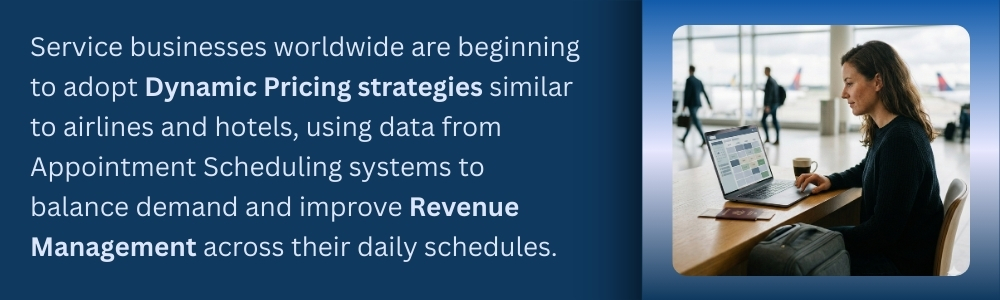
Many people associate Dynamic Pricing with airline tickets or hotel bookings where prices fluctuate based on demand, availability, and travel dates.
However, the same concept applies perfectly to service businesses.
Every appointment-based business operates with a limited inventory of time. A personal trainer has only so many hours in a day. A spa has a fixed number of treatment rooms. A salon has a limited number of chairs.
Because time is the core resource, pricing strategies should reflect how it is used.
Instead of offering a single fixed price throughout the week, Dynamic Pricing allows businesses to adjust rates based on demand patterns.
Busy evenings or weekends may carry premium pricing due to high demand. Midday or midweek appointments may offer better value to encourage bookings during slower hours.
This approach recognizes a simple reality. Customer schedules are not identical.
Some clients prefer evening appointments after work. Others may be able to visit during the afternoon. Some customers prioritize convenience while others prioritize affordability.
When businesses acknowledge these differences, they can balance demand across their entire schedule rather than concentrating all bookings into the same peak hours.
This leads to stronger Business Optimization because staff time, treatment rooms, and service capacity are used more evenly throughout the day.
How Dynamic Pricing Improves Revenue Management and Increases Profit Margins
When service businesses begin implementing Dynamic Pricing, one of the first benefits they notice is improved Revenue Management.
Instead of focusing solely on raising prices, businesses start to maximize the use of their available time slots.
Take the example of a fitness studio that offers multiple classes throughout the day.
The 6 PM class might always sell out because it fits perfectly into people’s after-work routine. Meanwhile, the 2 PM class may consistently struggle to attract participants.
Without pricing adjustments, this imbalance continues indefinitely. The evening classes remain crowded while the afternoon sessions remain underutilized.
Demand-based pricing changes this dynamic.
Peak classes continue at standard rates. Off-peak classes receive small price incentives that attract a different customer segment.
Students, freelancers, remote workers, and individuals with flexible schedules may find these sessions much more appealing.
The result is a healthier distribution of bookings across the entire schedule.
The class that once struggled to fill now attracts steady attendance. The instructor’s time is used more effectively. The studio generates revenue from sessions that were previously half-empty.
Over weeks and months, this approach improves Profit Margins because more available hours generate income.
The Role of Appointment Scheduling Systems in Implementing Dynamic Pricing Strategies
Managing Dynamic Pricing manually would quickly become overwhelming for most businesses. Monitoring demand patterns, adjusting prices daily, and communicating those changes to customers requires significant effort.
This is where modern Appointment Scheduling platforms make a meaningful difference.
Advanced scheduling systems allow businesses to automate demand-based pricing rules that adjust based on availability and booking patterns.
For example, the system can automatically apply:
- Lower pricing for midweek afternoon appointments
- Slightly higher rates for peak evening hours
- Discounted rates for last-minute openings caused by cancellations
- Special promotions for historically slow days
These automated rules ensure that Dynamic Pricing becomes a seamless part of daily operations rather than an additional administrative burden.
Customers benefit as well. When browsing available time slots online, they can instantly see which appointments offer better value. Many customers willingly select those options, helping businesses fill gaps without requiring additional marketing.
This combination of automation and visibility supports stronger Business Optimization while keeping schedules consistently active.
Industries Where Dynamic Pricing and Appointment Scheduling Drive Business Optimization
Although Dynamic Pricing originated in industries like aviation and hospitality, it translates extremely well to service-based businesses that rely on scheduled appointments.
Fitness studios, for example, often experience predictable demand patterns. Early morning and evening classes attract the most participants, while midday sessions struggle to maintain attendance. Adjusting pricing across these time slots encourages a more balanced class schedule.
Salons and spas face similar challenges. Weekend appointments tend to fill quickly, while weekday slots remain open longer. Demand-based pricing can shift some of that demand toward quieter days.
Massage therapists, physiotherapists, and wellness clinics also benefit because their schedules depend entirely on booked sessions. Filling unused hours directly contributes to improved Profit Margins.
Consultants, tutors, and coaches can also offer flexible pricing to encourage bookings during slower periods while maintaining premium rates for high-demand hours.
Across all these industries, combining Dynamic Pricing with reliable Appointment Scheduling systems creates a powerful strategy for steady growth.
Why Customers Appreciate Dynamic Pricing in Modern Appointment Scheduling Services
One of the most interesting outcomes of Dynamic Pricing is that many customers respond positively to it.
When pricing reflects demand patterns, customers feel they have options. They can choose convenience by booking peak time slots or value by selecting quieter hours.
This flexibility gives customers a sense of control over their spending.
Transparency also plays a major role. When customers understand why certain time slots are priced differently, the system feels fair and logical.
Over time, many customers begin adjusting their booking habits accordingly. Someone who previously insisted on weekend appointments may start exploring weekday options if they notice meaningful savings.
From a business standpoint, this shift supports stronger Revenue Management because demand spreads more evenly across the week.
Using Data and Analytics to Improve Business Optimization with Dynamic Pricing
Successful Dynamic Pricing strategies rely on understanding booking patterns and customer behavior.
Data reveals valuable insights about how demand changes throughout the week, month, and year.
Businesses may discover that certain services are extremely popular on specific days. Others may see seasonal patterns where demand increases during certain months.
Advanced Appointment Scheduling platforms often provide detailed analytics dashboards that track booking performance, cancellation patterns, and customer preferences.
These insights allow businesses to refine their pricing strategies over time.
Instead of guessing when to offer promotions, businesses can rely on real booking trends to guide their decisions.
This data-driven approach strengthens Business Optimization while supporting healthier Profit Margins.
Many service businesses are also exploring how automated scheduling technology improves bookings and reduces operational errors. If you want to see how scheduling tools can directly impact revenue and client experience, read this detailed guide on automated booking systems that reduce human error and boost studio revenue.
How Dynamic Pricing Helps Fill Empty Slots While Protecting Profit Margins
Many business owners hesitate to introduce flexible pricing because they worry it might lower the perceived value of their services.
However, Dynamic Pricing is not about reducing prices across the board.
The goal is to maintain strong pricing during peak demand while encouraging bookings during quieter hours.
An empty appointment slot generates no revenue. Even a slightly discounted appointment helps cover operating costs and staff wages.
When more time slots are filled throughout the week, overall Profit Margins improve because fixed expenses are spread across a larger number of bookings.
This balance is what makes demand-based pricing such an effective Revenue Management strategy.
Turning Dynamic Pricing into a Sustainable Revenue Management and Business Optimization Strategy
Businesses that adopt Dynamic Pricing often find that it becomes part of a broader growth strategy rather than a short-term fix.
Once scheduling becomes more balanced, businesses can further expand their pricing models. Loyalty programs, membership packages, and bundled services can all complement demand-based pricing.
For example, members might receive exclusive access to discounted off-peak appointments. Package holders may enjoy special pricing during slower periods.
These strategies encourage repeat visits while keeping schedules consistently active.
When combined with intelligent Appointment Scheduling, strong Revenue Management, and ongoing data analysis, demand-based pricing becomes a central pillar of Business Optimization, supporting sustainable growth.
Maximizing Every Booking with Smart Appointment Scheduling and Dynamic Pricing Tools
For service businesses, time is the most valuable asset. Every hour that goes unbooked represents a lost opportunity.
By introducing Dynamic Pricing, businesses can transform slow periods into productive hours while maintaining strong Profit Margins during peak demand.
However, the real impact comes when flexible pricing is supported by modern technology.
Platforms like Dotbooker help service businesses manage bookings, automate Appointment Scheduling, and apply intelligent pricing strategies that support stronger Revenue Management.
With the right system in place, businesses can easily identify demand trends, encourage bookings during quieter hours, and create a smoother experience for customers.
Instead of watching empty slots pass by, businesses can turn those hours into steady revenue while improving overall Business Optimization.
Popular Blogs

- Oct 20, 2022
- 6170
- Sep 08, 2024
- 5652

- Nov 11, 2022
- 5030
- Oct 13, 2025
- 4081
Ready to Transform
Your Business?

Get expert guidance to streamline your business operations.