How Do Customer E-Wallet Software Encourage Repeat Appointments?
A customer finishes a message, pays, and leaves happy.
A few weeks later, they are thinking about booking it again.
What makes that second appointment easy?
The quality of the service matters most, of course. But the experience around the service matters too. If booking again is simple, payment is quick, and the customer already has credit available to use, there are fewer small barriers standing between “I should go back” and “I’ve booked.”
That is where customer e-wallet software can become useful for repeat-service businesses.
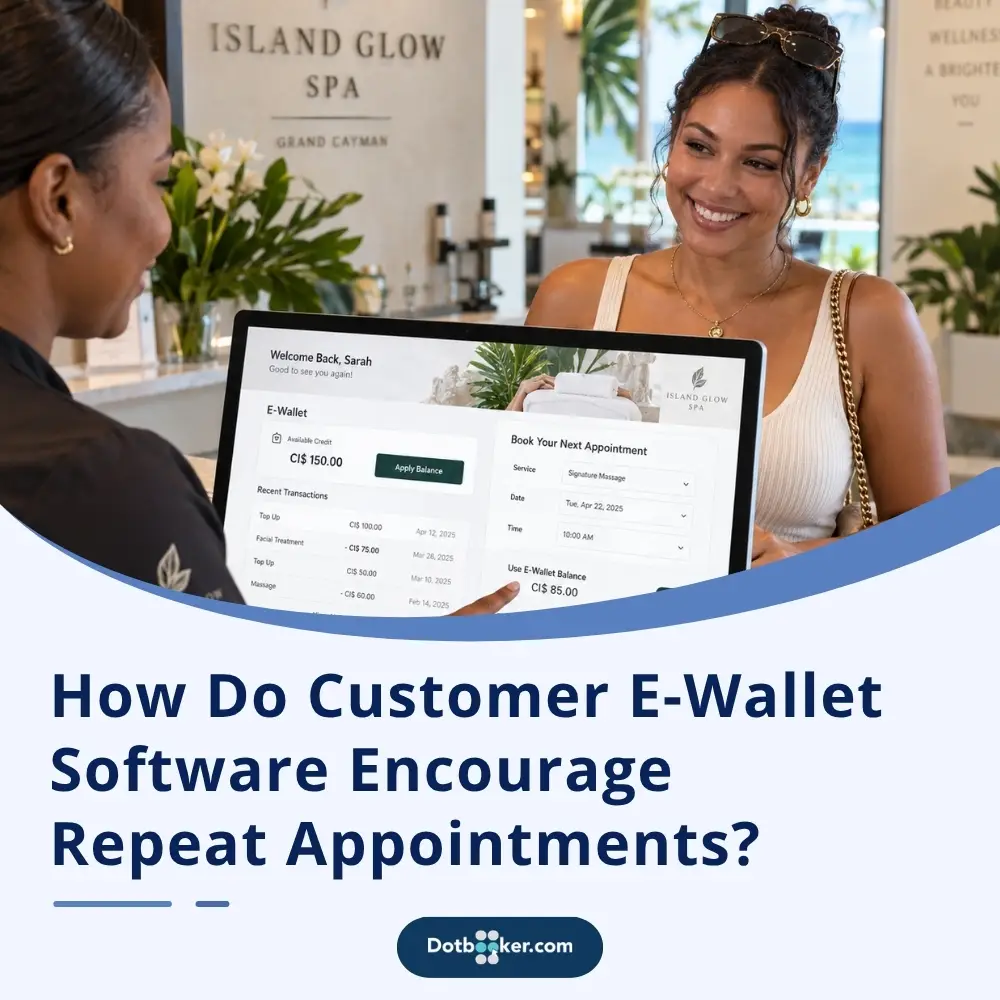
Instead of treating every appointment as a completely new transaction, an e-wallet can keep available funds within the customer's account for future use. For example, digital wallet software allows users to store funds, check balances, and make payments within the platform, helping reduce checkout friction.
For Cayman salons, spas, fitness studios and other service businesses where the same customers may return regularly, that can make payment feel like a natural part of the return journey.
What Does Customer E-Wallet Software Actually Do?
An e-wallet in a service business is easier to understand if we look at it from the customer's perspective. Suppose a customer has money available in their wallet account.
When they return for another eligible purchase or appointment, they can use that available balance rather than starting the payment process from scratch. A customer's wallet system therefore gives customers a place to manage available funds associated with the business.
E-wallet functionality is designed to let users store funds, make payments directly within the platform, and check their balances. Its e-wallet also describes real-time balance and financial activity tracking. So, the value of digital wallet software is not simply that money becomes digital.
The bigger question is: What happens when the customer wants to come back?
That is where stored value can become interesting for retention.
Stored Credit Gives Customers Something to Come Back and Use
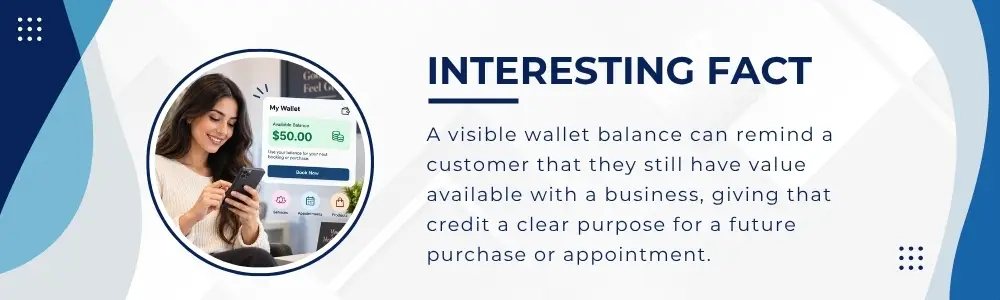
Imagine a customer has CI$35 remaining in their wallet after previous transactions. A few weeks later, they are thinking about another salon or wellness appointment.
Seeing:
Available Balance: CI$35
can give them a practical reason to use that value toward their next eligible purchase. The wallet does not create loyalty on its own. Customers still need good service experience.
But a customer's wallet system can reduce one small barrier to returning because part of the customer's spending value is already available. This is particularly relevant for services people use repeatedly, such as:
- Hair and beauty appointments
- Massage and spa treatments
- Fitness sessions
- Wellness services
- Regular personal-care appointments
For these businesses, prepaid wallet software can help carry customer value from one visit to another.
Faster Payment Can Make the Return Experience Better
Getting customers to return is not only about the appointment itself.
The experience before and after it matters too.
Consider a customer who has just finished treatment. If checkout involves finding a payment method, waiting for staff and completing several steps, the visit ends with unnecessary friction.
Now compare that with having available wallet funds ready to use.
A digital payment solution connected to an e-wallet can make payment simpler because the customer can use funds already associated with their account.
Dotbooker's e-Wallet functionality supports payments within the platform and is designed to reduce checkout friction.
That matters because the final part of the visit should feel as convenient as the booking itself.
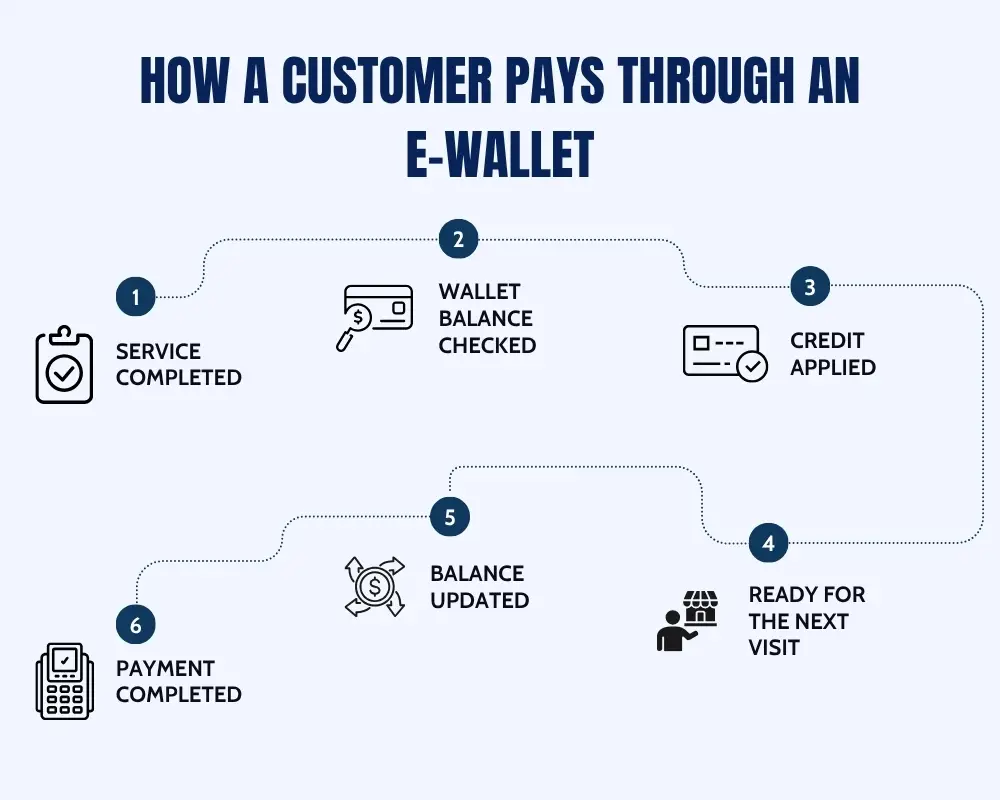
From Service to Payment
A simple experience might look like:
Appointment completed → Wallet balance checked → Available credit used → Payment completed
For the customer, fewer unnecessary payment steps can create a smoother checkout.
For the business, the customer e-wallet software keeps the transaction connected to the customer's account.
What About Prepaid Credit in Digital Wallet System?
Prepaid value can make the relationship even more connected. A customer might add funds that can later be used toward eligible purchases or services.
With prepaid wallet software, those funds remain available in the customer's account until they are used according to the business's applicable rules.
That can be useful for customers who already expect to return. Instead of thinking about each visit as an isolated payment, they have a balance available for future use. This can be particularly relevant for businesses with frequent repeat visits.
For a Salon: A regular client may know they will need another service in several weeks.
For a Spa or Wellness Business: A customer may want to return for another treatment without repeating the entire payment experience.
For a Fitness Studio: A customer may make multiple service or class-related purchases over time.
In these scenarios, a customer wallet system can make available value easier to carry from one interaction to the next.
Packages, Promotions and Wallet Value Should Be Easy to Understand
A customer should never have to guess what value they have available.
Imagine seeing: Wallet Balance: CI$45
That is much clearer than remembering an old receipt, promotion, or conversation at the front desk. This is another area where digital wallet software can improve the experience.
E-Wallet features include balance management and real-time monitoring of wallet activity. Its broader platform also includes package functionality and loyalty/rewards features.
However, businesses still need clear policies around how different forms of value can be used. A prepaid wallet of software balance, package entitlement, promotional credit and loyalty reward are not automatically the same thing.
Customer experience is strongest when people can clearly understand what is available and how it applies.
Why Should the Wallet Be Connected to the Customer?
A wallet is more useful when the business knows whose wallet it is and how that customer interacts with the business. Suppose a regular spa customer has:
Previous appointments + customer information + available wallet value + an upcoming booking
Those pieces tell a more complete story than a payment record by itself. This is where a customer wallet system and client management can complement each other.
Client Management to keep client information, preferences and history organized, while its e-Wallet feature supports balance management and transactions. For a repeat-service business, this means the customer does not have to feel like a completely new transaction every time they return. That continuity can support a more familiar experience.
Where Does Digital Wallet Software Fit in Cayman Service Businesses?
The strongest use case is not necessarily a one-time customer. It is the person who has a reason to come back. Think about a Cayman resident who gets a haircut every few weeks.
A customer who regularly books messages.
Someone attending recurring fitness or wellness sessions.
A beauty client who uses several services throughout the year.
These businesses naturally have opportunities for repeating appointments.
Digital wallet software fits into that pattern because customers may be paying for the same business repeatedly. A digital payment solution can make those repeated transactions easier, while prepaid wallet software can keep available customer value ready for future use.
The wallet therefore does not need to become the reason someone chooses the business. Instead, it can make existing customer relationships easier to continue.
What Makes a Customer Wallet Experience Actually Useful?
Adding a wallet is not enough. Customers should be able to understand it easily. A useful wallet experience should make four things clear:
1. Available Balance: Customers should be able to see how much value they have.
2. Where It Can Be Used: They should understand which eligible purchases or transactions can use that balance.
3. What Happens After Payment: If only part of the balance is used, the remaining amount should be clear.
4. What Happens When the Balance Is Not Enough: Customers should understand how the remaining payment can be completed.
These details matter because customer e-wallet software should reduce friction rather than create new questions. The same principle applies to digital wallet software and any digital payment solution: the technology is useful when the customer experience feels simpler because of it.
How Does Customer E-Wallet Software Encourage Repeat Appointments?
The answer is not that an e-wallet forces customers to return. It makes the return experience more convenient.
A customer who enjoyed their first appointment may already want another. If they also have available value with the business, that balance can make the next transaction feel easier.
A customer wallet system keeps that value visible.
Prepaid wallet software can make funds available for future eligible transactions.
A digital payment solution can reduce friction when it is time to pay.
And when these functions sit alongside customer and book information, the experience can feel more connected from one visit to the next.
For Cayman service businesses, that matters because retention is often built through small, consistently good experiences not one dramatic feature.
Make It Easier for a Good Customer to Come Back
A salon cannot create repeat customers with a wallet alone. Neither a spa, fitness studio or wellness business.
Customers return because they value the service.
But once they want to return, customer e-wallet software can make part of that journey easier.
Available balances can carry value forward. Digital wallet software can make those funds easier to access. A customer wallet system keeps the balance associated with the customer, while a digital payment solution can help make checkout quicker and more convenient.
That is where an e-wallet becomes more than a payment feature.
It becomes part of the repeat-customer experience.
Dotbooker brings e-Wallet functionality together with online payments, client management and booking tools, giving Cayman service businesses a more connected way to manage customer interactions and transactions.