- By Dotbooker
- Apr 10, 2026
- 728
The 3-Click Checkout: Reducing Front-Desk Friction During Peak Service Hours
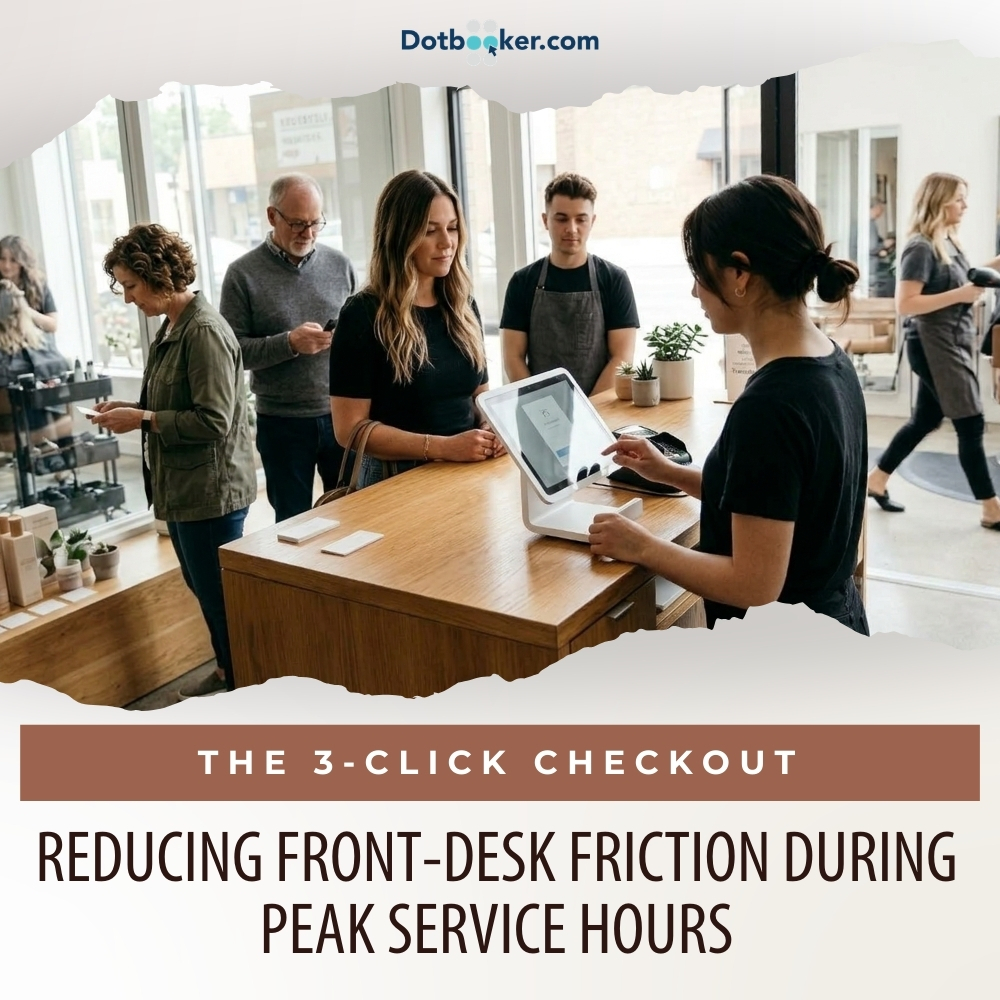
Picture a busy evening at a wellness studio or salon. Clients are finishing services, new appointments are arriving, and the front desk suddenly becomes the busiest corner of the business. Staff are answering questions, processing payments, checking bookings, and managing product sales simultaneously. In those few minutes, the entire atmosphere of the business depends on how quickly and smoothly the checkout process moves.
When the checkout system slows down, the front desk turns into a queue. When it works seamlessly, customers move through effortlessly and leave with a positive final impression. This is why modern service businesses are shifting their attention toward faster checkout experiences powered by smarter Point of Sale solutions.
The idea behind a three-click checkout is simple yet powerful. Reduce unnecessary steps, simplify transactions, and allow staff to complete payments almost instantly. What sounds like a small operational improvement often becomes a major upgrade in both efficiency and Customer Experience.
How Checkout Speed Shapes the Customer Experience at the Front Desk
Many businesses spend enormous effort perfecting the service itself. They train staff, refine techniques, invest in equipment, and create a relaxing environment so customers enjoy every moment of their visit. Yet the final interaction at the front desk often carries just as much emotional weight as the service that came before it.
Psychologists often talk about the “peak-end rule,” which explains that people tend to remember the most intense moment of an experience and the way it ended. In service industries such as salons, spas, wellness centers, or fitness studios, the checkout process becomes that final memory.
Imagine a client who has just completed a relaxing massage or a premium beauty treatment. They leave the treatment room feeling refreshed and satisfied. When they arrive at the front desk, they expect the process to be quick and effortless. Instead, they watch the receptionist navigate multiple screens, re-enter service details, search for the customer profile, and confirm payment options while several other clients wait behind them.
The experience slowly shifts from calm to impatient.
Customers rarely blame the staff. Instead, they associate the delay with the business itself. What should have been a seamless finish suddenly feels inconvenient. That single moment can subtly influence whether they recommend the business to others or return to it.
Businesses that actively focus on improving Customer Experience understand that checkout is not simply a financial transaction. It is the final impression that completes the entire service journey. A smooth checkout signals professionalism, organization, and respect for the customer’s time.
When the payment process takes only a few seconds, customers leave with the same positive energy they felt during the service. They are more likely to book their next appointment, recommend the business, or even purchase additional products. The difference between a slow checkout and a smooth one often determines whether the visit becomes a routine appointment or a memorable experience.
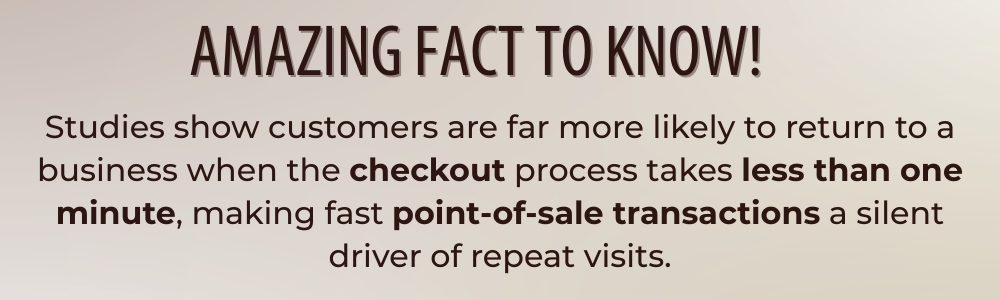
Why Peak Service Hours Reveal Weaknesses in Your Point of Sale System
Operational problems often remain hidden during quiet periods. When customer flow is light, staff have time to work through systems patiently. They can double-check information, navigate different screens, and manage tasks without feeling rushed.
However, peak service hours act like a stress test for the entire operation.
When several clients complete services at the same time, the front desk instantly becomes the busiest point in the business. Appointments overlap, customers want to purchase retail products, others want to book future sessions, and payments must be processed quickly to keep the line moving.
In these moments, the design of the Point of Sale system becomes extremely important.
If the system requires several steps to confirm a service, locate customer records, apply discounts, or process payment, the delay quickly multiplies. Each additional click adds a few seconds. Multiply that by several customers waiting in line, and the delay becomes noticeable.
Queues start forming. Staff begin to feel pressure. Customers become impatient.
Peak hours reveal whether a system is truly built for real-world service environments. Businesses that prioritize Checkout Optimization prepare for these moments by reducing unnecessary steps and ensuring the checkout workflow remains simple even when traffic increases.
A well-optimized checkout process allows the front desk to operate smoothly regardless of how busy the schedule becomes. Staff remain calm, transactions move quickly, and customers continue to feel valued even during the busiest parts of the day.
The Power of 3-Click Checkout for Better Checkout Optimization
Efficiency in service businesses often comes down to removing unnecessary friction. A three-click checkout represents a philosophy that prioritizes clarity and simplicity.
Instead of forcing employees to complete multiple steps before accepting payment, the system organizes the entire transaction into a clear, predictable flow.
The process begins with confirming the services performed during the appointment. Because the booking system is already connected to the checkout environment, the services appear automatically, eliminating the need for manual entry. This removes one of the most common sources of delay.
Next comes the payment step. Staff selects the payment method the customer chose, whether it is a credit card, contactless payment, digital wallet, or membership package. Because the system already contains customer information, there is no need to re-enter details or repeatedly verify data.
Finally, the transaction is completed, and the receipt is generated instantly.
This three-step structure removes the confusion that often surrounds traditional checkout processes. Employees know exactly what to do, and the system guides them through the transaction naturally.
A well-designed checkout optimization strategy does more than save time. It creates consistency across the team. New staff members can learn the process quickly, and experienced employees can handle large volumes of transactions without feeling overwhelmed.
The result is a front-desk environment where customers move through checkout smoothly, and staff remain confident even during busy periods.
How Smart Point of Sale Systems Improve Front Desk Efficiency
The front desk acts as the operational heartbeat of many service businesses. It connects appointments, payments, product sales, memberships, and customer records. When these elements operate independently, staff must constantly move between systems to complete even simple tasks.
This fragmentation is one of the biggest reasons checkout processes become slow.
A modern Point of Sale system solves this problem by consolidating all operational functions into a single unified platform. Instead of juggling different tools, staff can manage appointments, verify services, add retail products, and process payments from a single interface.
This integration significantly improves Front Desk Efficiency.
For example, when a customer finishes a service, the appointment details automatically appear within the checkout screen. If the customer purchased products during their visit, those items can be added instantly. The system may also display membership benefits, package balances, or loyalty points.
Instead of searching through separate records, staff see everything they need in one place.
Another advantage of smart POS systems is the reduction of mental fatigue for employees. When systems are confusing or inconsistent, staff must constantly think about which steps to follow. A streamlined system removes this uncertainty and allows employees to focus on customer interaction.
With fewer distractions and clearer workflows, the front desk operates more smoothly, and customers experience faster service.
Reducing Billing Mistakes Through Effective Checkout Optimization
In busy environments, mistakes rarely occur because the staff lacks skill. Most errors happen when employees must move quickly while handling complicated systems.
A receptionist may accidentally skip a service, forget to add a product, or overlook a membership benefit simply because they are juggling multiple tasks.
These small errors can have serious consequences. Incorrect billing may lead to customer complaints, revenue loss, or time spent later correcting records.
Effective Checkout Optimization directly addresses these issues by reducing the number of manual steps required during checkout.
When services performed during an appointment automatically appear in the checkout screen, the risk of missing information decreases significantly. Retail products can be added with simple selections or barcode scanning, eliminating manual entry.
Inventory systems can update automatically when products are sold, ensuring that stock levels remain accurate without requiring extra work from staff.
This automation improves accuracy while strengthening Front Desk Efficiency. Staff no longer need to worry about remembering every detail of the transaction because the system organizes the information for them.
By simplifying the workflow, businesses reduce errors while maintaining a faster checkout experience.
Faster Point of Sale Checkout Without Losing the Human Customer Experience
Some business owners worry that faster checkout processes might make interactions feel rushed or impersonal. In reality, efficient systems often make customer interactions more personal.
When checkout systems are slow, staff spend most of their time staring at screens and navigating menus. They may appear distracted or overwhelmed, even though they are trying to complete the transaction accurately.
Customers notice this shift in attention.
When systems are streamlined, employees can process transactions quickly and refocus on the person in front of them. They can ask about the service, recommend future treatments, or suggest products without worrying about a complicated checkout process.
A modern Point of Sale environment enables staff to balance efficiency with hospitality.
Instead of feeling pressured by long queues or slow systems, employees maintain relaxed conversations with customers while completing transactions smoothly. This combination of speed and attentiveness strengthens the overall Customer Experience.
Customers appreciate both elements. They want transactions to be fast, but they also value genuine interaction. Efficient checkout systems make it possible to deliver both simultaneously.
Businesses looking to streamline both appointments and payments often benefit from connecting booking tools with their Point of Sale system. This detailed guide to POS and booking software integration explains how unified systems simplify checkout, reduce front-desk delays, and improve the overall Customer Experience.
Why Service Businesses Are Prioritizing Checkout Optimization and Customer Experience
Customer expectations have changed dramatically in recent years. People are accustomed to instant transactions in many aspects of their daily lives. Online purchases take seconds, contactless payments complete instantly, and digital services provide immediate confirmations.
These expectations naturally carry over into physical service environments.
Customers visiting a salon, spa, or fitness studio expect the checkout process to match the efficiency they experience elsewhere. When they encounter delays, the contrast becomes noticeable.
Businesses that invest in better Checkout Optimization recognize that checkout speed directly influences customer perception.
Faster transactions reduce waiting time and create smoother transitions between appointments. Customers feel their time is respected, encouraging repeat visits.
Advanced Point of Sale systems also provide valuable insights into customer behavior. Businesses can track popular services, monitor product sales, and identify trends in purchasing patterns.
These insights allow managers to refine pricing strategies, improve retail offerings, and design better service packages.
The benefits of faster checkout, therefore, extend beyond operational efficiency. They support stronger business decisions while enhancing the overall Customer Experience.
How Better Point of Sale Systems Create Smooth Front Desk Efficiency
Peak service hours will always exist in successful service businesses. The goal is not to eliminate busy periods but to manage them effectively.
A well-designed three-click checkout system transforms how businesses handle these moments.
Instead of seeing long queues forming at the front desk, transactions move steadily, and customers continue their day without unnecessary delays. Staff remains organized, the environment feels calm, and the business maintains its professional image even during high traffic periods.
Improved Front Desk Efficiency also enables businesses to serve more clients within the same time frame. Faster checkouts reduce congestion, allowing staff to focus on assisting customers rather than managing queues.
Over time, these operational improvements contribute to a stronger reputation. Customers associate the business with reliability, convenience, and professional service.
What begins as a simple change in checkout design ultimately becomes a powerful tool for building customer loyalty and long-term growth.
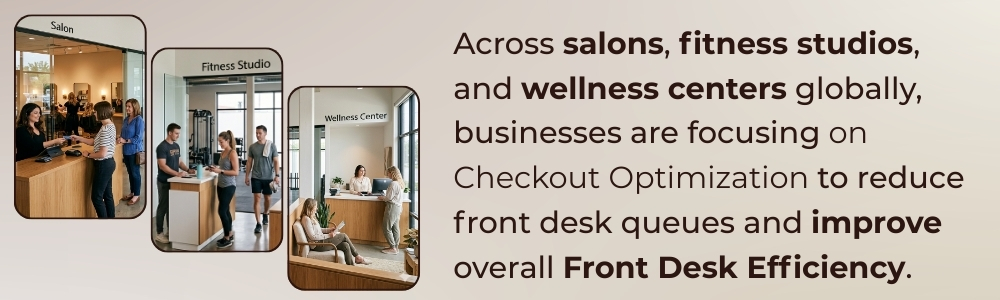
Where Smart Checkout Optimization Begins with Dotbooker
Every service journey ends at the front desk. That final interaction determines whether customers leave feeling satisfied or frustrated.
Businesses that recognize the value of seamless checkout experiences are turning to advanced systems that simplify transactions and remove operational friction.
This is where Dotbooker makes a meaningful difference. Designed specifically for service-based businesses, Dotbooker combines booking management, retail sales, memberships, and payments into one powerful Point of Sale environment.
The platform supports streamlined checkout workflows that allow staff to confirm services, select payment methods, and complete transactions in just a few clicks. This level of Checkout Optimization ensures that even during the busiest service hours, operations remain smooth and manageable.
By improving Front Desk Efficiency and streamlining the payment process, Dotbooker helps businesses deliver a more seamless Customer Experience from start to finish.
When checkout becomes effortless, customers leave with the same positive energy they felt during the service itself. And that final impression is often what brings them back again.
Popular Blogs

- Oct 20, 2022
- 6209
- Sep 08, 2024
- 5699

- Nov 11, 2022
- 5068
- Oct 13, 2025
- 4135
Ready to Transform
Your Business?

Get expert guidance to streamline your business operations.