Yoga Studio Management Software: 3 Customer Types Drop-In, Package or Member?
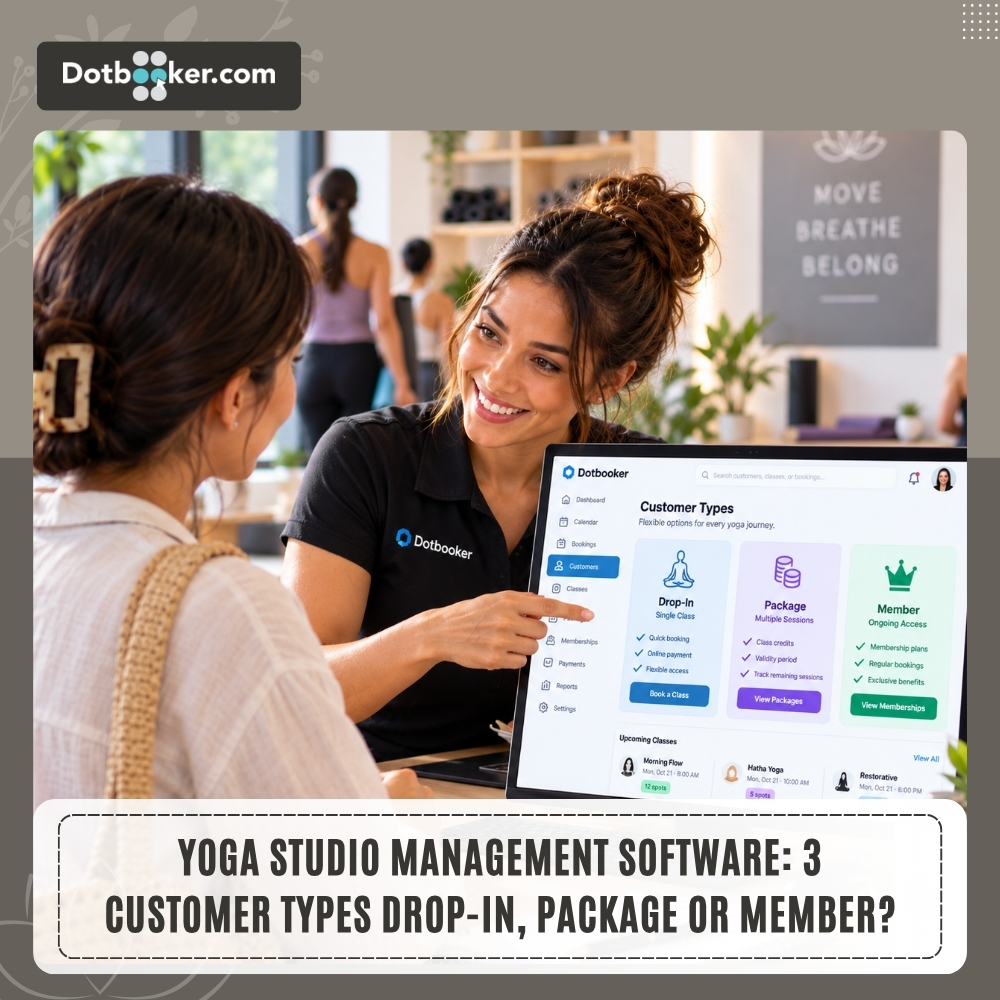
Walk into a yoga studio on a busy evening and you may see three very different types of customers.
One person has booked a single class because they are visiting Cayman for a few days. Another has purchased a five-class package and is using one of their remaining sessions. A third customer has an active membership and books classes every week.
They are all attending the same studio, but they are not using the business in the same way.
That difference matters.
A studio needs to know who can book a class, what they have purchased, how many sessions they have left, and what access their membership provides. At the same time, customers want the booking process to feel simple.
This is where yoga studio management software can bring classes, bookings, packages, memberships, and payments into one place. It can support class scheduling, instructor availability, online booking, memberships, payments, and different pricing models, including drop-in rates and class packages.
So, should a yoga studio focus on drop-ins, packages, or memberships?
The answer may be all three.
Not Every Yoga Customer Wants the Same Commitment
A yoga studio can have customers with completely different expectations.
Some want to try one class before deciding whether to return. Some already know they will attend several times but do not want a recurring membership. Others have made yoga part of their regular weekly routine and want ongoing access.
For a Cayman yoga studio, this mix can be even more noticeable. A business may serve residents, people visiting the island and customers with changing work or travel schedules.
This is why yoga booking software should not only make it possible to book a class. It should help the business manage different ways of accessing that class.
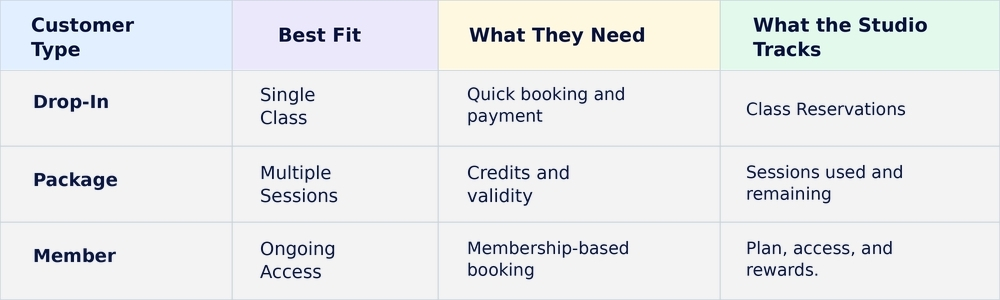
The customer sees a class on the calendar.
The business sees three different types of access behind that booking.
That is why having a clear management process matters.
Customer 1: The Drop-In Visitor
The drop-in customer is looking for flexibility. They may be trying the studio for the first time, visiting Cayman temporarily or simply unsure how often they will attend. They do not necessarily want to buy five sessions or sign up for a recurring membership.
They want to choose a class, pay for it and attend. A good yoga class booking system can make this process straightforward. The customer can find a suitable class, see availability, and complete the booking online without needing to contact the studio for every step.
This can be particularly useful for first-time customers.
Imagine someone searching for a yoga class while staying in Grand Cayman. They find a studio, look at the available classes, and see that a Saturday morning session has space.
If the studio offers a drop-in option, the customer can book that individual class without having to understand the studio's membership structure first.
When Does a Drop-In Make Sense?
Drop-ins can be useful for:
- First-time customers
- Occasional visitors
- Travelers
- Customers with unpredictable schedules
- People trying a new class
The advantage is flexibility. The customer does not have to make a long-term decision before experiencing the studio. For the business, a drop-in option can also create an entry point for someone who may later become a package customer or member.
Customer 2: The Class-Package Customer
The second customer wants more than a single class but less commitment than a recurring membership. This is where class packages come in. A studio might offer:
5 Classes
10 Classes
Or another package structure that suits its business model.
The customer purchases a set number of sessions and uses those sessions according to the package rules. This creates a different management requirement. The studio needs to know how many credits the customer has used, how many remain, and whether the package is still valid.
Session Credits
Suppose a customer purchases a five-class package. After the first booking:
5 credits → 4 credits
After the second:
4 credits → 3 credits
The customer can continue using the package until the available sessions are used according to its rules. A yoga membership software setup that also supports package information can make these details easier to manage. The customer should not have to message the studio every time they want to know how many sessions remain.
Package Validity
Credits are only one part of the picture. The package may also have a validity period. For example, a customer could purchase five classes that need to be used within a defined period.
This means the business needs to track two things:
- How many sessions remain?
- Is the package still valid?
Keeping both details connected to the customer record helps reduce confusion.
Tracking Remaining Usage
Manual tracking becomes harder as the customer base grows. Imagine staff checking spreadsheets, payment records, and messages before confirming whether someone can use a package of credit.
That is unnecessary friction.
A connected yoga booking software setup can associate the customer's package with their booking activity, making it easier for staff to understand the customer's remaining usage. It also gives the customer a clearer experience.
Customer 3: The Regular Member
Then there is a customer who has made yoga part of their routine. They may attend every week, book several classes each month, and prefer the predictability of membership. A membership can provide ongoing access based on the plan selected by the customer. For example, a studio may offer different membership options for different levels of access.
The important point is that the customer understands what their membership provides. A yoga membership software solution can help a studio manage active memberships and connect them with class bookings. Yoga management system specifically lists membership options such as drop-in class passes, off-peak subscriptions and unlimited courses.
For the customer, the experience should be simple:
Membership active → Class available → Book → Attend
Meanwhile, the studio can manage membership and appointment booking information together.
One Calendar Should Understand All Three
From the customer's perspective, there should ideally be one simple question:
Can I book this class?
Behind that question, the studio may need to check several things.
- Is the customer paying for a drop-in?
- Does the customer have a package of credits?
- Is membership active?
- Does the selected plan include this class?
- Is the class already full?
A good yoga class scheduling software setup can bring these details into the wider scheduling process. The booking calendar is a way to manage class schedules, instructor availability, and special workshops, while its online booking feature supports class selection, scheduling, and automated reminders.
That means a studio does not need one calendar for members and another for package customers.
The class remains in the same calendar.
The customer's access is what changes.
Keep Class Eligibility and Credits Clear
Not every class has to follow the same rules. A studio could offer:
- Regular yoga classes
- Advanced sessions
- Workshops
- Private sessions
- Special events
A five-class package might apply to regular classes, but not a weekend workshop. A membership could provide broader access depending on its plan. A drop-in customer may simply pay the individual class price.
This is why yoga membership software, and package management should work alongside booking rather than sitting separately. Clear rules also make conversation with customers easier.
Instead of: "Let me check whether your package covers this class."
Staff can have a clearer record of what the customer purchased and what can be used. The customer gets the same benefit. They can understand what they are booking before completing the reservation.
Let Customers Choose How They Want to Practice
A yoga studio does not need to push every customer toward membership. The right model depends on the customer's routine.
A traveler may want one class.
A customer with an irregular schedule may prefer a five-class package.
A regular practitioner may choose an ongoing membership.
That flexibility can be especially useful for a Cayman studio serving people with different schedules and reasons for visiting. A customer journey might naturally look like:
Drop-In → Package → Membership
But it does not have to.
Some customers may remain in drop-ins.
Others may continue buying packages.
Some may become members.
The role of the business is to make each option easy to understand and manage.
What Happens When a Drop-In Becomes a Regular Customer?
This is where the three models can become part of a longer customer journey.
Imagine someone visiting a yoga studio while staying in Cayman.
They book one drop-in class.
They enjoy it and return the following week.
Instead of buying another individual class, they purchase a package. A few months later, they attend regularly and decide that membership is more suitable.
The studio has not changed its entire operation.
The customer's relationship with the business has simply changed.
A connected yoga booking software setup can support this journey by keeping bookings, customer information and different access options within the same operational system.
What Should Yoga Studios Look for in Management Software?
Choosing yoga studio management software should involve more than asking whether the platform has a calendar. Look at how the major parts of the customer journey work together.
1. Class Management: The studio should be able to manage different class types, instructors, schedules, and workshops.
2. Online Booking: Customers should be able to see available classes and reserve their preferred session without unnecessary back-and-forth.
3. Package Management: The system should help track package credits, validity, and usage.
4. Membership Management: Membership access should connect with eligible classes and bookings.
5. Payment Management: Payments for classes, packages, and memberships should be easy to record and review.
6. Notifications: Customers should receive relevant reminders and updates about upcoming classes or schedule changes.
Yoga Management Platform brings these areas together through calendar management, notifications, memberships, ePOS, online booking and content management. It also states that instructors can manage their profiles and availability, while cancellations and no-shows can update schedules and notify customers.
One Studio, Three Customer Choices
A yoga studio does not have to choose between drop-ins, packages, and memberships. Each one serves a different type of customer. Drop-in gives someone flexibility. The package gives customers multiple sessions without requiring an ongoing commitment.
Members get a more consistent way to participate. The challenge is making all three works together without creating confusion for customers or staff.
With the right yoga studio management software, a business can connect classes, bookings, memberships, packages, payments and customer information.
Yoga booking software can make individual class reservations easier, while yoga class scheduling software can organize classes and instructor availability.
Yoga membership software can connect active memberships with class access, and a yoga class booking system can give customers a clear way to reserve available sessions.
For Cayman yoga studios serving residents, visitors and regular members, flexibility does not have to mean complicated administration.
One studio. Three customer types. One clearer booking experience.
Dotbooker provides yoga businesses with tools for class scheduling, instructor availability, memberships, online booking, payments and customer management.