- By Dotbooker
- Jun 19, 2026
- 1561
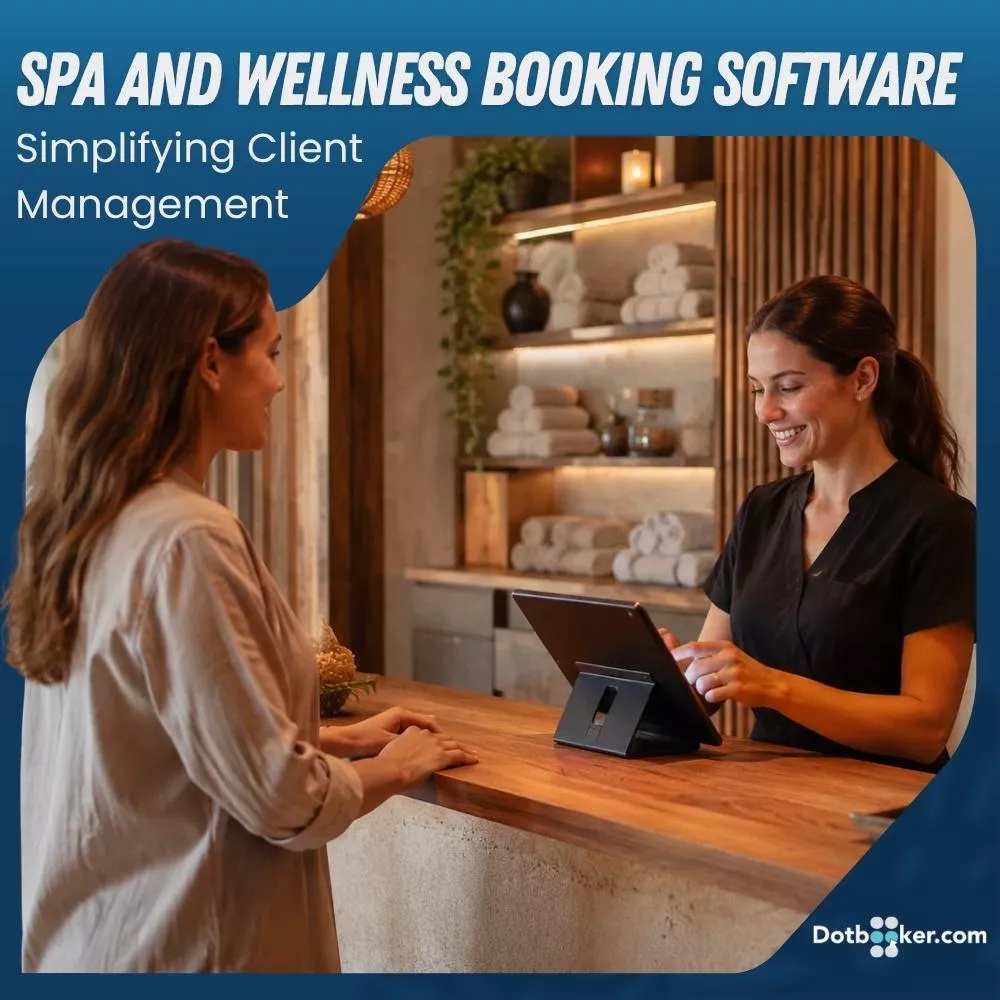
Spa and Wellness Booking Software: Simplifying Client Management
Running a spa or wellness business looks calm from the outside. Soft lighting, peaceful music, clean treatment rooms, relaxed clients, and a team focused on helping people feel better. But behind that calm setting, there is often a lot happening at once.
Appointments need to be booked correctly. Therapists need the right schedule. Treatment rooms must be available. Clients may ask to reschedule. Payments need to be tracked. Memberships, packages, gift cards, repeat visits, cancellations, and staff availability all need attention.
For a small team, even one missed detail can create confusion.
A client arrives, but the room is still occupied. A therapist is double-booked. A repeat customer has to explain their preferences again. A cancellation is missed. A payment is not recorded properly. These moments may seem small, but in a spa business, the client experience is built through small details.
This is where spa booking software becomes more than a digital calendar. It helps wellness businesses manage appointments, client information, staff schedules, payments, reminders, and service history in one organized place. Instead of relying on notebooks, spreadsheets, phone calls, and scattered messages, the business gets a single, clear system for daily operations.
For spas, salons, massage studios, med spas, wellness centers, beauty clinics, and resort-based wellness services, better client management is no longer optional. Clients expect convenience before they even walk through the door.
Why Spa Client Management Feels So Complex
Client management in a spa is not as simple as storing a name and phone number. Every client may have different preferences, treatment needs, appointment habits, package history, therapist choices, product purchases, allergies, notes, and follow-up requirements.
One client may prefer a specific massage therapist. Another may always book after work. Someone else may have a skin sensitivity that the team needs to remember before every facial. A regular guest may use a package balance. A resort visitor may want a couples treatment with a fixed time window. A wellness member may need monthly session tracking.
When all this information is managed manually, the business becomes dependent on memory.
That may work for a few appointments per day. But once bookings grow, manual tracking becomes risky. Staff members change shifts. Front desk teams get busy. Clients message through different channels. Notes get misplaced. Package balances are forgotten. Follow-ups are delayed.
The result is not just internal confusion. The client feels it.
They may have to repeat information. They may wait longer. They may receive the wrong appointment reminder. They may not feel recognized as a returning guest. In wellness, where trust and comfort matter deeply, that can affect repeat business.
Good wellness business software helps address this by keeping client details, appointments, preferences, and service records connected. It gives the team one shared view, so every client receives a more personal and consistent experience.

What Spa Booking Software Actually Handles
At its simplest level, spa booking software helps clients book appointments online. But modern systems do much more than that.
A proper appointment system for spa operations can help with:
- Online bookings
- Staff and therapist availability
- Treatment room scheduling
- Service duration and buffer time
- Client records
- Appointment reminders
- Payments and deposits
- Memberships and packages
- Gift cards and vouchers
- Cancellation tracking
- Waitlists
- Reporting
- Client communication
- Marketing follow-ups
- Multi-location management
The real value is not only in having these features. The value comes from connecting them.
For example, when a client books a 90-minute massage, the system should check whether the therapist is available, whether the treatment room is open, whether buffer time is needed, whether the client has a package balance, and whether a reminder should be sent before the appointment.
That is not just scheduling. That is client management.
How Spa Booking Software Simplifies Daily Operations
Every spa has a rhythm. Mornings may begin with appointment checks. Staff may need treatment room details. Clients may call to reschedule. Walk-ins may ask about availability. The team may need to handle payments, product sales, and membership renewals while maintaining a calm atmosphere.
When everything depends on manual coordination, the front desk becomes the pressure point of the business.
Spa booking software reduces that pressure by giving the team a clear view of the day. Instead of switching between notebooks, WhatsApp messages, emails, payment records, and staff calendars, the team can see bookings, client details, service timings, and availability from one place.
It Reduces Booking Mistakes
A system can help prevent double bookings, unavailable staff selection, and treatment room conflicts. This is especially useful for spas offering services that require specific rooms, equipment, or trained therapists.
It Saves Time During Client Check-In
Staff can quickly see what the client booked, whether they have visited before, what notes are attached, and whether payment or package details are pending.
It Improves Staff Coordination
Therapists can know their schedule in advance, prepare for the right treatment, and avoid last-minute confusion.
It Gives Managers Better Visibility
Instead of guessing which services are popular or which days are busiest, managers can review reports and plan more effectively.
This is why spa scheduling tools are becoming an essential part of serious wellness businesses. They help the business stay organized without making the client experience feel mechanical.
Better Client Bookings with Spa Scheduling Tools
Clients today do not always want to call during business hours to book a spa appointment. Many prefer to check availability online, compare service options, choose a time, and confirm their booking without waiting for a reply.
This is especially true for busy professionals, travelers, parents, and wellness clients who make plans outside regular working hours.
An online spa booking system gives clients that freedom.
They can book at a time that is convenient for them. They can see available slots. They can choose services. They can receive confirmation instantly. Some systems also allow them to reschedule or cancel based on business rules.
This simple change can improve the entire client journey.
Before the visit, the client feels in control. During the visit, the team is prepared. After the visit, follow-ups and repeat booking prompts can be handled more easily.
For spas in the Cayman Islands, the US, and Canada, this matters even more because many wellness businesses serve a mix of local clients, tourists, seasonal visitors, and repeat guests. A client may not always call ahead. They may discover the spa online and want to book immediately. If the process feels slow, they may move to another provider.
Good spa booking software helps capture that interest at the right moment.
Why Client Records Matter in Spa Software
In wellness, personalization is not a luxury. It is part of the service.
A client who books a massage does not want to explain their pressure preference every time. A facial client may expect the team to remember previous skin concerns. A member using a monthly wellness package may expect accurate session tracking. A guest who had a poor experience once may need extra care during the next visit.
Client records help make this possible.
With spa client management software, businesses can store useful information such as:
- Contact details
- Appointment history
- Preferred therapist
- Service preferences
- Treatment notes
- Allergies or sensitivities
- Package usage
- Membership details
- Payment history
- Feedback
- No-show or cancellation history
- Product purchases
This allows the team to serve clients with more awareness.
For example, when a returning client books another deep tissue massage, the therapist can review past notes before the session. If a client purchased a skincare product after a facial, the business can recommend a follow-up treatment at the right time. If a client usually books every month but has not visited recently, the spa can send a thoughtful reminder or offer.
Without proper records, these opportunities are easy to miss.
This is where wellness business software becomes useful for both service quality and revenue. It helps the business remember the details that clients care about.
Reducing No-Shows with Spa Booking Software
No-shows are painful for spa businesses because time is the product.
When a client misses an appointment, the therapist’s time is lost, the treatment room sits idle, and another client may be turned away. For services with longer durations, this can create a direct revenue loss.
An appointment system for spa businesses can help reduce this problem through automated reminders, deposits, cancellation rules, and waitlists.
Automated Reminders Keep Clients Informed
Reminders can be sent by email, SMS, or app notification depending on the system. These reminders help clients remember their bookings without requiring staff to call each person manually.
Deposits Improve Booking Commitment
Deposits or prepayments can make clients more likely to attend or reschedule properly. This is especially useful for longer treatments, high-demand time slots, and premium services.
Waitlists Help Recover Canceled Slots
If someone cancels, the system can help fill the empty slot faster by notifying clients who were waiting for availability.
This does not eliminate all cancellations, but it gives the business better control. Instead of reacting after revenue is lost, the team can prevent many issues before they happen.
For resort spas and wellness businesses serving guests across busy travel seasons, the booking experience becomes even more important. You can also read Dotbooker’s guide onspa booking systems for Caribbean resorts to understand how smoother scheduling improves the guest experience from the first booking moment.
Managing Staff Better with Spa Scheduling Tools
Spa scheduling is different from regular appointment scheduling.
A service may depend on a specific therapist, room, machine, product, or setup time. A couples massage may require two therapists and one larger room. A facial may need equipment. A body treatment may require cleanup time before the next booking. Some therapists may be trained for certain services but not others.
Manual calendars often fail here because they show time slots but not operational reality.
Spa scheduling tools can help match appointments to the right staff, room, and service duration. This prevents situations in which a booking appears available on paper but cannot actually be fulfilled.
Common Scheduling Conflicts a Spa System Can Prevent
- A therapist is free, but the required room is not
- A room is free, but the trained staff member is off duty
- A service is booked back-to-back, but cleanup time is needed
- A package appointment is booked, but the client has no remaining sessions
- A couple's treatment is booked, but only one therapist is available
A good system checks these details before confirming the appointment. That means fewer awkward conversations at the front desk and fewer stressful moments for staff.
Managing Spa Payments, Packages, and Memberships
Many spa and wellness businesses do not sell only one-time appointments. They sell packages, memberships, prepaid sessions, gift cards, add-ons, and retail products.
This adds another layer to client management.
If package tracking is done manually, mistakes can happen. A client may be charged when they still have sessions left. Someone may use more sessions than they paid for. Staff may not know whether a membership is active. Gift card balances may be unclear.
Spa booking software can connect bookings with payments and package balances.
This makes the process cleaner for both the business and the client. When a client books a service, the system can show whether they are paying now, using a package, redeeming a gift card, or applying a membership benefit.
For managers, this gives better reporting. They can see which packages are popular, how many sessions go unused, which memberships are active, and how much revenue comes from repeat clients.
This is especially helpful for wellness businesses that want to grow beyond one-time visits. Packages and memberships can create steadier income, but only when they are managed properly.
Better Spa Communication with Wellness Business Software
Client communication can quickly become scattered.
One client messages on Instagram—another call. Someone replies to an email reminder. Another sends a WhatsApp message asking to move their appointment. A new client fills out a website form. A regular client asks about a package renewal.
Without a proper system, staff may spend too much time tracking conversations instead of serving clients.
Wellness business software can help by centralizing key communications related to appointments and client records. Automated confirmations, reminders, follow-ups, and feedback requests can reduce manual workload while keeping clients informed.
Communication That Can Be Automated
- Booking confirmation after appointment selection
- Reminder before the appointment
- Follow-up message after the visit
- Birthday or anniversary offers
- Package renewal reminders
- Feedback requests
- Reactivation messages for inactive clients
This type of communication does not need to feel cold or robotic. When written well, it can feel thoughtful and helpful.
The aim is not to replace human service. The aim is to make sure no client is forgotten.
Reporting That Helps Owners Make Better Decisions
Many spa owners know their business by instinct. They can sense busy days, popular therapists, strong seasons, and slow periods. But instinct alone is not enough when the business starts growing.
Reports help turn daily activity into clear decisions.
Spa booking software can show useful information such as:
- Most booked services
- Peak booking hours
- Staff performance
- Cancellation trends
- No-show patterns
- Revenue by service
- Revenue by therapist
- Package sales
- Membership activity
- Client retention
- First-time versus returning clients
- Booking source
- Product sales
These insights help owners make better choices.
If Saturday mornings are always full, the business may extend hours or add staff. If a certain service is popular but has low profit margins, pricing may need to be reviewed. If clients often cancel at a specific time slot, the reminder timing may need to be adjusted. If many clients book once and never return, the follow-up process may need to be reviewed.
The best part is that decisions become less emotional and more practical. Instead of guessing, the owner can look at what is actually happening.
Why Growing Spas Need Wellness Business Software
A small spa with one room and one therapist may manage manually for a while. But as the business grows, so does its complexity.
Growth usually means:
- More services
- More staff
- More rooms
- More clients
- More payment options
- More packages
- More locations
- More marketing campaigns
- More reporting needs
At that stage, old methods begin to slow the business down.
A growing wellness business needs systems that can support scaling without overwhelming the team. This is where spa booking software becomes a long-term business tool, not just a scheduling aid.
For multi-service wellness businesses, the system should support different appointment types, service durations, staff permissions, room assignments, payment flows, and client communication. For multi-location businesses, it should also provide location-wise reporting and centralized control.
This is especially useful for spa brands, resort wellness centers, med spas, massage chains, and beauty businesses that want consistent service across locations.
Features to Look for in Spa Booking Software
Not every booking system is suitable for spas. A basic calendar may help with appointments, but spa operations often need more detail.
When choosing spa booking software, look for features that match the way your business actually works.
1. Online Booking That Is Easy for Clients
Clients should be able to book without confusion. The booking page should be simple, mobile-friendly, and clear. Services, prices, durations, available times, and staff options should be easy to understand.
2. Staff and Room Management
The system should manage therapist availability and treatment room availability together. This is essential for avoiding booking conflicts.
3. Client Profiles and Visit History
A strong client record helps the team personalize service. Look for notes, preferences, past appointments, package history, and communication records.
4. Automated Reminders
Reminders help reduce no-shows and save staff time. Email and SMS options are useful depending on how your clients prefer to communicate.
5. Payment and Deposit Options
Online payments, deposits, package payments, and gift card tracking can help protect revenue and improve booking commitment.
6. Packages and Memberships
If your business offers prepaid sessions, monthly plans, wellness memberships, or treatment bundles, the system should clearly track usage.
7. Reporting
Reports should be easy to read and useful for daily decisions. You should be able to see bookings, revenue, cancellations, staff activity, and client retention.
8. Marketing and Follow-Up Tools
The system should help with repeat bookings, reminders for inactive clients, offers, and feedback requests.
9. Multi-Location Support
If you operate across multiple locations, the software should allow location-level control while giving owners a complete view of the business.
10. Simple Staff Access
Your team should be able to use the system without constant confusion. A feature-rich system is only useful if staff can work with it comfortably.
How Spa Booking Software Improves Client Experience
The client experience begins before the treatment starts.
It begins when the client searches for the service, checks availability, books the appointment, receives confirmation, arrives at the spa, is greeted by the team, receives the treatment, pays, and decides whether to return.
Spa booking software supports each step.
Before the visit, it gives clients convenience.
During the visit, it gives staff the right information.
After the visit, it helps maintain the relationship.
For example, a client books a facial online. The system sends confirmation. The staff sees that the client has visited before and had a sensitivity note. The therapist prepares accordingly. After the appointment, the client receives a follow-up message and a reminder to book the next session in four weeks.
The experience feels smooth because the system supports the team quietly in the background.
That is the best kind of technology in wellness. It does not take attention away from the client. It gives the team more room to focus on care.
Common Problems Spa Booking Software Solves
Many spa businesses turn to software only after daily issues become too frequent. These issues often include:
- Too many phone bookings
- Missed appointment requests
- Double bookings
- No-shows
- Unclear staff schedules
- Treatment room conflicts
- Lost client notes
- Manual package tracking
- Slow check-in process
- Confusing payment records
- Weak follow-up after visits
- No clear reporting
- Difficulty managing multiple locations
Each of these problems may seem manageable on its own. But together, they create stress for staff and inconsistency for clients.
An appointment system for spa businesses helps create order. It gives the team a single place to manage appointments, clients, staff, payments, and follow-ups.
That order directly affects the quality of service.
How Spa Software Supports Client Retention
Getting a new client is good. Bringing that client back is better.
Client retention is one of the most important parts of a successful spa or wellness business. A loyal client is more likely to book regularly, buy packages, purchase products, refer friends, and trust the team with higher-value services.
Spa booking software can support retention in practical ways.
It can track when clients last visited. It can show which clients have unused packages. It can help send reminders for repeat treatments. It can identify clients who have not booked in a while. It can support loyalty programs, memberships, and personalized offers.
For example, if a client usually books a monthly massage but hasn't booked for 8 weeks, the business can send a gentle message with available slots. If a skincare client completed a facial, the system can suggest the right follow-up period. If a member has unused benefits, the team can remind them before expiry.
These small touches can bring clients back without aggressive marketing.
For wellness businesses, retention often comes from consistency. Clients return when they feel remembered, valued, and well cared for.
Why Manual Spa Scheduling Holds Businesses Back
Manual systems often feel comfortable because they are familiar. A notebook, spreadsheet, or basic calendar may seem easier at first.
But manual systems create hidden costs.
Staff spend more time checking details. Clients wait for replies. Owners struggle to measure performance. Mistakes happen more often. Information stays in people’s heads instead of being stored properly. When a staff member leaves, knowledge can leave with them.
Manual systems also limit growth.
A business cannot easily add more services, staff, locations, packages, or marketing campaigns if every process depends on manual tracking. At some point, the business becomes busy but not organized.
Spa scheduling tools help remove that ceiling. They allow the business to handle more appointments and more clients without losing control of the service experience.
How Dotbooker Can Help Spa and Wellness Businesses
For spa and wellness businesses, the goal is not only to accept bookings. The goal is to manage the full client journey with clarity.
Dotbooker helps service-based businesses simplify appointment booking, scheduling, client management, payments, and daily operations with a single connected platform. For spas, salons, wellness centers, massage studios, and beauty businesses, this means fewer scattered processes and a better way to manage the client experience from booking to follow-up.
With the right spa booking software, your team can spend less time chasing appointment details and more time creating the kind of experience clients remember.
Better Client Visits with Spa Booking Software
Spa and wellness businesses are built on trust, comfort, timing, and personal care. When appointments are missed, notes are lost, or schedules become confusing, the experience suffers.
The right software helps protect that experience.
It gives clients an easier way to book. It gives staff a clearer way to work. It gives owners better control over the business. It keeps client records organized, reduces scheduling mistakes, supports payments and packages, and helps turn one-time visitors into repeat clients.
In a business where every detail matters, spa booking software is no longer just a convenience. It is the system that helps the entire client journey feel smoother, more personal, and more reliable.
Popular Blogs

- Oct 20, 2022
- 6083
- Sep 08, 2024
- 5562

- Nov 11, 2022
- 4943

- Oct 13, 2025
- 3998
Ready to Transform
Your Business?

Get expert guidance to streamline your business operations.