
- By Dotbooker
- Feb 09, 2026
- 957
From Chaos to Clarity: How a Schedule Management System Streamlines Daily Operations
Let's be honest: behind every successful business is someone who is silently overwhelmed by spreadsheets, sticky notes, and texts about last-minute rescheduling.
Whether you manage a fitness center in Toronto, a dentist's office in Miami, or a spa in Grand Cayman, you have undoubtedly faced the same invisible enemy: disorganized scheduling. It seeps in gradually. A double-booked customer here, a shift missed there. Before you know it, you're managing chaos instead of a timetable.
But what if scheduling didn’t have to feel like spinning plates?
That’s the promise of a schedule management system, not just a tool, but a silent force that turns operational noise into harmony.
Top Benefits of a Schedule Management System for Growing Teams
Let's look past the obvious. What is the true benefit of a schedule management system for your company? It's more than just a computerized calendar, in actuality. It serves as the core nervous system for your operations, improving control, agility, and transparency across the board.
Centralizes Everything
Imagine replacing five different tools with a single, cohesive system. Staff shifts, time-off requests, availability calendars, public holidays, and even client appointments are all managed by a single dashboard.
Whether you own a salon in Grand Cayman or a wellness center in Vancouver, this level of visibility is revolutionary. It reduces communication failures, speeds up managers' responses, and eliminates the need to switch between platforms.
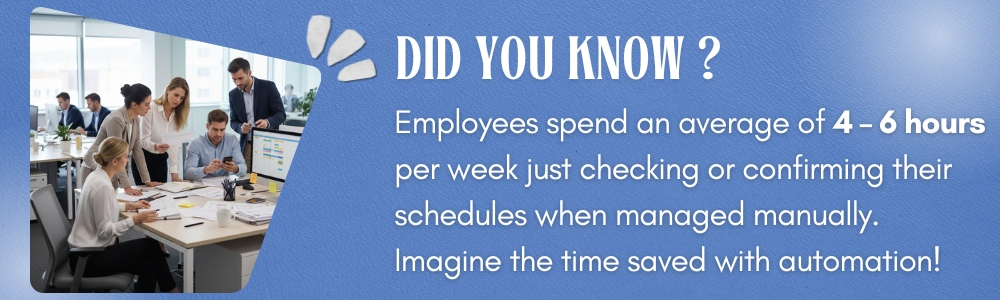
Reduces Human Error
Even the most organized managers can make mistakes when scheduling manually, overlapping shifts, forgetting special requests, or assigning someone on approved leave.
Conflict detection is automated by a scheduling management system, ensuring that such mistakes are identified and corrected before they occur. This preserves your company's reputation and customer satisfaction while preventing costly accidents.
Empowers Employees
When workers are informed, their level of engagement increases. Workers with mobile access can request leave, view their schedules while on the go, indicate their availability, and even change shifts (with permission).
This increases team members' autonomy, reduces managerial pressure, and minimizes back-and-forth messaging. It fosters trust, reduces misunderstandings, and increases accountability.
Improves Client Experience
Although they can't see your backend tools, they can sense the outcomes. Smoother encounters, faster service, and fewer missed appointments are all results of a cohesive team.
Consistent staffing immediately increases client satisfaction and retention for appointment-based businesses such as grooming shops, massage parlors, and physiotherapy clinics.
Boosts Decision-Making
Effective scheduling involves planning for the future as well as the present. Managers can monitor trends such as peak hours, overtime patterns, and understaffed days using built-in analytics and make the necessary adjustments.
Instead of relying solely on instinct, this allows firms to make more informed personnel decisions and manage resources more effectively.
Compliance-Ready
Businesses operating in nations like Canada or the Cayman Islands must comply. These technologies help you comply with local labor laws by tracking your hours worked, scheduling breaks appropriately, limiting overtime, and managing holiday entitlements.
Digital records and audit trails are particularly advantageous because they can help shield you from legal challenges and inspections.
Facilitates Cross-Department Coordination
Departmental cooperation can be challenging in larger teams. By coordinating duties and responsibilities among front desk employees, service providers, supervisors, and support teams, the system ensures nothing is overlooked.
Supports Business Continuity
Life takes place. Weather interferes with operations, workers become ill, or emergencies occur. Without having to start from scratch, a strong scheduling system enables you to swiftly change course, reassign jobs, instantaneously notify teams, and reduce downtime.
How a Schedule Management System Works to Automate Your Workflow
Understanding the advantages of a schedule management system is one thing; knowing how it works in your daily business is quite another. Let's draw back the curtain.
A schedule management system is fundamentally similar to a never-sleeping digital operations assistant. It cleverly arranges the people, time, and activities that keep your company operating. The outcome? Complete visibility, quicker planning, and fewer mistakes.
Here’s how it works in action:
1. Drag-and-Drop Scheduling
Eliminate time-consuming spreadsheets. The schedule for today is aesthetically pleasing and straightforward to use. Employees can be assigned shifts by supervisors simply dragging them onto a calendar view.
A last-minute callout necessitates reassigning a shift. Simply drag it to another person. This saves time on scheduling and facilitates real-time modifications.
2. Employee Self-Service Portals
The modern workforce demands control and flexibility. Employees can manage their schedules using a scheduling management system without contacting a supervisor.
They can request time off, check future shifts, set availability preferences, and even trade shifts with coworkers (subject to administrative restrictions). It lessens miscommunication, encourages ownership, and improves work-life balance.
3. Real-Time Notifications & Alerts
The days of depending on someone to "see the message" are over. The system immediately notifies staff of any schedule changes, approvals, or reminders.
Whether through email alerts or mobile push notifications, updates happen instantly. This reduces no-shows and ensures everyone stays in sync.
4. Conflict Detection Engine
Let's say you book an employee who is already on permitted leave or inadvertently push someone into overtime.
An efficient scheduling system promptly identifies and flags these issues before they become operational challenges. This built-in safety measure ensures compliance, eliminates overlaps, and protects worker welfare.
5. Integration with Other Business Systems
Scheduling is just one piece of your operational puzzle. That’s why most advanced systems seamlessly integrate with payroll, attendance trackers, HRIS systems, booking software, and even billing.
This means you don’t have to manually transfer data between tools, reducing admin time and avoiding errors in payroll or client appointments.
6. Custom Rules & Automation
Whether you run a salon that closes early on Sundays or a wellness clinic with rotating staff, you can set up automation rules. For example:
- Automatically assign lunch breaks
- Restrict night shifts to specific employees.
- Prevent back-to-back shifts across locations.
- Apply labor laws or overtime limits for your region (like Cayman Islands holiday pay rules)
7. Secure Access Levels
Different levels of access can be granted to each team member. A manager might consider the entire staff calendar, but a receptionist might focus only on the front desk schedule. This allows for collaboration while safeguarding private data.
Why a Schedule Management System for Small Businesses is a Competitive Edge
It's simple to assume that high-tech scheduling solutions are only necessary for huge enterprises. In actuality, however, schedule management systems are most advantageous for small enterprises. Every hour, every shift, and every employee's availability becomes crucial to success when your team is small and resources are limited.
Let's examine why a contemporary scheduling solution is now essential for small business operations rather than a luxury:
1. Better Staff Coverage Without the Guesswork
Even one absence might result in lost revenue, overworked staff, or service delays in small teams. You can allocate shifts effectively and prevent coverage gaps by using a schedule management system, which gives you an overview of your team's availability, preferences, and current assignments. Additionally, you'll see who is ready to take over if someone calls out, which will lessen the rush.
Let's say you manage a tiny West Bay health studio. An urgent leave of absence is required for one of your massage therapists. You use the platform to discover another available therapist, reschedule appointments, and notify everyone in real time—all before your client arrives—instead of manually messaging each person.
2. Faster Onboarding and Training
Hiring a new employee? Onboarding people into your scheduling framework is quick and straightforward using a digital system. With a fast walkthrough and a login, they can effectively manage their own schedules without lengthy explanations or printed rosters. Your managers will need less assistance, and your new hire will get off to a better start.
For instance, if you own a boutique salon in Toronto, new stylists won't need to ask for daily updates because they can see their calendar right away, comprehend peak periods, and align themselves with business hours.
3. Real-Time Monitoring, Even from a Distance
A cloud-based scheduling management system enables you to monitor daily operations with total visibility, whether you are managing remotely from another country or in-office. Whose time is it? Who's going to be late? Do you have enough employees for the evening shift? You can remain proactive even when you're not physically present thanks to this degree of real-time intelligence.
Owners in the Cayman Islands who travel frequently or oversee several locations across the island, or even different regions, may particularly benefit from this.
4. Smart Cost Control and Labor Optimization
Labor is frequently the most significant operating expense for small firms. You may track hours, overtime, and shift patterns using a scheduling management system, providing you with the information you need to reallocate staff during high-demand periods or reduce overstaffing during calm periods.
You will have genuine insights rather than depending on intuition. You may find that your juice bar's peak hours vary by season, or that Fridays require more therapists but fewer front desk employees. These insights enable you to make swift adjustments, manage payroll expenses, and increase profitability.
5. Creates a Culture of Ownership and Accountability
The success of small teams depends on mutual trust. When given time management tools, such as the opportunity to indicate their availability, request time off, and get real-time shift changes, employees feel more appreciated and responsible. This leads to improved timeliness, fewer misunderstandings, and higher morale.
Additionally, by using audit trails and approval histories to preserve transparency in every scheduling decision, you can prevent the common "I didn't know I was working today" scenario.
6. Enables Growth Without Growing Pains
Seamless scalability is the most significant benefit of a scheduling management system. The system expands as you add locations, team members, or services. Every time you grow, you won't have to start again since your scheduling infrastructure will be robust, adaptable, and ready for more.
You will therefore be ready from the start, regardless of whether you are operating a single physiotherapy practice now or hoping to build a second site next year.
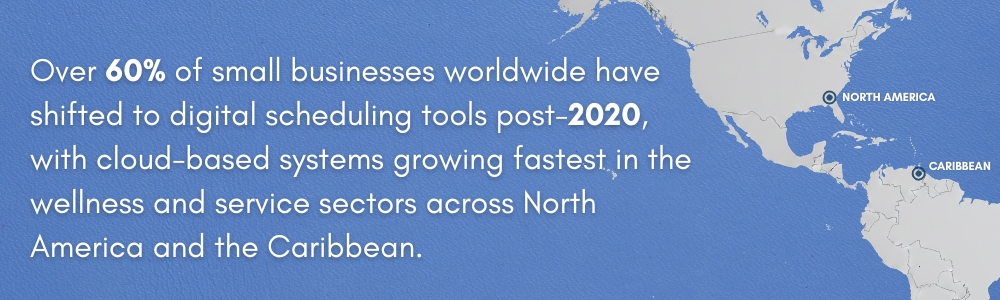
Transforming Business Operations with a Schedule Management System
Let's not call this a "conclusion." This is where frustration gives way to flow.
Scheduling is not the only benefit of a schedule management system. It changes the rhythm of your business. It clears the cerebral clutter, eliminates the ongoing friction, and substitutes clarity for chaos.
And if you're a manager, operator, or business owner managing several tasks, it may be time to think about a system made just for that.
For example, Dotbooker is more than just software. Businesses in the wellness, fitness, spa, grooming, therapy, and other appointment-driven sectors can use this comprehensive platform. Dotbooker puts operational clarity at your fingertips by automating staff shifts, managing bookings, tracking hours, and coordinating calendars with corporate objectives.
Dotbooker, designed for small and mid-sized businesses and optimized for customers in the US, Canada, and the Cayman Islands, lets you spend more time providing outstanding service and less time handling turmoil.
What are you going to do next? Don't only plan. Make a plan.
Allow Dotbooker to help you transform your company from reactive to exceptional.
Popular Blogs

- Oct 20, 2022
- 6115
- Sep 08, 2024
- 5601

- Nov 11, 2022
- 4981

- Oct 13, 2025
- 4036
Ready to Transform
Your Business?

Get expert guidance to streamline your business operations.