
Why Online Waivers and Digital Forms Are Becoming Important for Fitness and Wellness Businesses
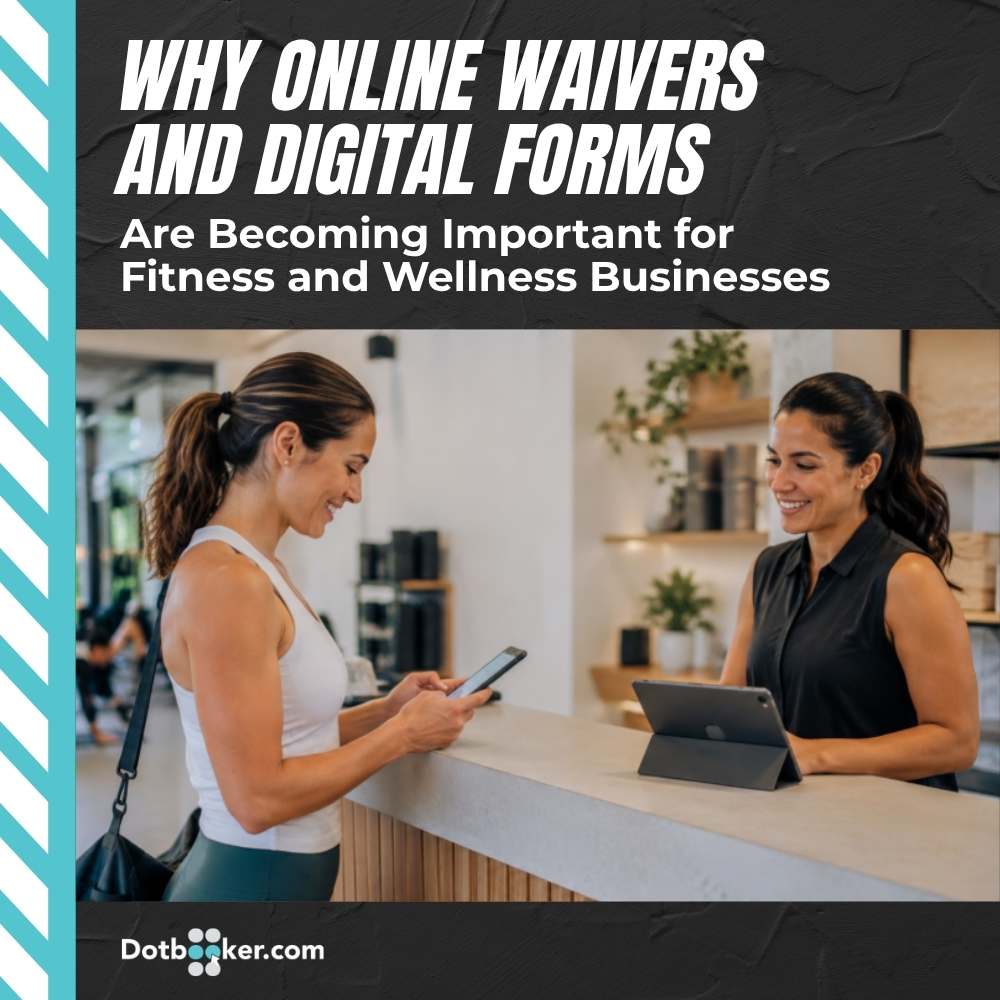
A client walks into a yoga studio for the first time. The class starts in six minutes. The front desk is busy. Someone hands them in a paper form, a pen, and a clipboard.
They rush through the questions.
Medical history? Skipped.
Emergency contact? Half-filled.
Signature? Added quickly.
By the time the class begins, the instructor has no idea about the client’s past knee injury; the front desk has another paper to file, and the client’s first impression has already started with friction.
Now imagine the same client completing everything online before arriving. Their waiver is signed. Their health details are saved. Their preferences are recorded. The team is ready. Check-in takes seconds.
That is the real reason online waiver software is no longer just a digital upgrade. For fitness and wellness businesses, it is becoming part of the client experience, the safety process, and the daily operating system.
Start Every Visit with Online Waiver Software
First visits matter.
A new client is already making quiet judgments from the moment they book. Was the booking easy? Did they receive clear instructions? Did the studio feel prepared? Did they have to repeat the information? Did the experience feel smooth?
Paper forms often interrupt that flow.
They make clients pause at the front desk, rush through important details, and start their session with admin work instead of comfort. For gyms, yoga studios, Pilates centers, spas, wellness clinics, massage studios, personal trainers, and fitness centers, that first few minutes can shape how professional the business feels.
Online waiver software changes the start of the journey.
Instead of filling out forms on arrival, clients can complete waivers and client intake forms before they visit. They can sign from their phone, tablet, or laptop. They can read terms at their own pace. They can answer health questions without feeling rushed.
The business receives the details earlier, and the client arrives with one less thing to worry about.
That small change can make the entire visit feel more organized.

Why Online Waiver Software Matters Today
Fitness and wellness services are personal. They involve movement, equipment, physical effort, treatments, touch, health information, and sometimes risk.
A fitness class may involve high-intensity movement. A gym may have strength training equipment. A spa treatment may require allergy details. A massage therapist may need to know about injuries. A yoga instructor may need to understand mobility limits. A personal trainer may need to review health concerns before preparing a routine.
This is why waivers are not just paperwork. They are part of responsible business management.
A waiver helps clarify expectations
A properly written waiver can help clients understand the nature of the service, possible risks, participation terms, and business policies. It gives the business a record that the client reviewed and accepted important information.
This does not replace legal advice or safe service practices, but it does create a cleaner process for collecting consent and acknowledgement.
A digital record is easier to trust than a paper trail
With paper forms, it is easy for records to go missing, become unreadable, or get stored in the wrong file.
Digital waiver software gives businesses a more reliable way to keep signed forms connected to client profiles. A team member can quickly check when a waiver was signed, whether a form is missing, or whether the latest version has been accepted.
That kind of access matters when the business is busy, growing, or managing multiple service types.
Client Intake Forms Improve First-Time Experiences
A waiver protects the business, but client intake forms help the business understand the person.
That difference is important.
A waiver may say, “I understand the risks.”
An intake form says, “Here is what you need to know about me.”
For fitness and wellness businesses, that information can directly improve the client experience.
What client intake forms can capture
A good intake process may include:
- Personal details
- Emergency contact information
- Health conditions
- Previous injuries
- Fitness goals
- Service preferences
- Experience level
- Allergies or sensitivities
- Pregnancy or mobility-related notes
- Consent for communication
- Photo or marketing permission
- Cancellation policy acknowledgement
When this information is collected clearly, the business can prepare better. A trainer can adjust to a workout. A yoga instructor can suggest modifications. A massage therapist can avoid pressure areas. A wellness consultant can begin with a better context.
This is how a form becomes more than an admin.
It has become a service tool.
Paper Forms Slow Fitness Business Operations
Paper feels simple because it is familiar. But behind the scenes, it creates repeated work.
- Someone has to print the forms.
- Someone has to explain them.
- Someone has to check missing fields.
- Someone has to file them.
- Someone has to scan or store them.
- Someone has to find them later.
For small fitness and wellness businesses, this can quickly become a daily headache. For larger studios or multi-location businesses, it becomes even harder to manage.
The hidden cost of paper
The cost is not only paper and ink. It is staff time, storage space, lost information, slow check-ins, and avoidable mistakes.
A front desk employee handling class check-ins, phone calls, payments, walk-ins, and form collection can easily miss something. A client may forget to sign one section. A staff member may file the form incorrectly. An instructor may never see the important health note before the session begins.
Digital waiver software reduces these gaps.
The form is completed online. Required fields can be marked. The signature is captured digitally. The record is stored against the client. Staff can check the status quickly.
The process becomes easier to follow.
Fitness Waiver Form Online Speeds Check-In
Speed matters at check-in.
A class may start at 7:00 AM sharp. A spa appointment may have a fixed treatment window. A trainer may have back-to-back sessions. A wellness center may be managing multiple clients at once.
When clients are still filling out paperwork at the front desk, everything slows down.
A fitness waiver from online helps move that task before the visit. The client signs in advance, and the team can see whether the form is completed.
This helps with:
- Faster first visits
- Shorter front desk queues
- Fewer delays before classes
- Cleaner client records
- Less repeated follow-up
- Better staff preparation
For businesses that rely on punctual classes and scheduled appointments, this can make the day feel much smoother.
Digital Waiver Software Matches Client Expectations
Clients already live in a digital-first world. They appointments online at any time and pay through cards and wallets. Then, they receive reminders by email or text. They check schedules from their phones. They review businesses online before visiting.
So, when a business still asks them to complete printed forms on arrival, the experience can feel dated.
Online waiver software meets clients where they already are.
They can complete forms from home, from work, before travel, or right after booking. For tourists and seasonal visitors in markets like the Cayman Islands, this is especially helpful. For busy clients in the US and Canada, it reduces another task from their arrival routine.
A simple online form can make the business feel more prepared, more modern, and more respectful of the client’s time.
Online Waiver Software Improves Team Coordination
In a fitness or wellness business, different team members often need access to client information.
- The front desk needs to know whether forms are completed.
- The trainer needs to know about injuries.
- The therapist needs to know about allergies or preferences.
- The manager may need to review signed terms.
- The owner may need records for internal checks.
With paper, that information may sit in a folder, a drawer, or a scanned file that only one person knows how to find.
With digital waiver software, records can be connected to the client profile and accessed when needed.
Why this matters during busy operations
Imagine a client booking a Pilates session and mention lower back discomfort in their intake form. If that information is visible to the instructor before class, the instructor can offer safer modifications.
Now imagine that same note sitting unread on a paper form at reception.
The difference is not small.
Better access to client information can improve safety, confidence, and service quality.
Digital Waiver Software Simplifies Policy Updates
Business policies change over time.
- A gym may update its liability for wording.
- A yoga studio may revise class safety terms.
- A spa may add new treatment requirements.
- A wellness center may update cancellation rules.
- A fitness studio may introduce new equipment, services, or age-related participation rules.
With paper forms, updated policies can become messy. Old copies may remain at the front desk. Staff may use the wrong version. Clients may sign outdated documents.
Digital waiver software makes updates easier.
The business can update the form and share the latest version with clients. If required, clients can be asked to sign up again. This helps the business keep records cleaner and more consistent.
For multi-location businesses, this is even more useful because every location can work from the same version.
Online Forms Support Hybrid Wellness Services
Fitness and wellness businesses are no longer limited to one room, one class, or one location.
Many now offer outdoor sessions, online classes, retreats, private home appointments, corporate wellness programs, pop-up events, workshops, and hybrid memberships.
Paper forms do not fit well into that model.
If a client joins a beach yoga session, a virtual fitness class, a wellness retreat, or a corporate program, the business still needs proper consent and client details before the service begins.
Online waiver software makes that possible.
Clients can sign from anywhere. Staff can confirm completion before the event. Records remain stored in one place.
This is especially useful for businesses that serve both local and visiting clients, which is common in the Cayman Islands and other tourism-driven markets.
If your fitness business is already moving toward digital forms and faster client onboarding, you may also find this guide helpful: The Future of Fast Check-Ins: Why Custom Mobile Booking App.
Digital Forms Create Cleaner Client Experiences
A strong digital form process does not feel like a separate task. It fits naturally into the client journey.
Here is what that journey can look like:
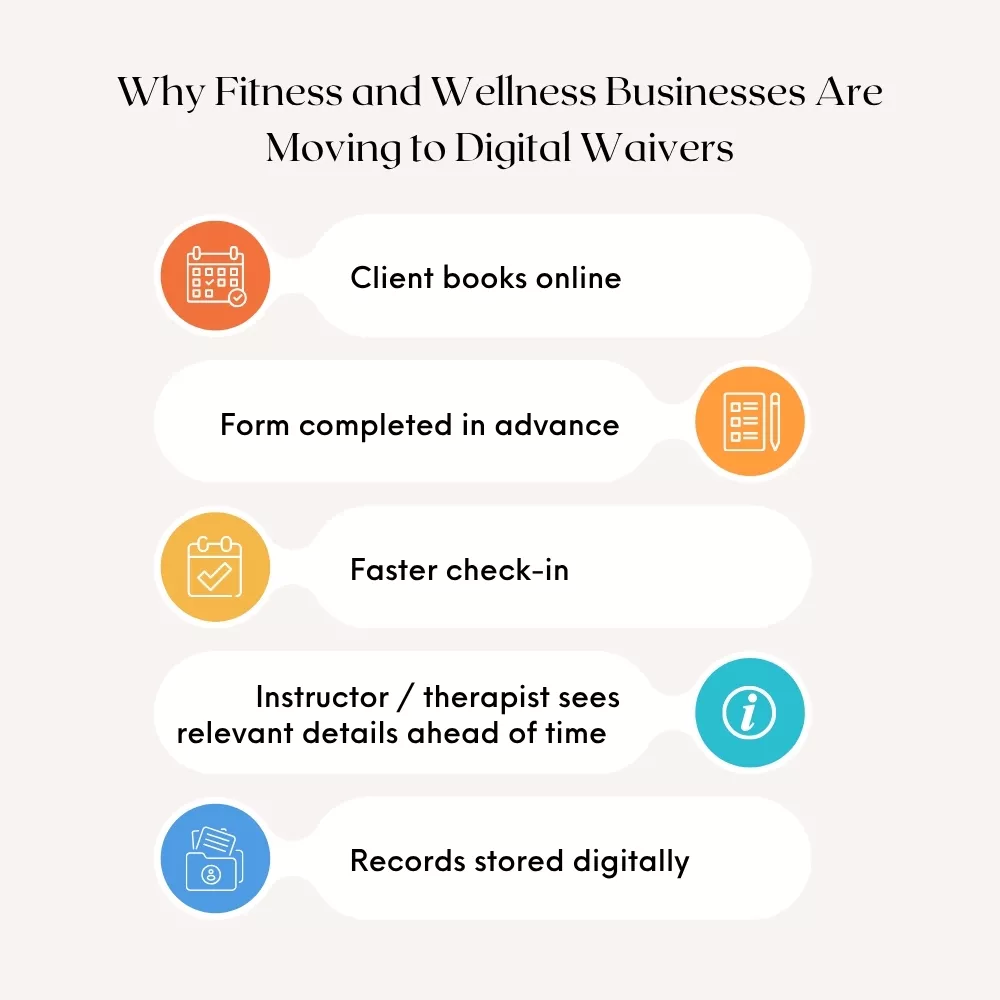
- A client books a class or service online.
- They receive confirmation.
- The waiver and intake form are shared automatically.
- The client completes the form before arrival.
- The team reviews the details.
- The client checks in quickly.
- The service begins without delay.
- The record stays attached to the client's profile.
- That is not just a better admin. It is a better experience.
The client does not have to repeat information. The staff does not have to chase paperwork. The service provider is not left to guess.
Everyone starts with more clarity.
Key Features of Digital Waiver Software
Not all digital forms are useful. A plain document with a signature field may not be enough for a busy fitness or wellness business.
The right setup should make life easier for both clients and staff.
Easy mobile access
Clients should be able to complete forms from their phone without confusion. If the form is hard to open, too long, or difficult to read, people may leave it incomplete.
Custom form fields
Every business is different. A gym, yoga studio, spa, personal trainer, and wellness clinic will not ask the same questions. The system should allow custom fields based on the service type.
Digital signature capture
A waiver should include a clear signature process with date and time details.
Required fields
Important fields should not be skipped. Required fields help reduce incomplete forms and front desk follow-ups.
Client profile connection
The form should not be placed separately in a random folder. It should be connected to the client record so the team can find it easily.
Version tracking
When forms are updated, the business should know which version a client signed.
Secure storage
Client details should be stored carefully, especially when forms include health-related information, emergency contacts, or private preferences.
Simple sharing options
Small businesses will able to share forms using best online booking system through links, email, QR codes, reminders, or client portals.
The best digital form process is simple for the client and useful for the team.
Online Waiver Software Supports Business Growth
As a business grows, small manual tasks become bigger problems.
A studio with ten new clients a week may manage paper forms. A studio with hundreds of bookings, multiple instructors, memberships, workshops, and recurring clients will feel the pressure quickly.
Online waiver software helps grow businesses create a repeatable process.
- Every new client receives the right form.
- Every signed waiver is stored properly.
- Every missing form is easier to identify.
- Every team member can follow the same process.
This kind of consistency matters when the business wants to scale without creating confusion.
It also gives owners better control. They are not relying only on memory, paper folders, or front desk reminders. The process becomes part of the system.
Digital Waivers Build Stronger Client Trust
Clients may not openly praise a good form of process, but they notice when things feel organized.
- They notice when they do not have to wait.
- They notice when staff already have their information.
- They notice when their preferences are remembered.
- They notice when policies are clear.
- They notice when the experience feels smooth from booking to arrival.
- That quiet trust matters in fitness and wellness.
People share personal information. They are trusting instructors, trainers, therapists, and service providers with their time, comfort, and physical well-being. A clear digital process helps reinforce trust.
It tells the client, “We are ready for you.”
From Paperwork to Online Waiver Software
Online waivers and digital forms are becoming important because fitness and wellness businesses are changing.
Clients expect faster experiences. Teams need more information. Owners need cleaner records. Services are happening across studios, homes, outdoor spaces, online sessions, and events. Paper simply cannot keep up with that pace.
Online waiver software helps businesses move from scattered paperwork to a more prepared way of working. Digital waiver software makes consent easier to manage. Client intake forms help teams understand people before serving them. A fitness waiver form online makes the first visit smoother for everyone.
For businesses that want to look professional, protect their operations, and deliver a better client journey, digital forms are no longer a small technical feature. They are part of the way a modern fitness or wellness business runs.

Welcome Clients Better with Digital Forms
A great fitness or wellness experience does not begin when the class starts or when the treatment begins. It begins at the first interaction.
That might be a booking page. A confirmation email. A reminder message. A waiver link. An intake form.
When those first steps are simple, clear, and connected, the entire experience feels better.
Dotbooker helps fitness and wellness businesses manage bookings, clients, schedules, payments, memberships, check-ins, and client records from one place. For businesses such as gyms, yoga studios, spas, Pilates studios, wellness centers, physical therapy clinics, and personal training services, having digital processes connected to daily operations can reduce manual work and create a smoother client journey.
With the right digital setup, businesses can spend less time chasing forms and more time creating better experiences.
That is where online waivers and digital forms show their real value.
They do not just replace paper.
They help every client feel expected, understood, and ready to begin.