- By Dotbooker
- May 20, 2026
- 644
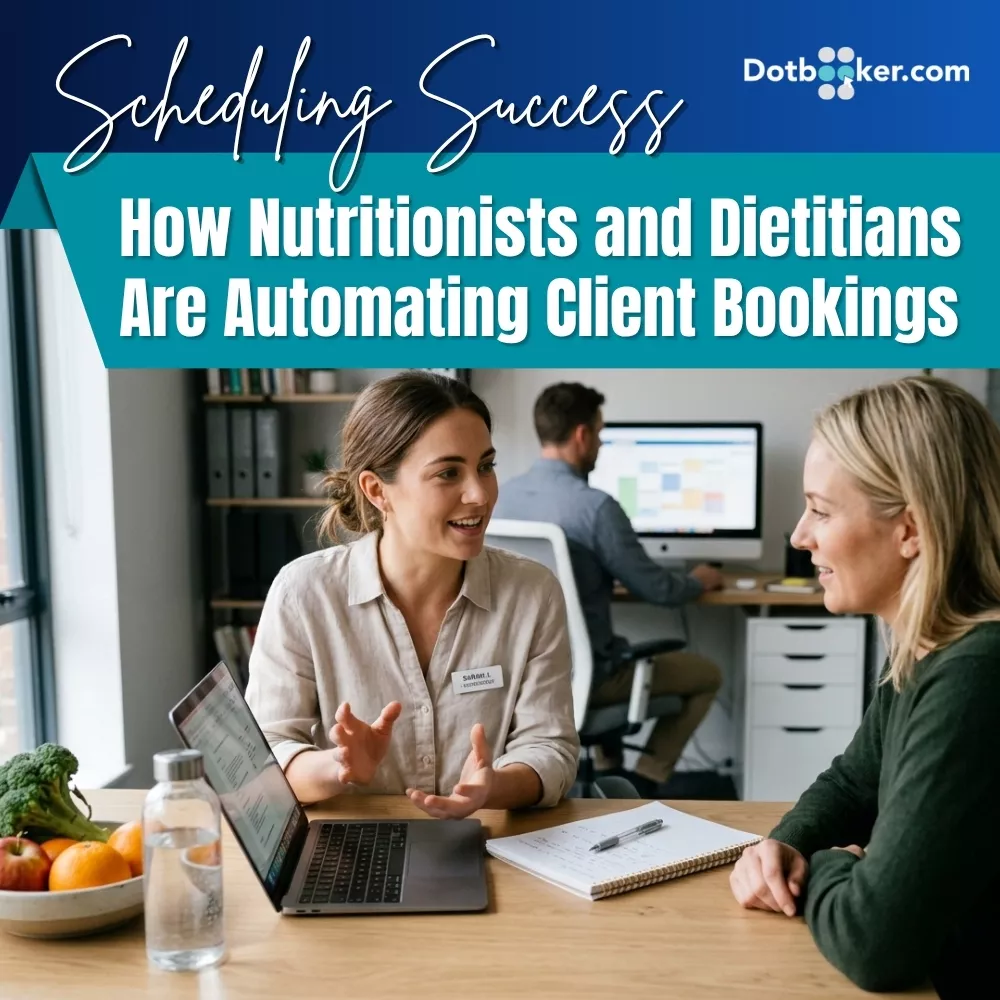
Scheduling Success: How Nutritionists and Dietitians Are Automating Client Bookings
At 10:42 PM, a message pops up.
“Hi, are you available tomorrow evening?”
You see it. You mentally check your schedule. You type, “Yes, 6 PM works.”
Five minutes later, another message arrives.
“Actually, can we do 7 instead?”
Now you’re negotiating time slots like you're planning a wedding, not a 30-minute consultation.
If you’re a nutritionist or dietitian, this scene probably feels very familiar.
And somewhere between these late-night messages, reschedules, and forgotten appointments, a quiet realization starts to creep in:
“This cannot be the way to run a practice.”
The Hidden Cost of Manual Scheduling Without Nutritionist Booking Software
Most nutritionists don’t start with fancy tools. They start with what’s easy.
- A notebook.
- A Google Calendar.
- A mix of WhatsApp, calls, and emails.
It seems easy. Adaptable. Almost reassuring.
It won't be until one day.
Manual scheduling gradually increases background pressure because it doesn't collapse abruptly.
At first, it’s small things.
- You check your messages while eating dinner because a client wants to “quickly confirm.”
- You scroll through chats trying to find where someone mentioned “next Tuesday.”
- You take a call while already on another call because you forgot you had blocked that time.
Then it grows into patterns.
- You start second-guessing your own calendar.
- You re-check appointments three times just to feel sure.
- You keep mental notes like “Don’t forget her follow-up this Friday,” knowing there’s a high chance you might.
And then comes the real cost, not just in time, but in how your day feels.
Your work doesn’t end when consultations end. It follows you into the evenings. Into weekends. Into moments that were supposed to be yours.
And let’s be honest, the stress is not even from the nutrition work. It’s from managing who is coming when.
Manual scheduling creates invisible work. The kind that doesn’t show up on your to-do list but quietly drains your focus.
And the worst part?
You didn’t study nutrition, build expertise, and grow your practice just to become a full-time calendar manager.
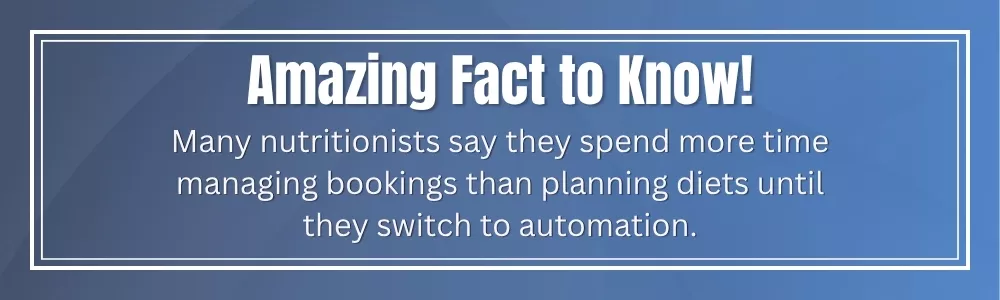
From Chasing Clients to Automated Scheduling with Nutritionist Booking Software
Now imagine a different kind of day.
It’s late at night. You’re not working. You’re not checking messages. You’re not thinking about schedules.
Meanwhile, a client opens your booking link.
- They see exactly what’s available.
- They choose a slot that fits their routine.
- They confirm it in seconds.
And by the time you wake up, your schedule is already updated.
No negotiation. No back-and-forth. No “Sorry, that time just got booked.”
This is what nutritionist booking software quietly changes.
It removes the need for you to be present in every scheduling conversation.
Instead of chasing clients with “Does this time work?” messages, your system handles it for you.
Clients feel empowered because they can book on their own terms.
You feel lighter because your calendar is no longer dependent on constant communication.
And something unexpected happens.
Your phone stops being a source of interruption.
It becomes just… a phone again.
The No-Show Problem and How an Appointment Reminder App for Dietitians Solves It
Every nutritionist has experienced this moment.
- You’re prepared.
- You’ve reviewed the client’s last session.
- You’ve even thought about what adjustments you’ll suggest today.
You glance at the time.
Five minutes pass.
Ten minutes pass.
And then that familiar thought hits:
“Did I remind them?”
No-shows are rarely about clients being careless. Life gets busy. People forget. Priorities shift.
But for you, each missed session has a real impact.
It’s not just lost income. It’s a gap in your schedule that could have been filled. Its momentum is broken in a client’s journey. It’s energy spent preparing for something that never happened.
Relying on manual reminders sounds easy in theory.
In reality, it means remembering to remember.
And that’s where things fall apart.
An appointment reminder app for dietitians completely changes this dynamic.
Instead of you thinking, “I should message them,” the system already has.
Clients receive reminders at the right time, in the right way, without you lifting a finger.
Some even confirm their attendance directly through the reminder. Others reschedule early instead of disappearing.
What used to feel like guesswork becomes predictable.
And those awkward “Were we supposed to meet today?” moments slowly disappear from your practice.
How Nutritionist Booking Software Brings Structure and Clarity to Your Practice
There’s a moment, once you move away from manual scheduling, where you open your calendar and something feels different.
Everything makes sense.
- You can see your day clearly.
- You know when you’re working.
- You know when you’re free.
There’s no decoding required.
Before this, your calendar might have looked like a mix of notes, reminders, and half-confirmed plans.
Now, every appointment has a structure.
- Each service has a defined duration, so you’re not squeezing a 45-minute consultation into a 30-minute slot.
- Breaks are not an afterthought; they’re part of your schedule.
- Recurring sessions appear automatically, so you don't need to track them manually.
Suddenly, the chaos of your workplace disappears.
It begins to feel deliberate.
You are no longer responding to your schedule. You're working within it.
This alteration affects how you present yourself to your clients. more concentrated. More in the moment. less hurried.
Why Clients Prefer Seamless Booking with Nutritionist Booking Software
Here’s the part most nutritionists underestimate.
Clients may not comment on your booking process, but they absolutely experience it.
Think about it from their perspective.
- If they have to wait hours for a reply just to confirm a slot, it creates hesitation.
- If they need to send multiple messages to finalize a session, it feels inconvenient.
- If there’s confusion around timing, it reduces trust.
Now flip that experience.
- They open a link.
- They see your availability instantly.
- They book in seconds.
There is no resistance. Don't wait.
It conveys a subliminal message.
This is a structured practice. Time is important to this individual.
And perception is important.
Before clients experience your guidance, your meal plans, or your results, they experience how easy it is to work with you.
A smooth booking journey builds confidence even before the first consultation begins.
Scaling Your Practice Easily with Nutritionist Booking Software
Growth sounds exciting when you think about more clients and more revenue.
But in reality, growth without structure can feel overwhelming.
- More clients mean more scheduling.
- More follow-ups.
- More coordination.
Your calendar begins to resemble a puzzle with interdependent pieces if you don't have the proper system in place.
Three slots are impacted when you attempt to modify one.
Your entire day abruptly changes when you reschedule one client.
This is where many nutritionists feel stuck.
They want to grow, but they don’t want the chaos that comes with it.
Automation changes that equation.
With a structured system in place:
- You can manage more clients without increasing your workload.
- Different services can run smoothly without overlapping or confusion.
- Recurring sessions are handled automatically, so long-term clients don’t require constant coordination.
Growth ceases to feel like pressure.
It begins to feel sustainable.
If you're exploring ways to reduce missed appointments and improve scheduling efficiency, this guide on how automated booking reduces no-shows and boosts revenue offers practical insights that go beyond just calendar management.
How Nutritionist Booking Software Simplifies Payments and Reduces Cancellations
Now imagine this scenario.
A client books a session and completes the payment at the same time.
- No follow-ups.
- No reminders about invoices.
- No uncertainty about commitment.
This simple shift changes how your entire booking process works.
When payment is tied to booking:
- Clients are more serious about showing up.
- Last-minute cancellations have reduced significantly.
- Your schedule becomes more reliable.
It also removes one of the most uncomfortable parts of running a practice.
Asking for payment.
You don’t need to send that “Just a reminder to complete the payment” message anymore.
The system handles it naturally as part of the process.
And from a business perspective, everything becomes easier to track.
You know what’s booked, what’s paid, and what’s upcoming without checking multiple places.
Why Nutritionist Booking Software and Appointment Reminder Apps Are Essential for Modern Practices
It’s easy to think this is just about tools.
But it goes deeper than that.
It’s about how your time is spent.
Every hour you spend managing schedules is an hour not spent improving client outcomes, learning, or even resting.
Every bit of mental energy used to track appointments is energy taken away from your actual work.
Automation doesn’t replace what you do.
It protects it.
It creates space for you to focus on the part of your work that truly matters, helping people feel better, eat better, and live healthier lives.
Because at the end of the day, your value isn’t in how well you manage a calendar.
It’s in how well you guide your clients.
And your systems should support that, not compete with it.
Your Schedule, Finally Working for You with Nutritionist Booking Software
At some point, every nutritionist reaches a stage where they realize:
“I can’t keep doing this the old way.”
That’s the turning point.
When you move to nutritionist booking software, you’re not just adopting a tool.
- You’re choosing structure over chaos.
- Clarity over confusion.
- Growth over burnout.
And you're addressing one of the most significant unspoken issues in your practice by combining it with a dietitian appointment reminder app.
- Fewer no-shows.
- Better time management.
- Happier clients.
If you’re looking for a way to bring all of this together in one place, platforms like Dotbooker help nutritionists manage bookings, reminders, payments, and client flow without the daily hassle.
Because at the end of the day, your job isn’t to manage calendars.
Your job is to change lives.
And your schedule should support that, not fight against it.
Popular Blogs

- Oct 20, 2022
- 6167
- Sep 08, 2024
- 5651

- Nov 11, 2022
- 5029
- Oct 13, 2025
- 4078
Ready to Transform
Your Business?

Get expert guidance to streamline your business operations.