- By Dotbooker
- Apr 01, 2026
- 719
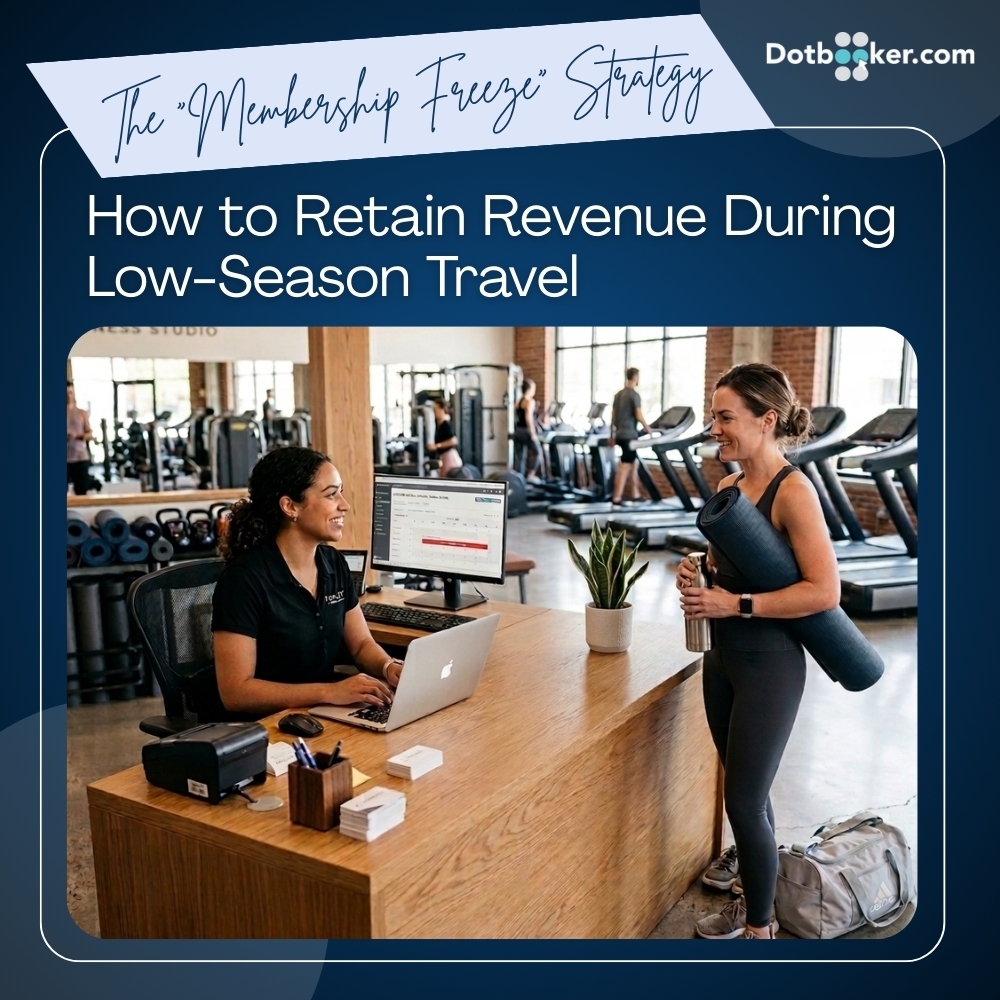
The "Membership Freeze" Strategy: How to Retain Revenue During Low-Season Travel
Travel seasons often bring excitement for customers but uncertainty for membership-based businesses. One week, your classes are full. The next half of your regular members are heading out of town for vacations, seasonal relocations, or business trips. This pattern is especially common in regions like the Cayman Islands, the United States, and Canada, where seasonal travel is deeply tied to lifestyle.
For gyms, wellness studios, training centers, yoga facilities, and other membership-driven businesses, these travel periods can quietly create a ripple effect. Members pause their routines. Attendance drops. And eventually, some customers cancel their memberships altogether.
What if businesses could transform these seasonal disruptions into an opportunity instead of a loss?
This is where the Membership Freeze Strategy comes into play. It allows businesses to maintain customer relationships while protecting long-term revenue. Rather than losing members during travel seasons, companies can keep them connected through flexible Subscription Models and thoughtful Membership Management practices.
The result is stronger Customer Loyalty, improved financial stability, and a business model that adapts to real customer behavior rather than fighting against it.
How Seasonal Travel Impacts Membership Management and Reduces Revenue Retention
Most membership businesses notice a predictable cycle every year. As travel seasons approach, attendance begins to drop gradually—members who once attended classes regularly or booked appointments every week suddenly become inactive on booking calendars.
At first, the change may seem minor. A few missed sessions here and there. But over time, the pattern becomes clearer. Members who were previously consistent are no longer showing up.
The reasons vary. Some customers travel for family vacations during summer or winter holidays. Others take extended business trips. In regions such as the Cayman Islands, seasonal relocation is also common, where residents travel abroad for part of the year. In the United States and Canada, seasonal travel peaks during school holidays, long weekends, and festive periods.
These travel habits naturally interrupt routines. Fitness members stop attending classes. Wellness clients pause their therapy sessions. Training program participants miss scheduled lessons.
Eventually, many of these customers reach the same conclusion.
They ask a simple question.
"Can I cancel my membership while I am away?"
When cancellation becomes the only option available, businesses unknowingly create a long-term risk. Members who cancel often intend to rejoin after they return. However, reality rarely follows that plan.
Once routines are broken, many customers struggle to rebuild them. They may join another facility closer to their home, switch priorities, or simply lose motivation.
For the business, this creates a silent but significant loss. Every canceled membership reduces Revenue Retention's strength. More importantly, it increases the pressure to attract new customers to replace those who left.
Acquiring a new customer often costs far more than retaining an existing one. Marketing campaigns, promotional offers, and onboarding efforts all require additional investment.
This is why seasonal travel quietly drains membership revenue. It does not always happen dramatically. Instead, it happens gradually as loyal members disappear from the system over time.
A well-designed membership freeze strategy helps businesses stop this cycle before it begins.

What Is a Membership Freeze in Membership Management and Why Does It Improve Revenue Retention
A membership freeze is a simple yet powerful concept. Instead of forcing customers to cancel their plans when they cannot attend, businesses allow them to pause their membership temporarily.
During this freeze period, the membership remains active in the system, but access to services is temporarily suspended.
For example, imagine a customer traveling abroad for four weeks. Without a freeze option, they might feel compelled to cancel their membership entirely. With a freeze option available, they can simply pause their plan until they return.
Billing may pause completely or be adjusted depending on business policy. Once the freeze period ends, the membership resumes automatically.
From a Membership Management perspective, this approach protects the customer relationship. The member remains part of the system. Their profile, preferences, and activity history stay intact.
More importantly, the business avoids permanently losing that member.
Membership freezes also align naturally with modern Subscription Models. Subscription-based services are designed to build long-term relationships rather than short-term transactions. Allowing temporary pauses strengthens that philosophy by giving customers the flexibility they need without ending their membership journey.
This small policy change can significantly improve Revenue Retention while maintaining a positive customer experience.
The Psychology Behind Membership Freezes and How They Strengthen Customer Loyalty
Membership freezes are not just operational tools. They also influence how customers emotionally connect with a business.
When companies offer flexible policies, customers feel respected and understood. Instead of feeling pressured to continue paying for services they cannot use, they feel supported.
That emotional connection directly strengthens Customer Loyalty.
To understand this, consider two situations.
In the first situation, a member must cancel their subscription because the business does not allow freezes. They plan to return later, but after several weeks away, their routine fades. Life becomes busy, priorities shift, and the membership never restarts.
In the second situation, the membership pauses while the customer travels. There is no cancellation process, no need to rejoin, and no interruption in their relationship with the business.
When they return home, the membership resumes automatically.
Which business is more likely to retain that customer?
The answer is clear. The second business removes friction and supports the customer's lifestyle.
Flexibility builds trust. Trust builds Customer Loyalty. And loyal customers remain members longer.
Why Subscription Models Require Strong Revenue Retention Strategies
Many modern service businesses rely heavily on recurring Subscription Models. These models provide a predictable monthly income and simplify financial forecasting.
For gyms, wellness studios, training centers, and other membership-based businesses, subscription revenue forms the backbone of their financial stability.
However, subscription models are only sustainable when customers continue their membership over time.
If large numbers of customers cancel their subscriptions during seasonal disruptions, the model's overall reliability begins to weaken.
This is why smart businesses place significant emphasis on Revenue Retention.
Retention strategies focus on keeping existing members engaged and connected rather than constantly searching for new ones.
The financial difference is substantial. Acquiring new customers often requires advertising, promotional discounts, and introductory offers. Retaining an existing member usually requires far fewer resources.
Membership freezes play a critical role in this retention strategy.
By allowing temporary pauses, businesses remove the need for cancellation. Members stay connected to the system and resume their subscriptions once their routine returns.
This simple mechanism protects the long-term health of Subscription Models and keeps revenue streams stable throughout seasonal cycles.
Turning Seasonal Travel Gaps Into Long-Term Customer Loyalty Through Smart Membership Management
Seasonal travel need not weaken membership businesses. When handled correctly, it can actually strengthen relationships between businesses and customers.
When members know they can pause their membership while traveling, they feel more comfortable committing to long-term subscriptions.
They no longer worry about paying for services they cannot use. Instead, they see the membership as something that adapts to their lifestyle.
This reassurance changes the way customers think about their relationship with the business.
Instead of viewing membership as a rigid contract, they see it as a flexible service designed around their needs.
Over time, this approach significantly improves Customer Loyalty.
Members remain connected even when they travel. They return after their trips with their membership intact. Their routine continues without disruption.
Businesses that adopt flexible policies often notice that customers remain members for much longer. Instead of short-term memberships lasting a few months, relationships extend into years.
That is the real strength of thoughtful Membership Management.
How to Design an Effective Membership Freeze Policy for Better Revenue Retention
For membership freezes to deliver real value, businesses must design clear and balanced policies.
Flexibility is important, but it must be supported by guidelines that protect operational stability.
Many organizations start by defining how often members can freeze their subscription. A common approach allows one or two freeze periods per year.
Next, businesses establish the duration of each freeze. Some companies set a minimum freeze period of seven days, while others allow freezes for up to 30 or 60 days, depending on their service model.
Certain businesses also charge a small administrative fee during the freeze period. This fee helps maintain minimal revenue while covering operational costs.
These policies ensure that the freeze system remains sustainable while still protecting Revenue Retention.
Equally important is clear communication.
Customers should easily understand how the freeze policy works. They should know when they can request a freeze, how long it lasts, and how it affects their billing cycle.
Transparent policies eliminate confusion and build trust, which further strengthens Customer Loyalty.
If you want to explore how the right technology can simplify memberships, improve customer experiences, and support long-term revenue retention, you may also find this guide on choosing the right membership management system helpful.
How Technology and Dotbooker Simplify Membership Management and Membership Freezes
As membership businesses grow, managing freeze requests manually becomes increasingly complex.
Staff members must track freeze start dates, billing adjustments, membership renewals, and customer communication. Without proper systems, this process can become time-consuming and error-prone.
Modern digital platforms simplify this entire process.
Software designed for Membership Management automates freeze requests, updates billing cycles, and keeps detailed records of membership activity.
Customers can submit freeze requests online while administrators maintain full visibility over membership status.
This is where Dotbooker plays an important role.
With Dotbooker, businesses can implement flexible Subscription Models that include automated membership freeze features. The system allows organizations to define freeze rules, automatically adjust billing schedules, and manage membership records without manual intervention.
Customers benefit from this automation as well. They can easily view their membership details, request freezes, and monitor billing through a simple digital dashboard.
This seamless experience improves customer satisfaction while strengthening Revenue Retention.
Why the Membership Freeze Strategy Is Becoming Essential for Modern Subscription Models
Across the Cayman Islands, the United States, and Canada, membership-based businesses are increasingly recognizing the importance of flexible retention strategies.
Customers today expect convenience, transparency, and adaptability from the services they use.
Businesses that align their policies with these expectations often outperform competitors that rely on rigid membership structures.
The membership freeze strategy addresses several important challenges simultaneously.
- It protects recurring income.
- It reduces membership cancellations.
- It strengthens Customer Loyalty.
- It supports sustainable Subscription Models.
Most importantly, it demonstrates a customer-focused approach to Membership Management.
Businesses that adopt this strategy show that they understand real customer behavior and are willing to adapt their services accordingly.
In today's competitive market, that adaptability often makes the difference between businesses that struggle with seasonal disruptions and those that continue to grow year after year.
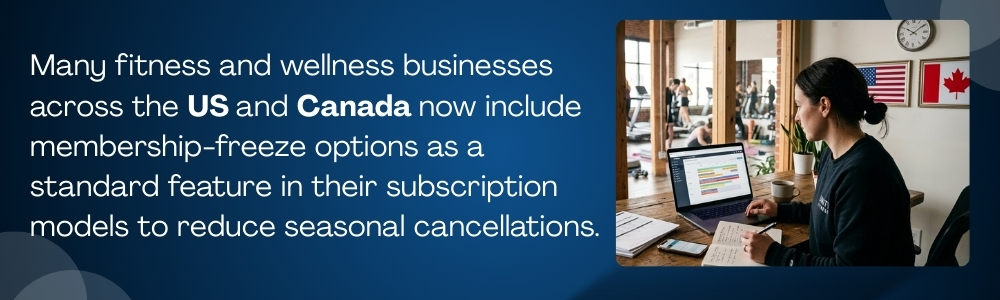
Keeping Members Connected During Travel With Better Membership Management and Customer Loyalty Strategies
Travel seasons will always be part of life. Customers will continue to take vacations, relocate temporarily, and adjust their routines throughout the year.
Businesses that fight these patterns often struggle with cancellations and unpredictable revenue.
Businesses that adapt to them build stronger relationships and more stable income streams.
The membership freeze strategy allows companies to stay connected with customers even when they are temporarily away.
By supporting flexible Subscription Models, improving Revenue Retention, and strengthening Customer Loyalty, businesses create a membership ecosystem that thrives year-round.
Platforms like Dotbooker make this process seamless by giving businesses the tools they need to manage memberships efficiently, automate freeze policies, and maintain consistent customer engagement.
When the right strategy meets the right technology, seasonal travel no longer becomes a threat to membership businesses. Instead, it becomes a manageable part of a sustainable growth journey.
Popular Blogs

- Oct 20, 2022
- 6146
- Sep 08, 2024
- 5631

- Nov 11, 2022
- 5006

- Oct 13, 2025
- 4058
Ready to Transform
Your Business?

Get expert guidance to streamline your business operations.