The "JOMO" Effect: Why Rest and Recovery are Your Studio’s Best Sellers

There was a time when the loudest room in the fitness industry won. The sweatiest class. The toughest coach. The session left people barely able to walk the next day.
But something quiet is happening across boutique studios in the Cayman Islands, the US, and Canada.
People are choosing to skip the chaos.
- Not because they are lazy.
- Not because they lack discipline.
- But because they finally understand what their bodies need.
This is the rise of Joy of Missing Out (JOMO) fitness.
And for studio owners, it may become your most powerful growth strategy.
Why Joy of Missing Out (JOMO) Fitness Is Replacing Burnout Culture in Modern Studios
Imagine a member scrolling through their schedule at the end of a long day.
Their inbox is full. Their phone has not stopped buzzing. Their shoulders feel tight from hours at a desk. Two options appear:
- High-intensity conditioning at 6:00 PM.
- Mobility, breathwork, and guided recovery at 6:15 PM.
A few years ago, the choice felt automatic. Push harder. Sweat more. Earn your rest later.
Today, the internal dialogue sounds different.
- “What does my body actually need right now?”
- “Will this help me feel better tomorrow?”
- “Am I training for performance, or am I training for punishment?”
The shift is not accidental. It is cultural, psychological, and deeply human.
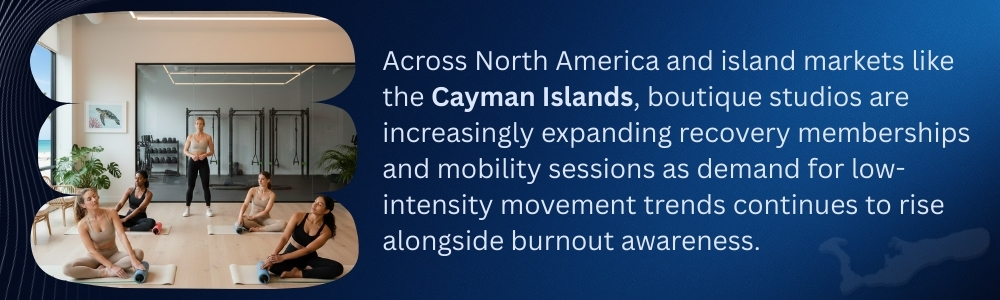
Across major cities in the US and Canada, professionals are navigating long commutes, demanding careers, and constant digital stimulation. In the Cayman Islands, where lifestyle and well-being are highly valued, members are protective of their energy. They are prioritizing balance, not burnout.
This is where Joy of Missing Out (JOMO) fitness changes everything.
It is no longer considered a weakness to skip the most demanding class. Strategic self-awareness is what it is. It indicates that people's attitudes toward health have matured. Recovery becomes a deliberate decision rather than a backup plan.
Studios that understand this mentality are not witnessing a decline in ambition. They are witnessing more astute ambition. Because they aren't overcommitting, members keep coming back. They are forming long-lasting habits.
When clients feel supported rather than pressured, they do not drift away. They commit.
That is the emotional power behind JOMO.
Why Recovery-Focused Studio Management Is the Smart Strategy for Long-Term Studio Growth
Some studio owners hesitate when they hear the phrase " recovery-focused studio management. They worry it sounds like a retreat from intensity or a compromise in performance.
In reality, it is the opposite.
It is strategic programming based on long-term performance, not short-term hype.
Not every day do professional athletes train at their highest level. They work in cycles. Deload weeks are scheduled. Sleep and muscle recovery are their top priorities. The same intelligence is applied at the corporate level by boutique studios that implement Recovery-focused studio management.
This entails intentionally creating weekly routines.
They alternate stress and healing rather than arranging high-impact sessions over several days. They celebrate lifespan and efficiency rather than weariness.
They analyze data such as:
- Instructor fatigue and energy levels
- Client injury patterns
- Seasonal spikes in cancellations
- Attendance consistency trends
- Member feedback about soreness and recovery
They identify where burnout begins and redesign before problems escalate.
This strategy produces operational stability. It safeguards revenue. It builds trust on an emotional level.
Membership freezes resulting from injuries are frequently lower in studios that adopt recovery-focused studio management. Throughout the year, their attendance is more reliable. As they advance at a reasonable rate, members feel secure.
When clients believe your studio protects their long-term health, they do not shop around for alternatives. They stay.
Rest as a Service: Turning Recovery-Focused Studio Management Into a Profitable Revenue Model
For many years, the fitness industry did not include rest in its business strategy. It took place quietly, at home, and without any financial gain.
That model is evolving.
With Rest as a service, studios are now transforming recuperation into a planned, high-end experience.
This is more than just introducing a stretch class. It entails purposefully creating a recovery product category in your studio.
- Dedicated mobility classes that focus on joint health and alignment.
- Guided breathwork sessions that regulate stress and improve focus.
- Cold plunge access designed for inflammation management.
- Infrared sauna memberships that complement strength programs.
- Compression boot lounges that offer measurable relief after training.
Rest as a Service is a potent upsell when correctly framed. Members are purchasing more than just equipment time. They are investing to recover more quickly.
This concept gives boutique studios a competitive edge in cutthroat US and Canadian marketplaces where experience is the deciding factor. It naturally fits with community expectations in the Cayman Islands, where lifestyle wellness is ingrained in everyday life.
Passive downtime is no longer what rest is. It is valuable, purposeful, and well-curated.
And importantly, it increases average revenue per member without increasing physical strain on instructors or equipment.
The Science Behind Sustainable Fitness Progress and Why Recovery Matters More Than Intensity
The fitness industry has traditionally celebrated rapid transformation. Before-and-after photos. Thirty-day challenges. High-intensity bootcamps promise dramatic change.
But many members have learned the hard way that rapid intensity often leads to setbacks.
- Overuse injuries.
- Chronic soreness.
- Mental fatigue.
- Irregular attendance patterns.
What they truly want is Sustainable fitness progress.
This means gradual strength gains. Improved mobility over time. Consistent attendance for years rather than months.
The body undergoes physiological changes as it heals. Muscles grow and heal. The nervous system restarts. The balance of hormones stabilizes. There is less inflammation.
Performance plateaus in the absence of sufficient recovery. with performance ingredients and structured recovery.
Sustainable fitness improvement is naturally supported by studios that incorporate recuperation sessions into their programming. Extreme energy swings are less common among members. They feel secure, competent, and driven.
This builds psychological confidence alongside physical resilience.
And confidence drives retention.
How Low-Intensity Movement Trends Support Sustainable Fitness Progress in Boutique Studios
If you examine class bookings across boutique studios, you will notice a clear pattern.
- Pilates reformer classes are consistently full.
- Restorative yoga sessions maintain waiting lists.
- Slow, controlled strength classes are gaining traction.
These shifts reflect the growth of Low-intensity movement trends.
Low effort does not equate to low intensity. It denotes deliberate effort. deliberate pace. Accurate motion. Training guided by breath that builds strength without becoming overpowering.
Customers are learning that order can coexist with disorder. Without continual adrenaline rushes, strength can be developed.
Professionals over 35 who desire joint-friendly training make up a substantial portion of the studio's clientele when they adopt low-intensity movement patterns. Clients recovering from childbirth are strengthening their core. Active seniors prioritize longevity. Athletes are looking to sustain their performance.
Instead of limiting your brand to high-adrenaline seekers, you position your studio as a long-term wellness partner.
That positioning provides stability in markets such as the US and Canada, where competition is intense. In the Cayman Islands, it aligns with a community-oriented, balanced lifestyle.
Top Boutique Studio Recovery Tools That Strengthen Recovery-Focused Studio Management
Physical space influences perception. When members walk into a studio and see thoughtfully designed recovery areas, it changes how they interpret your brand.
- Compression boots are displayed in a dedicated recovery lounge.
- Infrared saunas are integrated into membership packages.
- Mobility walls equipped with foam rollers, stretch straps, and guided routines.
- Cold therapy tubs are designed for contrast recovery sessions.
These Boutique studio recovery tools signal professionalism and depth.
They communicate that your studio understands the entire training lifecycle, not just the workout itself.
In high-income urban markets across the US and Canada, experiential design plays a significant role in referrals and social sharing. In the Cayman Islands, visually appealing recovery spaces reinforce lifestyle branding and premium positioning.
When implemented strategically, Boutique studio recovery tools enhance perceived value, support premium pricing, and encourage longer visits within your facility.
Members do not just attend a class. They engage in a complete recovery experience.
Why Joy of Missing Out (JOMO) Fitness Is Becoming the Emotional Core of Recovery-Focused Studio Management
The emotional component of Joy of Missing Out (JOMO) fitness is what makes it powerful.
Members are increasingly rejecting constant comparison. They are stepping away from performance pressure. They want to feel capable, balanced, and in control of their energy.
- When your studio openly validates recovery days, you remove guilt from the equation.
- When instructors confidently recommend mobility over maximum intensity, they build credibility.
- When programming protects energy rather than drains it, you create trust.
Trust is the foundation of long-term loyalty.
Studios that emotionally align with their members’ real lives build stronger communities than those that rely solely on intensity-driven marketing.
To deepen your studio’s approach to recovery and member well-being, consider incorporating mindfulness programs to enhance mental clarity and physical resilience, as highlighted in the blog post on implementing mindfulness in gyms.
How to Design a Studio Model Around Sustainable Fitness Progress and Rest as a Service
To operationalize this shift, begin with an honest evaluation.
Review your weekly schedule. Identify clusters of high-intensity sessions. Introduce clearly branded recovery blocks that feel intentional, not secondary.
Educate your team so they can confidently explain the science behind nervous system balance and recovery cycles. Encourage instructors to view recovery as a performance-enhancing process, not downtime.
Position recovery prominently in your marketing. Highlight the benefits of Sustainable fitness progress. Promote Rest as a service as an intelligent investment. Showcase how Low-intensity movement trends support longevity.
Track measurable outcomes. Monitor retention rates. Evaluate injury-related membership pauses. Review attendance consistency across seasons.
When executed properly, Recovery-focused studio management becomes more than a scheduling adjustment. It becomes a strategic identity.
Studios that sell strength through stillness are not lowering standards. They are raising them.
And in a world increasingly aware of burnout, that clarity stands out.
The Future of Joy of Missing Out (JOMO) Fitness and Recovery-Focused Studio Management in Boutique Studios
The future of boutique fitness will not be louder. It will be wiser.
- The Joy of Missing Out (JOMO) fitness trend reflects a deeper cultural shift.
- Recovery-focused studio management transforms operations into strategy.
- Rest as a service unlocks new revenue streams.
- Sustainable fitness progress builds loyalty.
- Low-intensity movement trends expand your audience.
- Boutique studio recovery tools elevate your brand experience.
Studios that embrace these elements position themselves for long-term growth across the Cayman Islands, the US, and Canada.
And this is where operational systems matter.
Platforms like Dotbooker allow studios to manage class scheduling, memberships, packages, recovery sessions, and recurring revenue models in one place. If you are offering mobility blocks, sauna sessions, or recovery memberships, you need a system that supports hybrid programming without complexity.
Dotbooker is designed for studios that operate on an appointment and membership basis. It helps you manage schedules, automate billing, and monitor performance trends so your business runs efficiently behind the scenes, whether you offer strength classes, recovery packages, or premium add-ons.
Rest is becoming the most effective commodity on your schedule in a society that once promoted exhaustion.
Studios that recognize this will not just make it through the transition.