- By Dotbooker
- Jun 24, 2026
- 517
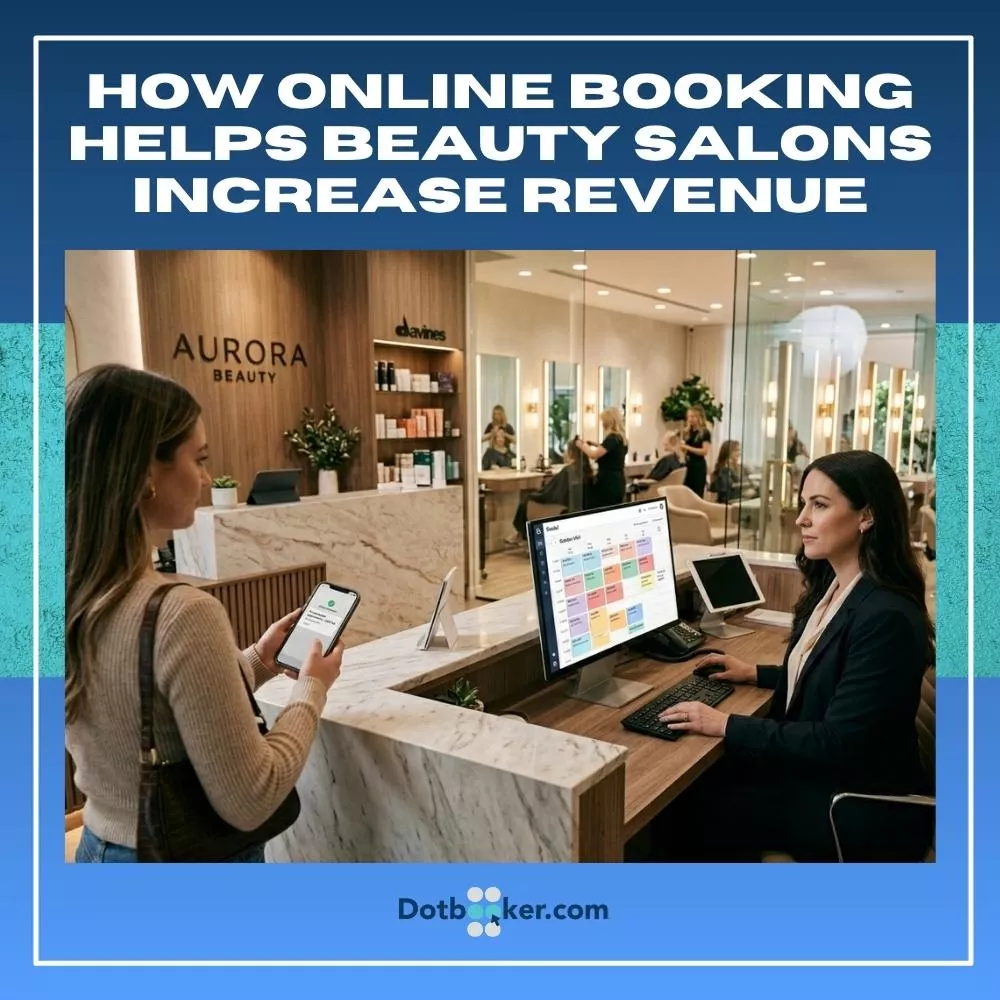
How Online Booking Helps Beauty Salons Increase Revenue
A beauty salon does not lose revenue only when a client cancels. Sometimes, revenue slips away quietly.
It happens when a call goes unanswered during a busy hair colour session. It happens when a client sends a message after closing hours and forgets to follow up the next morning. It happens when a regular customer wants a facial before the weekend but cannot quickly see an available slot. It happens when a stylist has a gap in the afternoon, but no one knows how to fill it in time.
For years, salons have depended on phone calls, front-desk diaries, social media messages, and manual appointment books. These methods may work when the salon is small, but as client expectations grow, they can create hidden revenue leaks.
Today’s beauty clients want booking to feel as easy as ordering food, reserving a table, or scheduling a fitness class. They want to choose a service, check availability, select a preferred stylist, and confirm their appointment without waiting for a reply. That is why an online booking system for salons is no longer just a nice extra. It has become a practical revenue tool.
With the right salon management software, beauty salons can manage appointment booking, staff availability, client records, service menus, reminders, payments, and follow-ups from one place. More importantly, they can turn casual interest into confirmed bookings before that interest disappears.
Modern Clients Prefer Online Salon Appointment Booking
Beauty clients have changed. Not because they no longer value personal service, but because their daily lives are faster, busier, and more digital.
A client may think about booking a manicure while scrolling through Instagram at 11 PM. Another may need a blow-dry before a business meeting but has only a few minutes between tasks. Someone else may be comparing salons online before booking a weekend facial.
In all these moments, the salon that gives the easiest path to booking has the advantage.
Clients Do Not Always Want to Call
Calling a salon can seem simple on the business side, but on the client side, it may feel inconvenient. They may be at work. They may not want to wait on hold. They may not know which service to ask for. They may prefer to check pricing and timing quietly before making a decision.
Online booking removes that hesitation. It gives clients control without pressure. They can browse services, compare time slots, check prices, and confirm when they are ready.
That smooth experience matters because hesitation can kill a booking. When the client has to stop, call, wait, explain, and confirm manually, the risk of losing the appointment increases significantly.

Salon Management Software Turns Calls into Bookings
In a busy salon, the phone often rings at the worst possible time.
The receptionist may be checking out a client. A stylist may be asking for product support. A walk-in may be waiting near the desk. A client may be asking about a membership, gift card, or reschedule. In the middle of that, a new customer calls to book a haircut, color, facial, or nail appointment.
If the call is missed, the revenue may be missed too.
Every Unanswered Inquiry Has a Cost
One missed call may not look serious. But over the course of a month, those missed calls can add up to a full list of lost appointments.
- A missed haircut.
- A missed colour treatment.
- A missed bridal makeup inquiry.
- A missed spa package.
- A missed repeat client who wanted a quick refill.
An online booking system for salons helps capture these opportunities automatically. The client does not have to wait for someone to respond. The system displays available slots and allows the client to confirm the appointment instantly.
This means your salon can keep accepting bookings even while your team is busy serving clients.
Better Salon Scheduling Drives More Revenue
A salon calendar can look full and still be poorly planned.
There may be small gaps that are hard to fill. Long services may be placed too close together. A stylist may be booked back-to-back without enough breathing room. A treatment room may sit empty because the calendar does not clearly show availability.
This is where salon scheduling becomes directly connected to revenue.
A Cleaner Calendar Means More Paid Hours
When salon scheduling is handled digitally, each service can be mapped with the right duration, staff member, resource, and availability. For example, a haircut may take 45 minutes, while a hair colour service may take two hours. A facial may need a treatment room, while a manicure may need a specific technician.
When this information is handled manually, mistakes become common. But with salon management software, the system can show only the slots that actually work.
That helps reduce double bookings, awkward gaps, rushed services, and staff confusion. The result is a calendar that works harder for the business.
Better Timing Improves Client Experience Too
Revenue does not grow only by adding more bookings. It also grows when clients enjoy the experience enough to return.
Poor timing can make clients feel rushed or ignored. If one appointment runs late, the rest of the day may suffer. When scheduling is planned properly, staff can focus on service quality instead of constantly adjusting the calendar.
A relaxed stylist, a prepared treatment room, and a clear appointment flow can make the client experience feel more professional.
Online Booking Helps Sell More Salon Services
Many salons have excellent services, but clients may not know the full menu.
A client may come for a haircut without realising the salon also offers scalp treatments, hair gloss, deep conditioning, or styling add-ons. Someone booking a facial may not know they can add LED therapy, eye treatment, or a premium mask. A nail client may not see nail art, gel removal, or strengthening treatments unless someone explains them.
Online booking brings those options into view.
Your Service Menu Becomes a Sales Tool
A well-organised online menu can show:
- Service categories
- Starting prices
- Duration
- Staff options
- Add-ons
- Packages
- Membership options
- Preparation notes
- Cancellation terms
This helps clients make better choices. It also helps salons increase the average appointment value.
For example, instead of booking only a basic facial, a client may add an enhancement. Instead of booking only a haircut, they may choose a treatment add-on. Instead of booking a single nail appointment, they may choose a package.
This kind of revenue growth feels natural because the client is already in booking mode. The system simply shows relevant choices at the right time.
Instant Appointment Booking Captures Client Interest
Beauty decisions are often emotional and visual.
- A client sees a hair transformation online and thinks, “I want that.”
- A bride-to-be sees soft glam makeup and starts looking for availability.
- A client sees a fresh manicure design and decides to book before the weekend.
- Someone sees a relaxing facial video and remembers they need self-care.
The moment of interest is powerful. But it can fade quickly.
Social Media Needs a Booking Path
Many beauty salons spend time creating Instagram posts, reels, before-and-after photos, offers, and stories. These efforts attract attention, but attention does not translate into revenue unless there is a clear booking path.
Online booking connects social media interest to real appointments.
A booking link can be added to:
- Instagram bio
- Facebook page
- Google Business Profile
- Website service pages
- Email campaigns
- SMS promotions
- Digital ads
- Influencer campaigns
When someone likes what they see, they should be able to book right away. The fewer steps between interest and appointment, the better the chance of conversion.
Salon Appointment Reminders Reduce Costly No-Shows
No-shows are one of the most frustrating revenue problems for salons.
The staff member is ready. The product may be prepared. The appointment slot has been reserved. But the client does not arrive, and that time is difficult to sell again.
Online booking helps reduce this risk in two ways: reminders and deposits.
Reminders Keep Clients on Track
Automated reminders can be sent through email, SMS, or app notifications. They remind clients about the date, time, location, service, stylist, and cancellation policy.
This is helpful because many clients do not miss appointments intentionally. They simply forget.
A reminder gives them a chance to confirm, reschedule, or cancel early enough for the salon to refill the slot.
Deposits Protect High-Value Appointments
Some services take more time and carry higher revenue potential. Hair colour, bridal makeup, spa packages, long nail sessions, and group bookings can block important parts of the calendar.
For these services, deposits can help protect the salon.
A deposit creates commitment. It also shows that the salon’s time has value. Clients are more likely to attend, and if they cancel late, the salon has some protection against the loss.
Repeat Appointment Booking Grows Salon Revenue
New clients are valuable, but repeat clients keep a salon stable.
The best salon revenue does not come from hoping every week will bring new people. It comes from establishing a rhythm in which clients return regularly.
Beauty services already have natural repeat cycles:
- Hair colour every few weeks
- Lash refills every two to three weeks
- Nails every two to four weeks
- Facials every four to six weeks
- Waxing every few weeks
- Haircuts every six to ten weeks
The problem is that clients often forget to rebook.
Rebooking Reminders Bring Clients Back on Time
With salon management software, salons can send reminders based on client history. A lash client can be reminded when it is time for a refill. A facial client can receive a follow-up suggestion. A hair color client can be prompted before roots become too visible.
This is not just convenient. It protects revenue.
When clients return on schedule, the salon earns more consistently. Clients also get better results because they maintain their services instead of waiting too long.
Online Booking Fills Empty Salon Slots Faster
Empty slots are not always avoidable. Clients cancel. Staff availability changes. Weather, travel, school schedules, holidays, and personal commitments can affect bookings.
But empty slots become a bigger problem when the salon has no fast way to refill them.
Last-Minute Availability Can Become an Opportunity
With digital booking, salons can promote open slots. A cancellation at 3 PM does not have to stay empty. The salon can send a message, update the booking page, or notify waitlisted clients.
For example:
- “Opening today at 4 PM for a blow-dry.”
- “Last facial slot available before the weekend.”
- “Color consultation slot just opened.”
- “Two manicure appointments available this afternoon.”
Clients who want quick appointments often appreciate these updates. For the salon, it means recovered revenue.
Salon Scheduling Gives Staff More Client Time
A salon team should not spend most of the day answering the same booking questions again and again.
- “What time are you available?”
- “How much is this service?”
- “Can I book with this stylist?”
- “Can I reschedule?”
- “How long does it take?”
- “Do you have anything on Saturday?”
These are important questions, but they do not always need manual handling.
Less Admin, Better Service
Online booking allows clients to answer many of these questions themselves. That gives the front desk and service team more time to focus on the people already inside the salon.
They can welcome clients properly, recommend products, prepare rooms, support stylists, handle consultations, and enhance the overall experience.
This can directly affect revenue because better service leads to stronger retention, more referrals, and higher client satisfaction.
If you want to explore this further, Dotbooker’s guide on why your hair salon needs an online booking system to compete explains how online appointment booking helps salons improve convenience, reduce no-shows, and support long-term business growth.
Salon Management Software Improves Business Decisions
Many salon owners rely on instinct. They know which days feel busy and which services seem popular. But feeling busy is not the same as understanding revenue.
A digital booking system can show what is really happening.
Useful Questions the System Can Answer
- Which services bring the most revenue?
- Which time slots stay empty?
- Which staff members are booked most often?
- Which clients have not returned recently?
- Which add-ons are popular?
- Which services need more promotion?
- Which days need more staff?
- Which offers are actually working?
These answers help salon owners plan smarter.
For example, if facials are slow on Tuesdays, the salon can create a weekday offer. If hair color is fully booked every Saturday, the salon may open more color slots or train another stylist. If clients continue to book after work hours, the salon may test extended evening availability.
Good data turns salon growth from guesswork into clear planning.
Online Booking System Builds Client Trust Early
A client forms an opinion before stepping into the salon.
They notice your website. They check your social media. They read reviews. They look at your service menu. They judge how easy it is to book.
If the process feels confusing, they may question the salon’s professionalism. If it feels smooth, they feel more confident.
The Booking Experience Is Part of the Brand
A clear booking process tells clients that your salon respects their time. It shows that your business is organised. It also helps new clients feel secure by providing confirmation, reminders, and service details.
For beauty salons in the Cayman Islands, the US, and Canada, this matters even more because clients often compare options online before making a choice. The salon with the easier booking journey can win the appointment before the client ever makes a call.
Digital Salon Management Software Is Now Essential
Some salon owners delay online booking because they worry it will feel less personal. But online booking does not remove the human side of the salon. It protects it.
It allows the system to handle the routine steps, while your team focuses on care, creativity, and client relationships.
Technology Should Support the Salon, Not Replace Its Personality
The best salons still feel warm, personal, and stylish. Online booking simply makes the business side easier.
Clients can book faster. Staff can work with more clarity. Owners can see the performance better. The salon can capture more appointments without adding pressure to the team.
That is where the real value appears.
Key Features of an Online Booking System for Salons
Not every booking tool is enough for a growing salon. A simple calendar may help with appointments, but a salon needs more than a calendar to increase revenue.
Key Features That Matter
A strong online booking system for salons should include:
- Online appointment booking
- Staff-wise availability
- Service duration setup
- Add-ons and upgrades
- Automated reminders
- Client profiles
- Deposits and online payments
- Cancellation and rescheduling options
- Waitlist management
- Service packages
- Membership options
- Reports and revenue tracking
- Mobile-friendly booking
- Social media and website booking links
- Multi-location support, if needed
When these features work together, the salon can manage more than appointments. It can manage growth.
Salon Management Software Creates a Fuller Calendar
Online booking is not just a digital feature. It is a revenue habit.
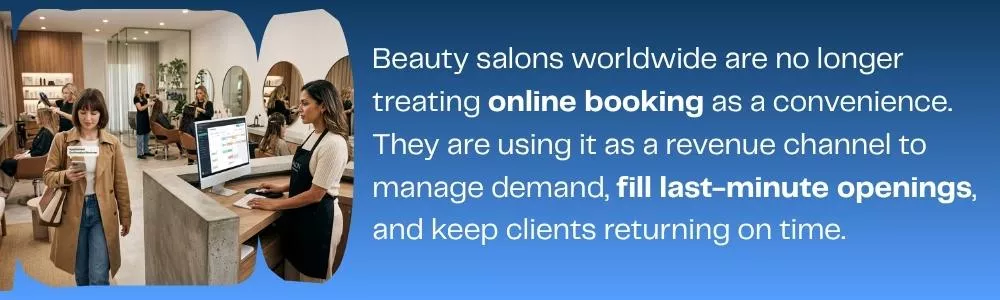
It helps beauty salons capture appointments outside business hours, reduce missed calls, improve salon scheduling, promote add-ons, collect deposits, reduce no-shows, encourage repeat bookings, and understand what clients actually want.
For beauty salons that want to grow without creating more front-desk pressure, the right salon management software can make a major difference.
Dotbooker supports beauty salons with online booking, appointment management, staff scheduling, client records, payments, memberships, packages, reminders, and reporting on a single connected platform. Instead of juggling calls, messages, calendars, and manual follow-ups, salons can manage the full booking journey more smoothly.
For clients, the experience feels simple. For salon owners, the calendar becomes easier to control. For the business, every available slot becomes a better revenue opportunity.
A salon does not need to work harder every day to grow. Sometimes, it just needs to make booking easier at the exact moment a client is ready to say yes.
Popular Blogs

- Oct 20, 2022
- 6109
- Sep 08, 2024
- 5591

- Nov 11, 2022
- 4975
- Oct 13, 2025
- 4027
Ready to Transform
Your Business?

Get expert guidance to streamline your business operations.