- By Anthony Filipiak, CEO of amplifa
- Jul 01, 2026
- 348
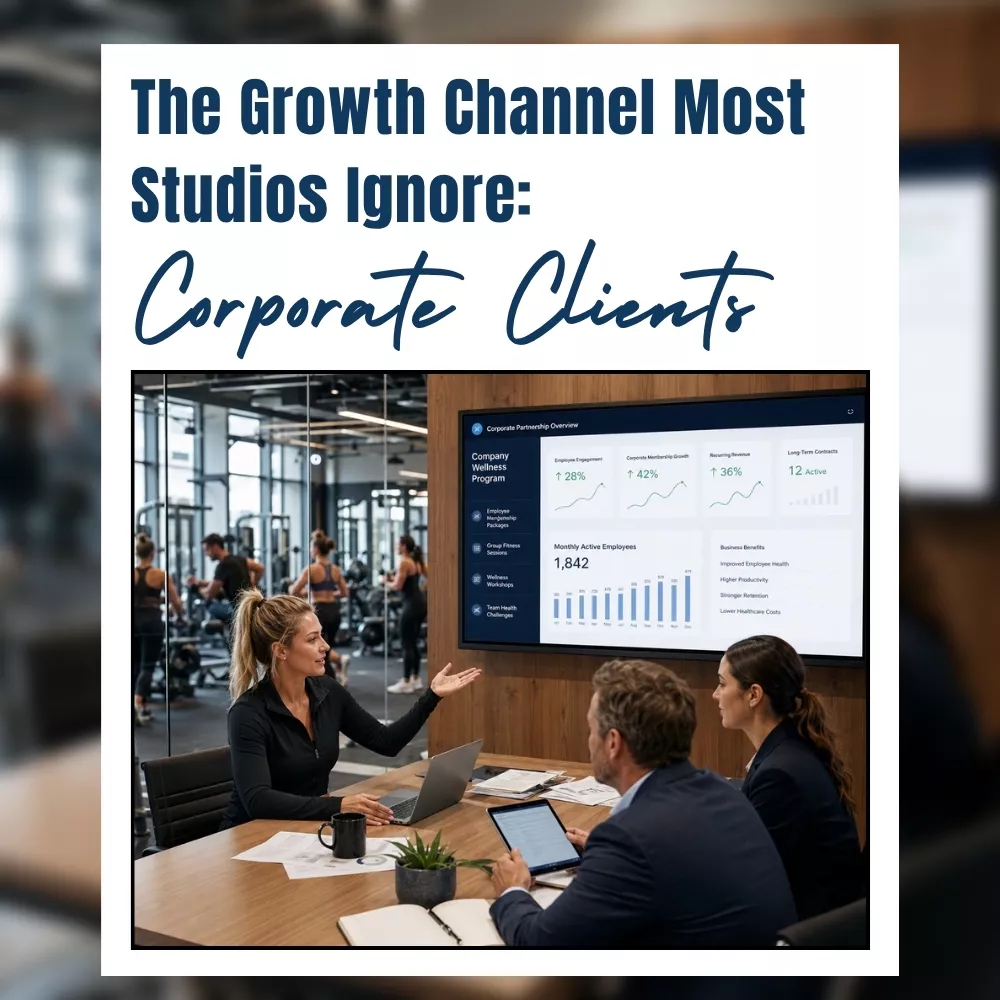
The Growth Channel Most Studios Ignore: Corporate Clients
I don’t run a gym. I run a company that helps B2B teams build predictable sales pipelines, and most of our clients sit in software and industry. So why write for a fitness and wellness audience? Because over the last few years I’ve watched dozens of studio owners, spa managers and independent trainers wrestle with the exact problem my clients have — just dressed in different clothes. They have a great service, a loyal base of customers, and no reliable way to grow beyond word of mouth.
Most fitness and wellness businesses live and die by consumer demand. You polish the booking flow, run a few local ads, post on Instagram, and hope enough people walk through the door this month. When they do, business is good. When they don’t, there’s nothing in reserve. That dependency is stressful, and it’s avoidable — because there’s a second growth channel sitting right next to you that almost nobody works on purpose: local employers.
The math behind corporate clients
One corporate wellness contract — a regional employer paying for memberships, on-site classes, or spa vouchers for its staff — is worth far more than a single walk-in, and it behaves completely differently. It renews on a budget cycle instead of a New Year’s resolution. It brings ten, thirty, fifty people at once instead of one. And once you’ve earned it, an HR or office manager is far less likely to churn than a consumer comparing your monthly fee to the gym down the street.
The reason most studios don’t have these contracts isn’t that employers aren’t interested. Companies spend real money on employee wellbeing, and a local studio is an easier sell than a faceless corporate provider. The reason is that winning corporate clients is a sales motion, not a marketing one — and very few people in the fitness industry have ever been taught how to run one.
Treat growth like a pipeline, not a lottery
Here’s the shift I’d encourage any studio owner to make: stop treating new business as something that happens to you, and start treating it as a pipeline you build deliberately.
A pipeline is just a predictable sequence. You identify the right companies, you reach the right person with a relevant reason, you have a short conversation, and a known fraction of those conversations turn into contracts. Once you know your numbers — how many companies you contact to land one client — growth stops being a lottery and becomes arithmetic.
For a fitness or wellness business, the building blocks look like this:
- Define who you’re actually targeting. Not “companies.” Employers within a realistic travel radius of your location, in the size range that can justify a wellbeing budget — often 20 to 250 employees. A small, sharp list beats a giant vague one every time.
- Reach the right person with a relevant reason. The decision-maker usually sits in HR, office management, or the leadership of a smaller firm. Your message shouldn’t be a brochure — it should reference something specific about them and offer one clear, low-friction idea: a free taster class for their team, a corporate rate, a wellbeing week.
- Make the next step effortless. This is where your booking system earns its keep. If your outreach lands and the manager is curious, the path from “interested” to “scheduled” should be a single click, not a week of email tennis.
- Follow up without being a pest. Most deals — in any industry — close on the second or third touch, not the first. A polite, spaced follow-up is the difference between a full corporate calendar and an empty one.
What I’ve learned automating this at scale
Building these pipelines is the entire job at my company — we build AI-driven outbound systems that help businesses find the right prospects and start relevant conversations at scale, which is what we do every day at amplifa.ai. I’m not suggesting a single-location studio needs enterprise software; a spreadsheet and an hour a week will take you remarkably far. But the principles translate exactly, and two of them are worth underlining.
First, relevance beats volume. The temptation is always to blast the same generic pitch at everyone. It doesn’t work in software and it won’t work for a spa. Twenty messages that each reference the specific company will outperform two hundred copy-paste ones.
Second, consistency beats intensity. The studios that build a real corporate base aren’t the ones who do a frantic outreach push in January and then forget about it. They’re the ones who contact a handful of new employers every single week, all year. It’s unglamorous, and it’s the whole game.
Start small, this week
You don’t need a sales team or a new budget to begin. Pick ten employers near your studio. Find the person who would own employee wellbeing. Send each a short, specific message offering one genuinely useful thing — a free team class, a guest day, a corporate rate. Put a reminder in your calendar to follow up in a week. Then do it again next week.
Consumer demand will always be the heart of a fitness or wellness business. But the owners who sleep well at night are the ones who don’t depend on it alone. The corporate channel is right there, most of your competitors are ignoring it, and the barrier to entry is nothing more than a willingness to start the conversation.
Popular Blogs
- Oct 20, 2022
- 6150
- Sep 08, 2024
- 5636
- Nov 11, 2022
- 5010

- Oct 13, 2025
- 4061
Ready to Transform
Your Business?

Get expert guidance to streamline your business operations.