
- By Dotbooker
- Mar 18, 2026
- 668
Owning Your Audience: Navigating the "Death of the Cookie" in 2026
At one point, marketing seemed simple.
You ran a commercial. Behavior was tracked using a platform. Visitors to your website spotted your salon online. The main lifting was done by retargeting. Silently, algorithms made the connections.
That period of time is coming to a close.
The cookie's alleged demise is hardly a spectacular breakdown. The shift is silent. Browsers are restricting third-party tracking. Laws protecting privacy are getting stronger. Customers are becoming more astute in their inquiries about how their data is used.
For salons across the Cayman Islands, the US, and Canada, this moment is not about panic. It is about ownership.
The real power in 2026 belongs to businesses that control their own data. That means investing in First-party data for salons and building a strong foundation around Privacy-first client marketing.
Let us explore what that actually looks like.
The End of Rented Audiences: Why Owned Audience Growth Matters More Than Ever
For years, many salons unknowingly rented their audience.
- Your followers live on Instagram.
- Your engagement lived on Facebook.
- Your retargeting lives inside ad platforms.
It was practical. Bookings came in after you advertised and promoted a campaign. In the background, however, you were increasing your visibility on property that was not yours.
Now take a time to reflect and ask yourself:
- What happens when ad costs suddenly double during peak season?
- What happens when an algorithm update reduces your organic reach overnight?
- What happens when tracking becomes restricted, and your retargeting campaigns lose precision?
- What happens if your account gets flagged or suspended without warning?
If your client connection depends entirely on someone else’s system, you do not own your growth. You are borrowing it.
This is exactly why owned audience growth is becoming the most important strategic shift for service-based businesses in 2026.
Owning your audience means:
- You control the database.
- You control communication.
- You control personalization.
- You control security.
No algorithm can take that away. No policy change can erase it. No platform outage can disconnect you from your clients.
When your marketing engine is built around your own ecosystem, you move from reactive to resilient. Instead of worrying about platform volatility, you focus on strengthening direct relationships. That stability is priceless in competitive markets like the US and Canada, and even more valuable in relationship-driven communities like Cayman.
Why First-Party Data for Salons Is the Foundation of Long-Term Growth
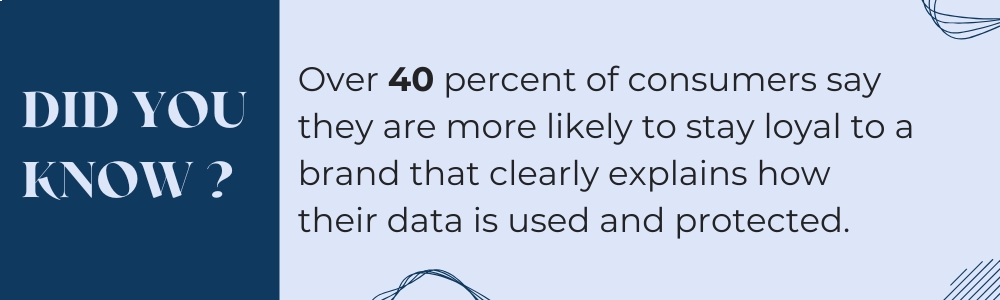
At its core, First-party data for salons is simple.
It is information your clients willingly give you through:
- Appointment bookings
- Consultation forms
- Service history
- Product purchases
- Loyalty programs
- Feedback submissions
This is not anonymous tracking. It is relationship-based data.
Every appointment tells a story. Every product purchase signals preference. Every feedback form reveals expectations. When properly structured, First-party data for salons becomes a map of client behavior, not just a list of names and phone numbers.
When you organize and activate this data correctly, you can:
- Send reminders exactly when clients are due for a service.
- Recommend treatments based on previous visits.
- Create birthday or anniversary campaigns that feel personal.
- Segment clients by frequency, spending level, lifestyle, or preference.
- Identify high-value clients and nurture them strategically.
- Reactivate clients who have not visited in months.
Instead of guessing, you communicate with precision. Instead of sending one generic promotion to everyone, you create targeted experiences.
In competitive markets like the US and Canada, this type of structured targeting dramatically improves retention and revenue predictability. In smaller communities like Cayman, this deepens trust because clients feel recognized rather than marketed to.
How Privacy-First Client Marketing Builds Trust and Drives Revenue
Clients today are not just booking appointments. They are evaluating brands.
They want clarity.
- Why are you collecting this information?
- Where is it stored?
- Who has access to it?
- Can I control my data?
This is where Privacy-first client marketing becomes your advantage.
When you clearly communicate:
- What data do you collect?
- How does it improve their experience?
- They can opt out at any time.
- How do you protect their information?
You build credibility.
And credibility drives repeat business.
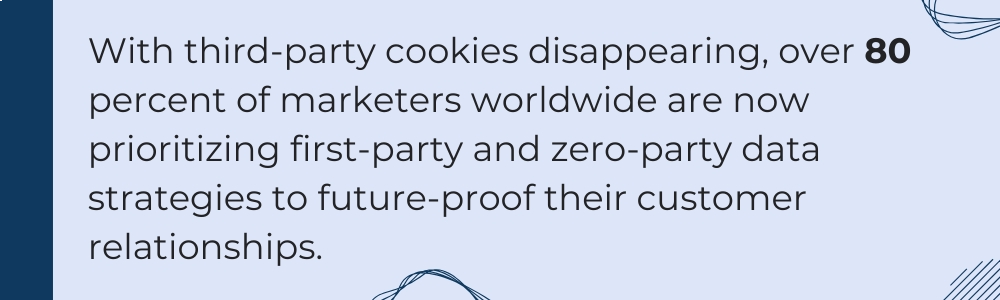
Privacy is no longer only required by law. It sets the brand apart. Salons that exhibit safe data policies stand out as contemporary, reliable companies in a time when news stories about data misuse predominate.
Respected clients are more inclined to divulge important information. They are more receptive to questionnaires. more at ease choosing to receive SMS reminders. more assured when downloading your app.
This emotional layer of trust directly influences lifetime value.
That is where a smart Zero-party data strategy becomes transformative.
Building a Powerful Zero-Party Data Strategy for Smarter Salon Personalization
Zero-party data is different from first-party data.
It is information clients intentionally and proactively provide about themselves.
A strong Zero-party data strategy could include:
- Asking clients about hair concerns before a treatment.
- Letting them choose communication preferences.
- Inviting them to share upcoming events.
- Offering skin type quizzes or style preference surveys.
- Capturing product sensitivities or allergies.
This data does not originate from website behavior tracking. It results from dialogue and agreement.
Your suggestions take on a strategic role when a client discloses that they are planning a wedding in three months. They bring up product sensitivities, which makes your upselling considerate. You can communicate more easily when customers prefer SMS reminders to emails.
A structured Zero-party data strategy shifts marketing from broad messaging to intelligent dialogue.
Personalization becomes intentional. Service becomes anticipatory. The experience becomes memorable.
And memorable experiences build loyalty that no advertisement can replicate.
Why GDPR-Compliant Scheduling Is Essential for Modern First-Party Data for Salons
Reservation systems are frequently undervalued. There is more to them than just calendars. Data gateways are what they are.
Your platform must support GDPR-compliant scheduling if your salon wishes to create long-lasting first-party data.
This includes:
- Clear consent checkboxes during booking.
- Easy access to privacy policies.
- Transparent communication preferences.
- The ability to remove or update data upon request.
- Secure storage of appointment history.
- Consent logs and audit trails.
Expectations for privacy are increasing rapidly in numerous US states and Canada. Global privacy standards are brought to Cayman by foreign visitors.
You and your clients are protected by a system that facilitates GDPR-compliant scheduling. It reduces legal risk, improves operational discipline, and reaffirms your brand's reputation as responsible and competent.
Customers can tell whether a company values privacy. It conveys dependability and maturity.
Loyalty is also strengthened by dependability.
The Importance of Secure Client Database Management in Privacy-First Salon Marketing
Building a strong database is powerful. Protecting it is critical.
Secure client database management is not just about installing software. It is about operational culture.
It requires:
- Role-based access for staff members.
- Encrypted storage.
- Regular system updates.
- Two-factor authentication.
- Secure payment processing.
- Data backup protocols.
- Internal access control policies.
Do you instantly deny access when a stylist departs the company? Is it possible to remotely safeguard client information if a device is lost? These are important questions.
In close-knit groups, word gets around fast. A breach affects more than one client. It affects how your whole market perceives you.
Salons that invest in strong Secure client database management practices demonstrate a serious commitment to client relationships. That seriousness translates into confidence.
Security becomes a competitive edge.
Scaling Owned Audience Growth with Smart Secure Client Database Management
Here is the real shift.
Instead of focusing only on gaining more followers, focus on growing your owned list.
Owned audience growth means:
- Building a strong email list.
- Growing SMS opt-ins.
- Encouraging loyalty memberships.
- Developing app users.
- Creating referral networks inside your database.
- Collecting structured client profiles that allow deeper segmentation.
Imagine launching a new service and promoting it directly to:
- Clients who booked similar treatments before.
- VIP members.
- Clients inactive for 60 days.
- High spending customers.
- Clients who previously purchased complementary products.
That is precision marketing powered by your own system.
This approach reduces advertising waste. It improves conversion rates. It shortens the sales cycle. Most importantly, it strengthens client retention.
When you own your audience, marketing becomes efficient instead of expensive. It becomes predictable instead of reactive.
For salons looking to centralize client data and streamline privacy-centered operations, exploring solutions like Dotbooker is a practical next step; you can learn more in this article on the rise of all-in-one hair salon management tools.
The Revenue Impact of Privacy-First Client Marketing and Structured First-Party Data for Salons
There is a misconception that privacy limits marketing potential.
In reality, Privacy-first client marketing improves performance.
Why?
Because clients who opt in are more engaged, they choose to hear from you.
You often see:
- Higher email open rates.
- More consistent rebookings.
- Better upselling conversion.
- Increased lifetime value.
- Stronger brand advocacy.
- More referrals generated organically.
When combined with structured First-party data for salons and a thoughtful Zero-party data strategy, your campaigns feel relevant rather than intrusive.
Clients do not feel tracked. They feel understood.
And in modern marketing, relevance always wins.
How Dotbooker Supports GDPR-Compliant Scheduling, Owned Audience Growth, and Secure Client Database Management
As salons move toward ownership and security, technology becomes the backbone of strategy.
Dotbooker is designed to support exactly this transition.
With features that enable:
- Structured First-party data for salons
- Integrated Privacy-first client marketing
- Smart consent collection for GDPR-compliant scheduling
- Advanced Secure client database management
- Tools that encourage steady Owned audience growth
Dotbooker helps salons build long-term digital independence.
Instead of depending on external platforms for visibility, you build direct relationships inside your own ecosystem.
In 2026, that difference matters.
Winning in a Post-Cookie World with First-Party Data for Salons and a Strong Zero-Party Data Strategy
The cookie is fading. But relationships are not.
Salons that treat data as a relationship asset, not just a marketing tool, will lead the next phase of growth.
When you own your database, respect privacy, secure information, and use insights intelligently, you create something stronger than retargeting ads.
You create loyalty.
And loyalty, unlike cookies, does not expire.
Popular Blogs
- Oct 20, 2022
- 6068
- Sep 08, 2024
- 5544
- Nov 11, 2022
- 4926
- Oct 13, 2025
- 3981
Ready to Transform
Your Business?

Get expert guidance to streamline your business operations.