- By Dotbooker
- Jan 13, 2026
- 799
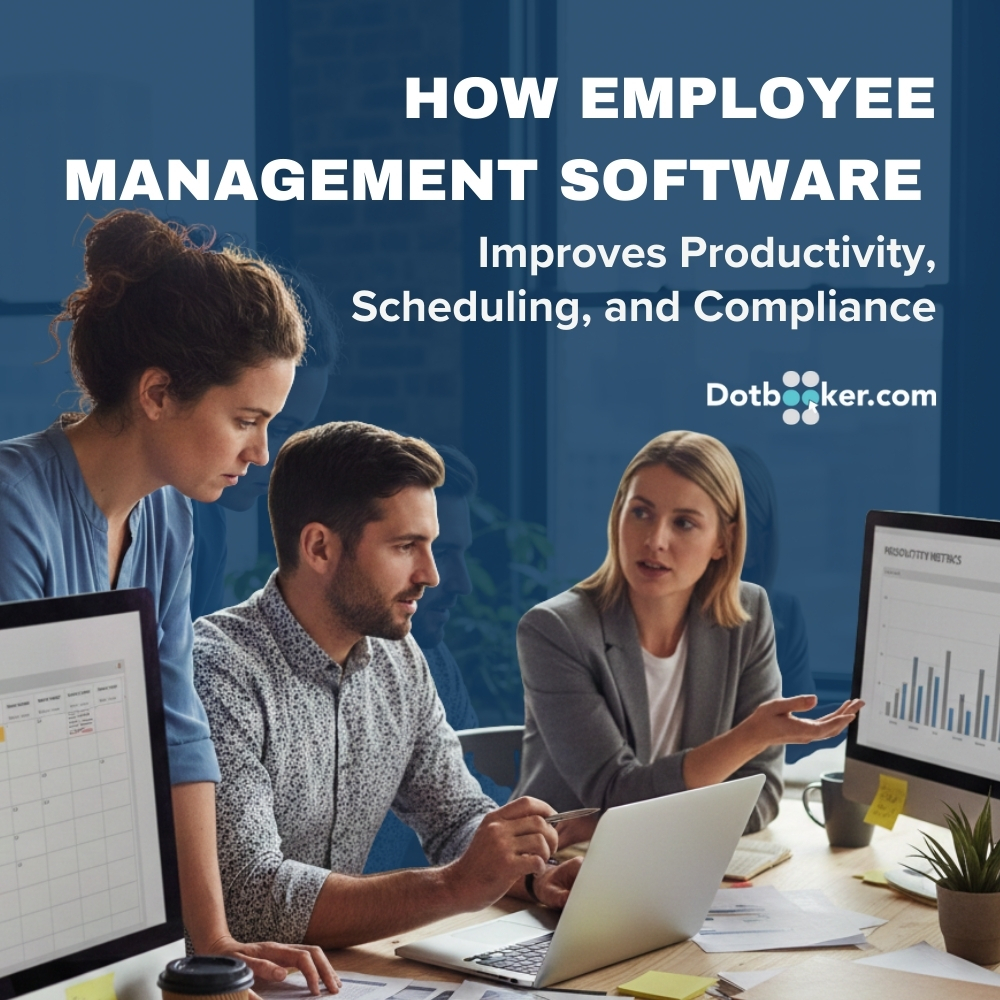
How Employee Management Software Improves Productivity, Scheduling, and Compliance
Every expanding company eventually reaches a point where managing people becomes more important than the actual task. What used to operate well with a small crew is now slowing down. Hourly tracking takes up more time for managers than growth planning. Workers frequently clarify schedules, wait for permissions, or fix preventable mistakes. On paper, none of this seems significant, but over time, it subtly reduces momentum, productivity, and trust.
This is where employee management software begins to change the rhythm of how a business operates, not by adding complexity, but by removing friction that most teams have learned to tolerate for far too long.
Productivity Is Not About Speed, It Is About Flow
When people talk about productivity, they often imagine faster output or longer working hours. In reality, productivity improves when work flows smoothly without unnecessary interruptions. Most productivity loss happens in the gaps between tasks. Waiting for approvals. Clarifying schedules. Correcting errors that should never have occurred in the first place.
In businesses without a centralized system, employees constantly switch context. They respond to attendance messages, follow up on leave approvals, or clarify work hours. Managers are equally distracted, jumping between spreadsheets, emails, and manual reports.
Employee management software brings structure to this chaos. Attendance records, leave data, approvals, and employee information are stored in a single system. Employees know where to check their details. Managers know where to review and act. This reduces back-and-forth communication that adds no real value to the business.
Over time, this clarity changes how people work. Teams become more focused. Managers plan instead of reacting. Productivity improves not because people work harder, but because fewer things get in the way of their work.
Visibility Creates Accountability Without Micromanagement
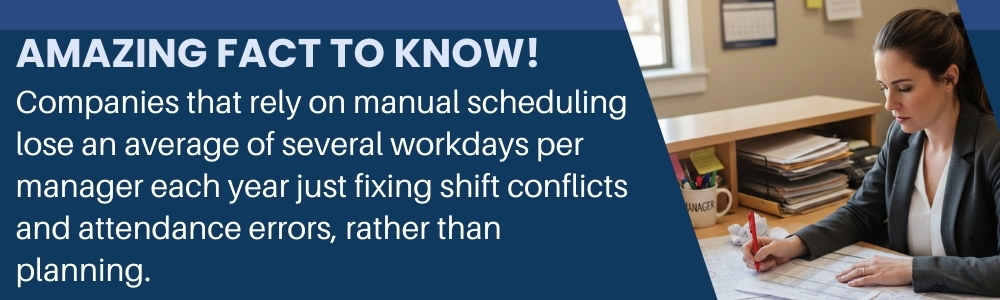
One of the most overlooked benefits of an employee management system is the visibility it provides. Not surveillance, but clarity. The team's availability, attendance trends, and workload distribution are all clearly visible to managers. Without continual reminders, employees are aware of expectations.
Micromanagement is no longer necessary because of this visibility. Trust increases when systems are transparent about who is working, when they are working, and what has been approved. Employees feel less observed and more supported. Because they have the correct facts to help them, managers are more comfortable making decisions.
In today's workplaces, when flexibility is required, this balance is crucial. Systems that can facilitate responsibility without causing conflict are necessary for remote work, hybrid schedules, and flexible hours.
Scheduling Becomes a Planning Exercise, Not Daily Firefighting
One of the most crucial aspects of any business's operations is scheduling. Customer satisfaction, team morale, and service quality can all be impacted by a single missed shift or misunderstanding. However, many businesses continue to use antiquated manual scheduling techniques.
The use of employee scheduling software makes scheduling an organized planning process rather than a reactive effort. Schedules can be made by managers depending on operational need, authorized leave, and actual availability. Workers may easily view schedules and use specified workflows to request modifications.
This structure reduces last-minute changes and confusion. Employees feel more confident planning their personal time. Managers spend less time resolving scheduling conflicts. The entire organization benefits from predictability.
For businesses operating across multiple locations or extended hours, this predictability becomes critical. Without it, growth simply increases chaos.
When Scheduling Is Connected to Workforce Reality
Scheduling becomes far more powerful when it connects with broader workforce management software. Attendance data, overtime limits, and compliance rules feed directly into scheduling decisions. This prevents common issues such as unplanned overtime or understaffed shifts.
Before schedules are set, for instance, the system indicates when an employee is approaching their overtime limit. A person is immediately disqualified from scheduling if they are on authorized leave. This proactive approach reduces payroll surprises and compliance risks.
Businesses avoid errors in the first place rather than fixing them afterward. Over time, this change alone can result in significant time and cost savings.
Compliance Stops Being a Stress Point
Compliance is one of the least visible but most critical aspects of workforce management. Many compliance issues are not caused by intent, but by inconsistency. Different managers apply rules differently. Records are incomplete. Documentation is scattered.
HR management software embeds compliance into everyday operations. Working hours, break rules, approvals, and documentation follow predefined logic. This guarantees uniform application of policies across teams and locations.
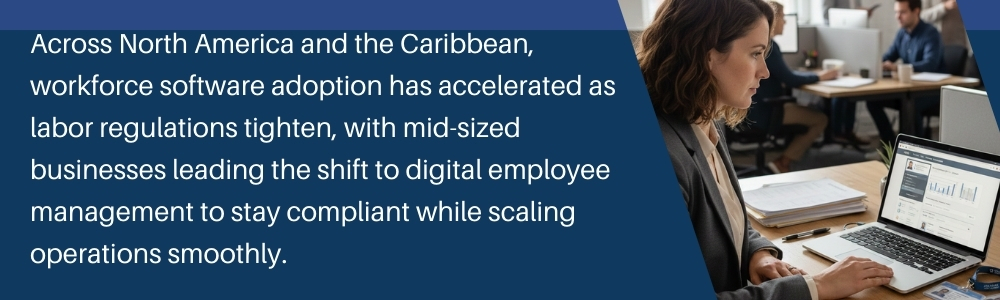
This consistency is crucial for companies operating in areas with stringent and changing labor laws, such as the US, Canada, and the Cayman Islands. Instead of being a distinct duty, compliance is integrated into the workflow.
Workers gain from this clarity as well. Trust increases when regulations are clear and applied equitably. Conflicts decrease. Decisions are supported by data rather than memory, which facilitates conversations.
Reducing Errors Without Losing Control
Human precision is crucial to manual systems. Even the most cautious teams make errors. Payroll problems or employee discontent can easily arise from inaccurate inputs, overdue approvals, or out-of-date data.
By standardizing procedures, a personnel management system lowers these risks. Approvals go along predetermined routes. Modifications are recorded. Real-time updates are made to records. Managers can still make decisions without being burdened by manual tracking.
This structure creates accountability without rigidity. Teams know what to expect. Managers know where to intervene. The organization operates with fewer surprises.
Better Decisions Come From Better Data
As organizations grow, leadership decisions become more complex. Hiring planning, workload distribution, and scheduling techniques require dependable data. Guesswork is no longer effective.
Software for managing employees transforms routine work into actionable insights. Over time, patterns in workload balance, scheduling effectiveness, and attendance become apparent. Early pattern recognition enables leaders to act before issues worsen.
This data-driven strategy supports sustainable growth. Businesses plan rather than respond to problems. Decisions about the workforce become more strategic than reactive.
Where This Matters Most in Real Operations
Productivity, scheduling, and compliance are deeply interconnected. Weakness in one area affects the others. Clear schedules reduce stress. Reduced stress improves performance. Consistent processes strengthen compliance.
For service-driven businesses, this connection is vital. Platforms like Dotbooker play a critical role in environments where people, time, and service delivery must align perfectly. Dotbooker helps businesses manage schedules, staff availability, and operational flow to support both employees and customers.
When systems align with how people actually work, growth becomes smoother. Teams operate with confidence. Managers focus on improvement instead of correction. The business moves forward without carrying unnecessary operational weight.
Popular Blogs

- Oct 20, 2022
- 6214

- Sep 08, 2024
- 5707

- Nov 11, 2022
- 5076
- Oct 13, 2025
- 4146
Ready to Transform
Your Business?

Get expert guidance to streamline your business operations.