
- By Dotbooker
- Dec 12, 2025
- 1022
The Complete Glossary of Booking & Scheduling Terms Every Wellness Business Owner Should Know
Today, managing a wellness company is similar to coordinating harmony between customers, employees, schedules, and systems. Whether you oversee a yoga studio, spa, salon, or treatment facility, the efficiency of your everyday operations depends on how you manage reservations.
In actuality, however, each booking software has its own vocabulary, such as "resource allocation," "buffer time," or "recurring sessions," which may seem straightforward but have significant practical implications. This glossary of wellness scheduling software is the best resource if you've ever stopped at one of these terms and wondered what it actually means.
Instead of treating them as impersonal definitions, we'll look at each of them as parts of your company's story and how they affect employee productivity, customer satisfaction, and growth.
One subject at a time, let's unravel the essence.
1. Booking Basics: Where Every Appointment Begins
Every client's journey starts with a booking. Whether a reservation is made online or over the phone, the foundations of booking management set the bar for all subsequent bookings. This section covers the essential components that give your front-end experience dependability, speed, and ease of use. By comprehending these ideas, you can ensure that every interaction, from browsing to confirmation, feels natural for both your employees and clients.
1.1 Online Booking System
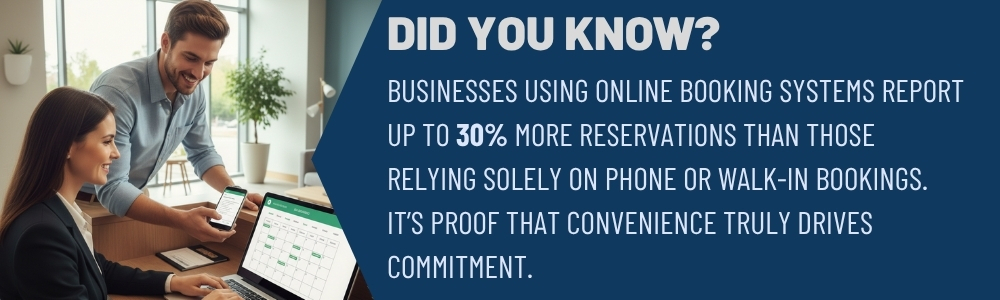
Your digital front desk is your online booking system, available around the clock. Customers can check your services, view your live availability, and schedule appointments without human contact. Customers may arrange a massage, facial, or lesson whenever inspiration strikes, so wellness centers won't have to cope with constant calls.
1.2 Booking Engine
The interface integrated into your website or application that records customer reservations is known as the booking engine. It helps turn browsers into paying customers by converting customer intent into confirmed appointments.
1.3 Real-Time Availability
This ensures that clients always see an up-to-date schedule. Once a slot is booked, it’s removed from availability immediately. It eliminates confusion and overbooking, two core concepts in any booking software glossary.
1.4 Calendar Sync
Google, Apple, or Outlook calendars can be synced with your internal scheduling tool. By making sure that every update is reflected everywhere, it keeps clients, trainers, and therapists in sync.
1.5 Recurring Appointments
This feature is perfect for loyal customers because it saves time and increases retention by automating regular sessions, such as weekly yoga or monthly facials.
1.6 Time Slot Management
Explains the structure of your day. Slot management ensures a balance between client flow and staff productivity, whether for 30-minute massages or 90-minute therapy blocks.
1.7 Booking Window
How far in advance customers can make reservations or cancel depends on the booking window. It keeps last-minute pandemonium at bay and offers you operational control.
1.8 Double Booking
This term refers to the situation in which two clients are accidentally booked for the same time slot, a scenario that every wellness scheduling software glossary aims to eliminate through intelligent conflict detection.
2. Scheduling Essentials: Keeping Time and Teams in Sync
Putting meetings on a calendar is only one aspect of scheduling; another is organizing people, locations, and resources in harmony. A well-planned timetable minimizes stress for both clients and staff, maximizes output, and prevents overlaps. These phrases demonstrate how you can plan, modify, and monitor tasks using modern technology without the chaos that can sometimes result from manual coordination.
2.1 Staff Scheduling
This function assigns therapists, trainers, and receptionists shifts according to availability and workload. Additionally, sophisticated technologies automatically monitor replacements, breaks, and overtime.
2.2 Resource Allocation
Resources include things like massage rooms, yoga mats, and machines. This feature ensures that each reservation is assigned the proper space or equipment by preventing overlaps.
2.3 Time Buffer
Staff can rest, clean tools, and reconfigure rooms during brief breaks between sessions. Buffers reduce burnout and enhance service quality.
2.4 Waitlist Management
This tool keeps potential customers in line if all of your spaces are reserved. The waitlist automatically replenishes itself in the event of a cancellation, ensuring consistent revenue.
2.5 No-Show Policy
a precise regulation outlining the consequences for clients who miss appointments. To reduce revenue loss, systems often automate penalties or rebooking restrictions.
2.6 Multi-Location Management
This function centralizes scheduling for companies with several branches, enabling you to monitor operations from a single dashboard.
2.7 Shift Swapping
Permits employees to switch shifts with the boss's permission. Spas and gyms with busy schedules can benefit from it.
2.8 Time-Off Requests
When employees request time off, integrated leave management automatically updates their availability across the booking calendar.
2.9 Block Time
For maintenance, events, or holidays, let's designate specific times or days as unavailable for reservations.
2.10 Group Bookings
Manages capacity and payments separately while overseeing sessions with several participants, including workshops or couples' massages.
3. Client Experience & Communication: Creating Seamless Connections
Relationships are the foundation of the wellness sector; each message, reminder, and follow-up fosters trust. Although it cannot replace human warmth, technology can enhance it. The following phrases describe how experience-driven features and digital communication technologies keep your customers informed, valued, and engaged with your business outside of appointments.
3.1 Client Portal
A self-service area where clients can book, modify, or cancel appointments, manage payments, and track package balances. It empowers customers while reducing your admin load.
3.2 Automated Reminders
Texts or emails received before an appointment. They significantly reduce no-shows while maintaining your brand's professionalism and punctuality.
3.3 Custom Notifications
In addition to reminders, this function strengthens customer loyalty by sending customized communications about forthcoming renewals, seasonal deals, and birthdays.
3.4 Multi-Channel Communication
Ensures that no message is lost by combining email, SMS, in-app conversation, and even WhatsApp under one roof.
3.5 Feedback Loop
Clients can use surveys or ratings to discuss their experiences following each consultation. These insights fuel your service improvements.
3.6 Client Retention Tools
To encourage repeat business, your booking system uses referral bonuses, loyalty points, and customized offers.
3.7 Membership Portal
Ensures clarity and transparency by providing clients with a separate view of their membership details, renewal dates, and benefits.
3.8 Custom Branding
Enables you to match your logo and color scheme to each email, booking page, and receipt. It's how your brand personality comes through while technology remains unseen.
4. Operations & Payments: Turning Bookings Into Business
A web of transactions and procedures supports every exciting workout class or soothing spa treatment. Operational features are the foundation of your company's finances, from managing packages and subscriptions to processing payments. This section describes how integrated systems let you focus on growth rather than paperwork by turning every booking into precise records, insights, and consistent revenue streams.
4.1 Point of Sale (POS)
Accepts payments both offline and online. Sales, taxes, and receipts are automatically recorded via a point-of-sale system that is integrated with your booking software.
4.2 Package Management
Monitors the use of packaged services such as "10 classes" or "5 therapy sessions." Following each visit, the system automatically subtracts sessions.
4.3 Membership Management
Ensures continuous services and steady income by automating member benefit tracking, frequent billing, and renewals.
4.4 Payment Gateway
The internet middleman that connects your account to the payment method used by your client. For dependable, smooth transactions, secure gateways like PayPal or Stripe are crucial.
4.5 Deposit & Prepayment
Gathering a modest advance payment shows dedication. To reduce last-minute cancellations, spas and salons often implement this strategy.
4.6 Refund Management
effectively handles refunds and cancellations, automating full or partial refunds in compliance with your policy.
4.7 Gift Cards & Vouchers
A great revenue booster. Integrated systems let clients purchase, redeem, and track gift cards directly within your booking platform.
4.8 Reporting & Analytics
Your engine for making decisions. It displays peak hours, top-performing employees, and seasonal demand by converting daily reservations and payments into charts and trends.
4.9 Split Payments
Simplifies checkout by enabling numerous clients (such as a couple receiving a massage) to divide the bill.
4.10 Commission Track Automatically
Computes staff commissions for each service, removing human tracking errors and promoting performance.
5. Technology & Automation: Powering Modern Wellness Businesses
Automation is the silent companion that keeps your company operating even when you're not on duty; it's no longer a luxury. Technology changes how effectively your wellness center runs, from cloud accessibility to AI-driven data. Here, we find innovations that improve security, eliminate tedious tasks, and provide you with the information you need to make well-informed, confident judgments.
5.1 Cloud-Based Software
Your entire company operates safely online and is reachable from anywhere at any time. No data loss, no local installs.
5.2 Integration
Keeps your digital ecology cohesive by enabling your booking system to integrate with other tools, such as accounting software and email marketing tools.
5.3 Role-Based Access
Specifies which system components are accessible to whom. Owners see everything, managers see reports, and receptionists see reservations.
5.4 Workflow Automation
Automates routine operations, such as mailing bills, reminders, and confirmations. The aim is to spend more time serving and less time managing.
5.5 Data Security
Guarantees the encryption and security of client data, including card numbers and personal information. Security is the foundation of trust.
5.6 AI-Powered Insights
Makes better business decisions by using artificial intelligence to forecast peak periods, evaluate customer behavior, and suggest upsells.
5.7 API Integration
Communication between two distinct systems is enabled by an API (Application Programming Interface). Integrating your booking app with your CRM is one example.
5.8 Mobile Accessibility
Let's use mobile devices to manage schedules for both clients and employees, which is crucial for flexibility while on the road.
5.9 Cloud Backups
Ensures business continuity even in the event of a device failure by automatically securely storing all your booking data.
5.10 Updates & Version Control
Guarantees that your reservation system consistently runs the newest features without any downtime, which is essential for speed and security.

6. Advanced Scheduling Features: Smart Tools for Growing Wellness Brands
The complexity of managing your wellness brand increases as it grows. Advanced features make large-scale scheduling, multi-service coordination, and individualized client management easier. This section covers the cutting-edge capabilities that enable you to scale gracefully and automate manual processes for greater accuracy.
6.1 Smart Waitlist
Goes beyond simple waitlists and automatically fills cancellations according to customer preferences rather than just signup order.
6.2 Group Class Management
It manages capacity restrictions, instructor assignments, and recurring schedules with ease, making it perfect for yoga studios or wellness programs.
6.3 Service Categories
Divides services (such as physiotherapy, massages, and facials) into several categories for convenient booking.
6.4 Split Sessions
Makes it possible to divide a lengthy service into manageable chunks, which is helpful for treatments involving several doctors.
6.5 Custom Booking Forms
Improves customization by gathering crucial information before a visit, including allergies and medical concerns.
6.6 Automated Follow-Ups
Builds regular client engagement by sending post-session notes to express gratitude or recommend rebookings.
6.7 Resource Utilization Reports
Maximizes efficiency and minimizes downtime by displaying which rooms, equipment, or workers are either overbooked or underutilized.
6.8 Tagging System
To personalize their experience and messages, let's tag clients (VIP, first-time, and recurring).
6.9 Service Duration Customization
Permits the flexibility to change treatment plans based on staff knowledge or client preferences.
6.10 Appointment Cloning
Quickly replicates current reservations, which is helpful for clients who frequently return for sessions.
7. Marketing & Growth Tools: Beyond the Booking
An excellent scheduling system fosters relationships that encourage repeat business while also managing appointments. The gap between operations and audience interaction is filled by marketing and growth technologies. This last subject will teach you how to make your booking platform a long-term growth engine through customer segmentation, integrated campaigns, and data-driven tactics.
7.1 CRM (Customer Relationship Management)
A system that allows you to provide individualized experiences by storing thorough client profiles, previous visits, preferences, and communication history.
7.2 Automated Campaigns
Connects booking data with email or SMS advertising to notify clients of upcoming sales or subscriptions that are about to expire.
7.3 Referral Management
Encourages organic growth by tracking referrals and rewarding customers who bring in friends.
7.4 Online Reviews Integration
After every appointment, automatically request reviews by connecting your booking software to Google or Yelp.
7.5 Retargeting Tools
Converts lost leads into conversions by focusing on customers who came to your booking page but did not make a reservation.
7.6 Coupon Tracking
Keeps an eye on how promotional codes are used to gauge the effectiveness of marketing initiatives.
7.7 SEO-Fensureooking Pages
Uses optimal meta URLs and schema data, all crucial for visibility, to ensure your booking page appears correctly in search results.
7.8 Social Media Integration
Let's clients book directly through Facebook or Instagram without leaving the app, boosting instant conversions.
7.9 Revenue Forecasting
Helps you plan promotions or staffing levels by using historical data analysis to forecast future bookings and revenue.
7.10 Customer Segmentation
Targeted marketing is made possible by grouping customers by their habits, such as first-timers, high spenders, or frequent bookers.
Mastering the Language of Scheduling with Dotbooker
You've just studied the entire lexicon that influences scheduling software, not as arbitrary definitions but as the essential instruments shaping the operations of contemporary wellness enterprises. From how a client schedules an appointment to how that booking results in data, revenue, and growth, each phase relates to some aspect of your day-to-day operations.
And while understanding the scheduling terms and definitions, the wellness business is empowering; implementing them seamlessly marks the beginning of the fundamental transformation.
That’s where Dotbooker stands apart.
Dotbooker isn’t just another booking system; it’s a unified platform that brings these terms to life. From cloud-based scheduling and payment automation to real-time analytics, multi-location control, and personalized communication, Dotbooker simplifies the complex.
So the next time you open your booking dashboard, these words won’t just be part of a glossary. They’ll be the language your business speaks fluently, one that saves time, improves experience, and keeps your clients coming back, effortlessly.
Dotbooker simplifies wellness management, one booking at a time.
Popular Blogs
- Oct 20, 2022
- 6202
- Sep 08, 2024
- 5691

- Nov 11, 2022
- 5061
- Oct 13, 2025
- 4124
Ready to Transform
Your Business?

Get expert guidance to streamline your business operations.