- By Dotbooker
- May 22, 2026
- 645
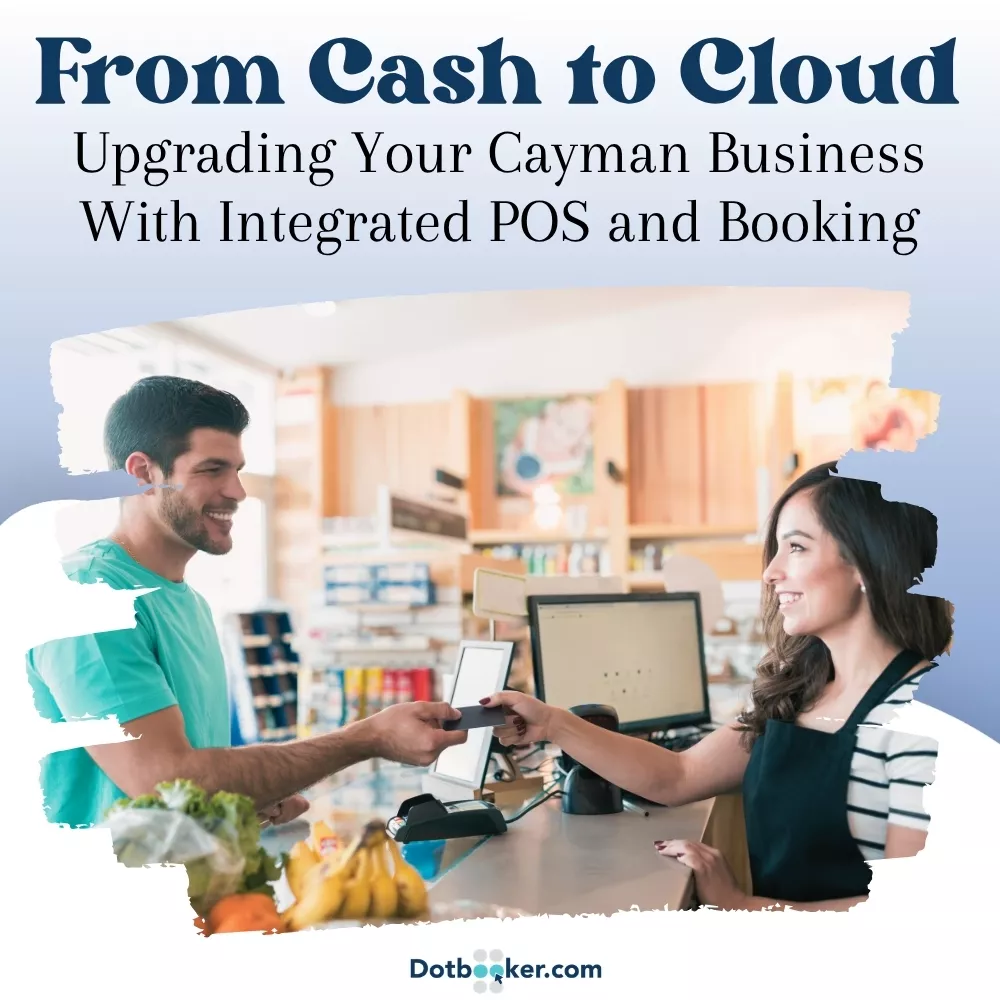
From Cash to Cloud: Upgrading Your Cayman Business With Integrated POS and Booking
It Always Starts With a “Small” Problem
Let’s start with something familiar.
It’s 5:45 PM. Your business is about to close. One last client walks in. The receptionist flips through a notebook, pauses, frowns, and says:
“Wait… I think you were booked for tomorrow?”
The client replies, “No, I booked for today. I even called to confirm.”
Now begins the investigation.
One staff member checks WhatsApp. Another checks the notebook. Someone else tries to remember.
Meanwhile, the client stands there, wondering whether to stay or leave.
If you’ve ever run a service business in the Cayman Islands, you already know this scene is not fictional.
And the truth is, this is not really a “booking problem.”
It is a system problem.
When Everything Lives in Different Places
Let’s paint a slightly more honest picture.
There’s a notebook at the front desk. A spreadsheet on someone’s laptop. A POS machine is sitting quietly near the counter. And somewhere in between, a WhatsApp chat with a customer saying, “Please book me for 3 PM… I think.”
For years, many businesses have managed operations exactly like this:
- Bookings in notebooks or spreadsheets
- Payments in a separate POS system or sometimes written down manually
- Customer details floating across calls, chats, and memory
And to be fair… it works.
Until it doesn’t.
At first, it even feels impressive. You know your regular clients by name. You remember who prefers morning slots. You can almost predict your busy hours without checking anything.
You feel in control.
But that control is mostly in your head.
Then growth happens. Quietly at first.
- A few more bookings per day
- More walk-ins than expected
- New staff joining the team
- More services are being added
- Payments coming in from different channels
And suddenly, your “system” starts behaving like a group project where nobody knows who’s responsible for what.
This is when the small cracks start appearing:
- Two clients booked for the same slot
- A service delivered but not billed
- A payment received but not recorded
- A staff member says, “I thought someone else handled it”
At first, these are rare.
Then they become weekly.
Then daily.
And one day, you realize you are no longer running your system.
You are chasing it.
Why Businesses Need Booking and POS Integration
Every business has that moment.
It’s rarely dramatic. It’s usually frustrating.
For some, it’s sitting with reports that just don’t make sense. The numbers say one thing, your gut says another.
For others, it’s that awkward conversation with a long-time customer:
“I’m really sorry… looks like your slot was given to someone else.”
And sometimes, it’s not even about customers.
It’s that quiet moment at the end of the day when everyone has left, and you are still there, trying to match bookings with payments like you are solving a puzzle no one asked for.
That’s when the thought creeps in:
“There has to be a better way to do this.”
That’s when business owners start hearing about booking and POS integration.
At first, it sounds like something complicated. Maybe expensive. Maybe unnecessary.
But once you understand it, it feels less like an upgrade and more like relief.
Like finally putting down something heavy you didn’t realize you were carrying all day.
How Booking and POS Integration Transforms Operations
Let’s revisit that same 5:45 PM scenario.
But this time, your system is not scattered. It is connected.
The client walks in.
No searching. No guessing.
The receptionist opens the system. The booking is already there.
Service selected. Staff assigned. Price defined.
It’s almost… too easy.
After the service:
- The invoice is already prepared
- Any add-ons are included automatically
- Payment is processed in seconds
- Receipt is sent instantly
No one needs to remember anything. No one needs to double-check anything.
And the best part?
No one is stressed.
What used to be a moment of tension becomes routine. Predictable. Smooth.
And yes, a little boring.
But in business, boring is powerful. It means things are working.
Best Booking Software Cayman Islands Driving Change
In the Cayman Islands, businesses operate in a very interesting space.
You are serving:
- Loyal local clients who come back regularly
- Tourists who expect fast, polished service
- High-value customers who notice even the smallest delays
This mix creates a different kind of pressure.
You cannot afford:
- Slow check-ins
- Confusing billing
- Long waiting times
- “Let me just check” moments
Because here, experience is everything.
A smooth visit can turn a one-time customer into a repeat client.
A bad experience can do the exact opposite.
That’s why choosing the best booking software Cayman Islands businesses rely on is not just about convenience.
It’s about keeping up with expectations that are already high.
Delayed Booking and POS Integration Costs Businesses
Every business owner has had this conversation:
- “Let’s just manage it for now.”
- “We’ll upgrade once things settle down.”
- “We’ll fix it next month.”
The problem is… things rarely “settle down.”
Instead, they get busier.
And “later” slowly turns into:
- Staff getting frustrated with repetitive tasks
- Customers pointing out mistakes you thought were minor
- Revenue gaps you cannot fully explain
- Late nights spent reconciling numbers that should have matched automatically
Then one day, you finally sit down to fix it.
And the realization hits:
This wasn’t a complicated problem.
It was just ignored for too long.
Booking and POS Integration Brings Business Clarity
Let’s forget features for a moment.
Here’s what changes on a daily level:
You stop asking questions like:
- “Was this booking already paid?”
- “Where is this customer’s record?”
- “Why is this not showing in the system?”
You stop switching between tabs, tools, and people just to find one answer.
You stop relying on memory like it’s part of your job description.
Instead:
- Everything is visible in one place
- Every booking is automatically tied to revenue
- Every payment updates instantly
- Every report reflects reality, not guesswork
It feels lighter.
Not because your business is smaller, but because your system is finally doing its job.
Before and After Booking and POS Integration
Before Integration
- “Who handled this client?”
- “Did they pay already?”
- “Why is this missing in the report?”
- “Can someone check the register?”
Half the time is spent asking questions.
The other half is spent finding answers.
After Integration
- Open system
- Check booking
- See payment status
- Move on
No confusion. No back-and-forth. No mental load.
Just clarity.
Why Booking and POS Integration Feels Risky
Even if your current system is messy, it’s familiar.
And familiar feels safe.
Switching brings real concerns:
- Will my team adapt quickly?
- What happens to existing data?
- What if something goes wrong during the transition?
These are valid thoughts.
But here’s what most businesses realize after making the switch:
The fear was bigger than the change itself.
Because once the system is in place, things don’t become harder.
They become simpler.
And the bigger risk?
Continuing with a system that already slows you down every single day.
If you're still exploring how online booking improves operations, you can also read how booking systems reduce no-shows and improve revenue consistency.
Choosing the Best Booking Software for Cayman Islands Businesses
You don’t need ten tools. You don’t need complicated setups.
You need something that fits your business naturally.
Focus on what actually matters:
- Online booking that works without constant follow-ups
- Payment processing that is quick and reliable
- A dashboard that shows everything clearly
- Real-time updates so nothing feels delayed
- Reports that you can understand without needing explanations
If you need training just to check a booking, something is off.
A good system should feel obvious, not overwhelming.
Booking and POS Integration Improves Customer Experience
Customers rarely ask, “Which system do you use?”
But they feel the results of it.
They notice:
- How easy it is to book
- How quickly they are attended to
- How smooth the checkout process feels
- Whether their bill is accurate without corrections
And here’s the truth:
A smooth experience feels normal.
A bad experience feels memorable.
In a place like Cayman, where word travels fast, those experiences matter more than most businesses realize.
Booking and POS Integration Gives Business Control
At the end of the day, this is not really about software.
It’s about how your business feels to run.
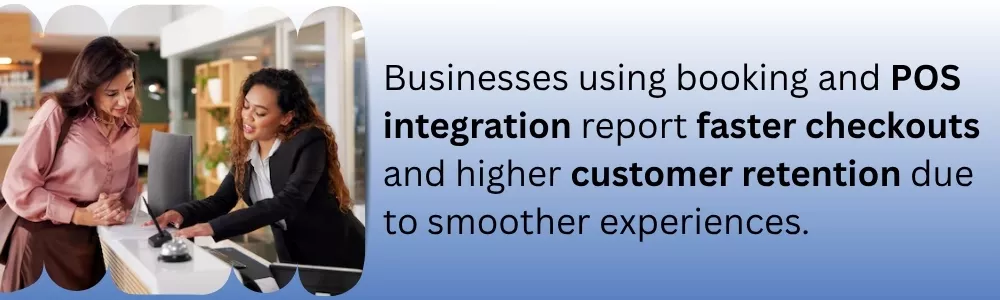
When your bookings and payments are connected:
- You know exactly what is happening in your business
- You trust your numbers
- You manage your team with clarity
- You stop fixing problems that should not exist
And something subtle but powerful happens.
You get your time back.
Not just time on the clock, but mental space.
The kind that lets you think about growth instead of constantly fixing what is broken.
Next Steps With Booking and POS Integration
Moving from cash-based or disconnected systems to a cloud setup is not just an upgrade. It is a reset.
It’s the moment your business stops reacting to problems and starts running with clarity.
And if you are looking for a platform that brings booking, payments, scheduling, and business operations together in one place, solutions like Dotbooker come into the picture.
Dotbooker is designed specifically for service businesses that want everything connected without adding complexity. From handling bookings to managing payments and tracking performance, it gives you a complete view of your business without the chaos of multiple systems.
Because at the end of the day, the goal is simple.
- Less confusion.
- Fewer errors.
- Better experiences.
And a business that finally runs the way you always wanted it to.
Popular Blogs

- Oct 20, 2022
- 6175
- Sep 08, 2024
- 5662

- Nov 11, 2022
- 5038

- Oct 13, 2025
- 4086
Ready to Transform
Your Business?

Get expert guidance to streamline your business operations.